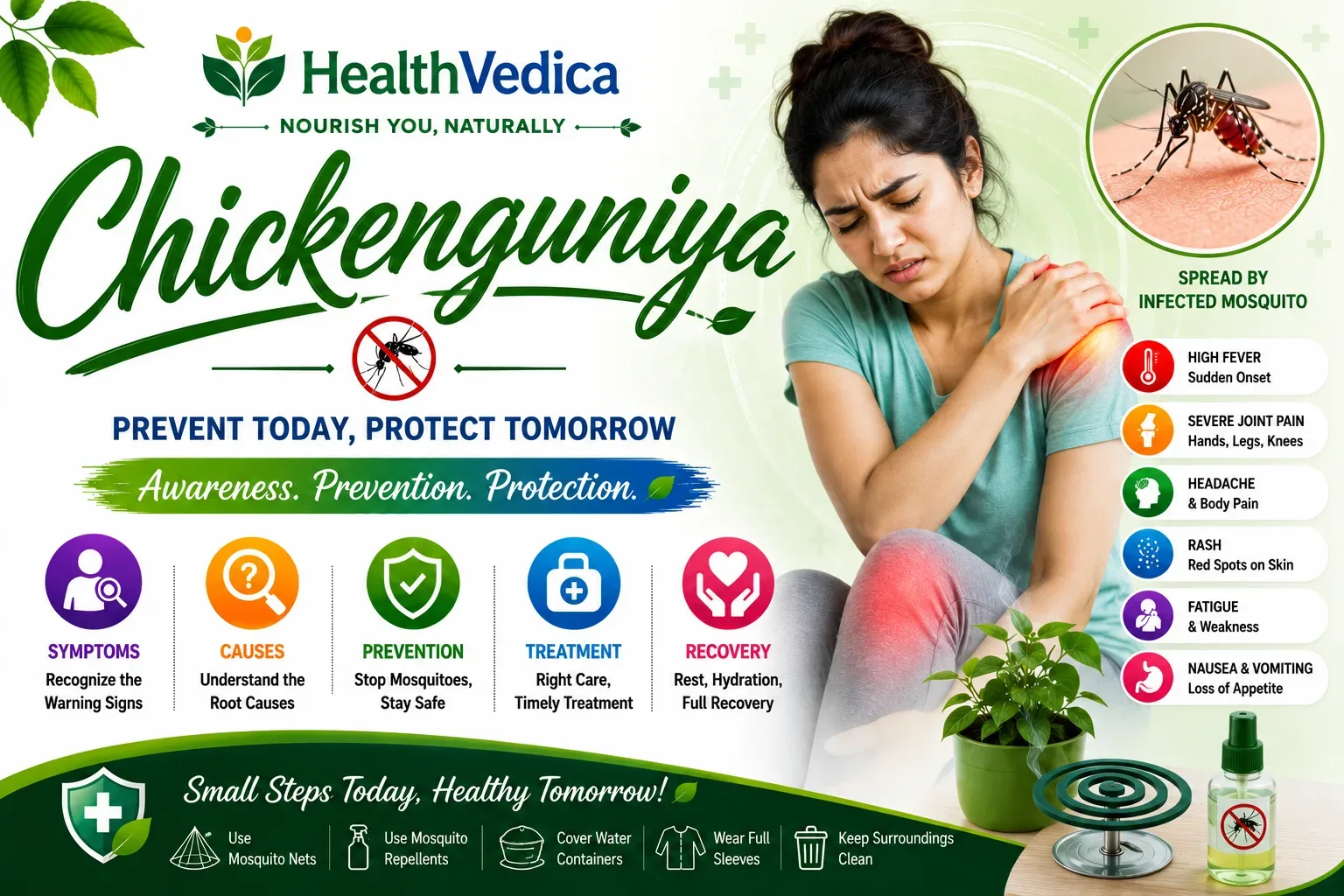
🔍 What is Chikungunya?
Chikungunya is a viral fever caused by the Chikungunya virus (CHIKV), an alphavirus transmitted to humans through bites of infected Aedes aegypti and Aedes albopictus mosquitoes — the same mosquitoes that transmit Dengue and Zika. The name 'Chikungunya' comes from a Makonde language word meaning 'to become contorted' — a reference to the stooped posture adopted due to severe joint pain. India experiences recurring major outbreaks, with millions affected. The 2016 Indian outbreak was one of the largest in history. While chikungunya is rarely fatal, its debilitating joint pain can persist for months to years — causing significant morbidity and disruption to daily life.
📋 Symptoms Timeline
| Phase | Timing | Symptoms |
|---|---|---|
| Acute Phase | Days 1–7 | Sudden high fever (39–40°C), severe joint pain (polyarthralgia) in multiple joints, muscle pain, headache, skin rash (maculopapular), fatigue, nausea, conjunctivitis |
| Subacute Phase | Weeks 2–3 | Fever resolves but joint pain, stiffness and swelling persist; fatigue continues |
| Chronic Phase | Months–Years | Persistent joint pain (arthralgia/arthritis) in 30–40% of patients — most distinctive and debilitating feature of chikungunya |
🦟 Transmission & Prevention
Chikungunya is exclusively transmitted through Aedes mosquito bites — NOT person-to-person (though rare vertical transmission mother-to-child during delivery). Aedes mosquitoes breed in clean, stagnant water and bite primarily during daytime (dawn and dusk). Prevention: Eliminate breeding sites (empty stagnant water from coolers, flower pots, buckets, tyres), use mosquito repellents (DEET or picaridin-based), wear full-sleeved clothing during daytime outdoors, use mosquito nets, and install window screens. Municipal fogging/spraying during outbreaks — report clusters to local health authorities.
💊 Medical Treatment
There is currently no specific antiviral treatment or vaccine for chikungunya — treatment is supportive. Key measures: Rest and adequate hydration (8–10 glasses of water/ORS daily), Paracetamol for fever and mild pain (preferred over NSAIDs in acute phase as dengue must be ruled out first), NSAIDs (ibuprofen, naproxen, diclofenac) for joint pain after dengue is excluded, Corticosteroids for severe persistent arthritis, and Physical therapy for chronic joint involvement.
🌿 Ayurvedic & Natural Joint Pain Remedies
| Remedy | Preparation | Benefit |
|---|---|---|
| Papaya Leaf Extract | Crush fresh papaya leaves, extract juice (2 tbsp 2x daily) or commercial capsules | Boosts platelet count (also important if co-infection with dengue) |
| Giloy (Guduchi) Juice | Fresh giloy stem juice 30ml twice daily or decoction | Immunomodulator, anti-inflammatory, anti-viral, reduces fever duration |
| Ashwagandha + Shallaki | Ashwagandha 500mg + Shallaki 300mg twice daily | Anti-inflammatory, analgesic — reduces chronic joint pain |
| Castor Oil Joint Massage | Warm castor oil massage on painful joints, leave overnight | Ricinoleic acid — anti-inflammatory; reduces joint pain and stiffness |
| Turmeric Milk | 1/2 tsp turmeric + black pepper in warm milk, 2x daily | Anti-inflammatory, reduces joint pain and inflammation |
| Ginger Paste | Apply warm ginger paste on affected joints 20 min | COX+LOX inhibition — anti-inflammatory, pain relief |
💡 Recovery Tips for Chikungunya Joint Pain
Joint pain in chikungunya can be prolonged and debilitating. Key recovery strategies: Rest acutely but begin gentle range-of-motion exercises as soon as tolerable — inactivity worsens joint stiffness. Warm water hydrotherapy (soaking affected joints in warm water with Epsom salt) provides significant relief. Physical therapy with a trained physiotherapist significantly speeds chronic joint recovery. Swimming/water aerobics is ideal low-impact exercise during recovery. Maintain good nutrition and hydration. Manage stress (stress worsens inflammatory conditions). Track symptoms — if joint pain persists beyond 3 months, consult a rheumatologist as chikungunya can trigger true chronic inflammatory arthritis requiring disease-modifying treatment.