🥗 What Is the 80-20 Diet Rule?
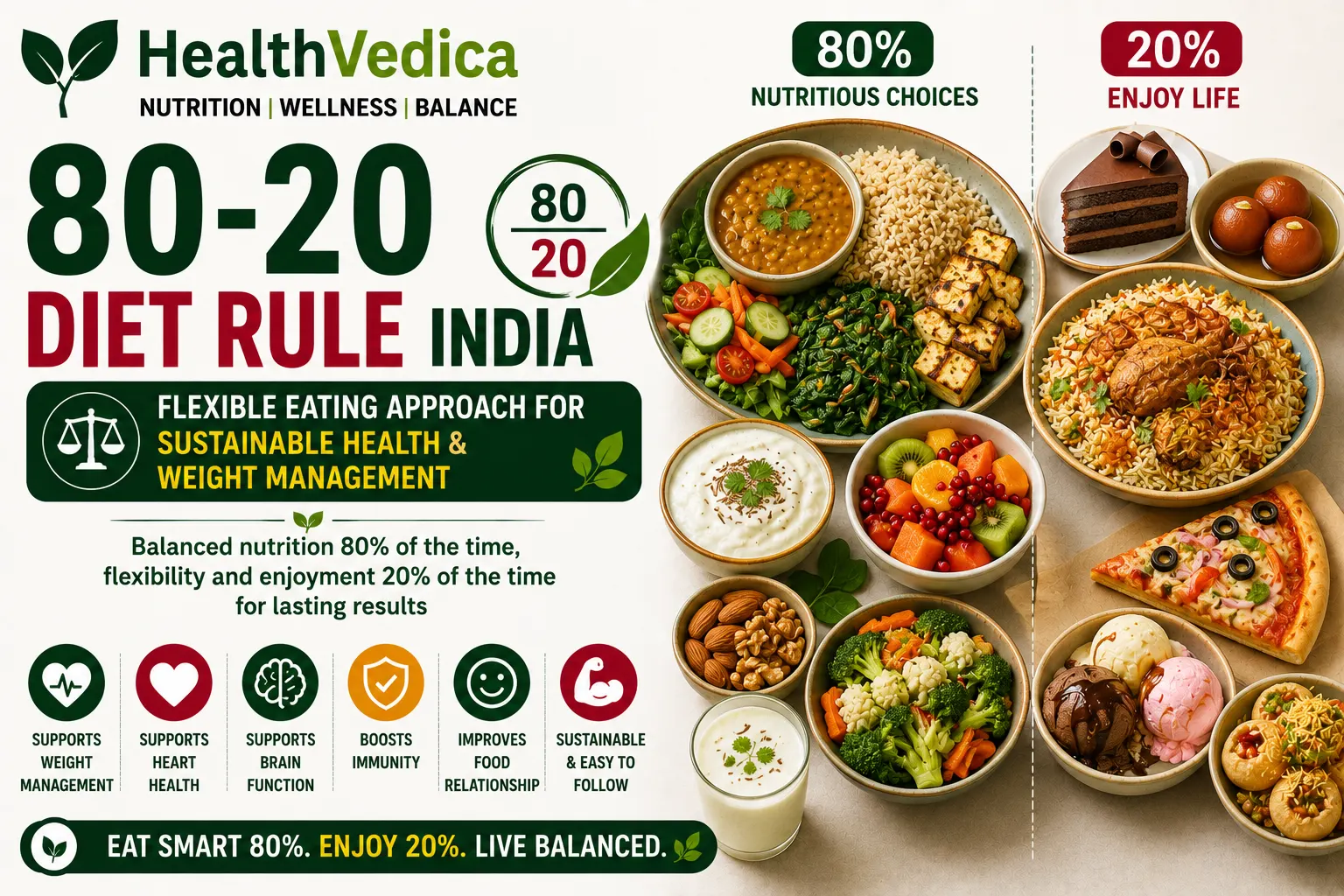
The 80-20 diet rule is a flexible eating strategy where approximately 80% of your food intake comes from nutritious whole foods and the remaining 20% comes from foods you enjoy purely for pleasure.
Unlike highly restrictive diets, the 80-20 approach focuses on consistency rather than perfection. It allows room for occasional treats while maintaining a strong foundation of healthy eating habits.
This makes it one of the most sustainable dietary approaches for long-term health, weight management, and lifestyle balance.
🔬 How the 80-20 Rule Works
The concept is simple:
- 80% of meals focus on nutrient-dense foods.
- 20% of meals allow flexibility and enjoyment.
For example, if you eat 21 meals per week:
- 17 meals can be healthy whole-food meals.
- 4 meals can include pizza, desserts, biryani, sweets, or favorite treats.
The goal is not mathematical perfection but maintaining healthy habits most of the time.
📊 What Should Make Up the 80%?
| Food Group | Examples | Main Benefits |
|---|---|---|
| Vegetables | Spinach, carrot, cabbage | Fiber and nutrients |
| Fruits | Apple, guava, papaya | Vitamins and antioxidants |
| Proteins | Eggs, fish, chicken, dal | Muscle support |
| Whole Grains | Brown rice, oats, millets | Sustained energy |
| Dairy | Curd, paneer, milk | Protein and calcium |
| Nuts & Seeds | Almonds, walnuts, flaxseeds | Healthy fats |
🍔 What Falls Into the 20%?
The remaining 20% allows foods that may not be highly nutritious but add enjoyment and social flexibility.
Examples include:
- Pizza
- Biryani
- Ice cream
- Chocolate
- Cakes
- Burgers
- Festival sweets
- Restaurant meals
The purpose is preventing feelings of deprivation that often lead to binge eating.
⚖️ Why Restrictive Diets Often Fail
Many diets fail because they completely eliminate favorite foods.
This often creates:
- Cravings
- Frustration
- Social difficulties
- Diet fatigue
- Binge eating episodes
The 80-20 approach reduces these issues by allowing flexibility while maintaining overall dietary quality.
🇮🇳 Indian Examples of the 80-20 Rule
80% Choices:
- Dal and vegetables
- Millet roti
- Brown rice
- Curd
- Paneer
- Eggs
- Fish
- Fresh fruits
20% Choices:
- Biryani
- Gulab jamun
- Jalebi
- Pizza
- Pani puri
- Ice cream
- Restaurant desserts
This balance allows enjoyment of Indian cuisine without sacrificing health goals.
🏋️ Can the 80-20 Rule Help with Weight Loss?
Yes, but only if overall calorie intake remains appropriate.
The 80-20 rule is not a weight-loss diet by itself. It is a framework that encourages better food choices.
Weight loss still depends on:
- Calorie balance
- Physical activity
- Sleep quality
- Stress management
- Consistency over time
🍽️ Sample 80-20 Daily Meal Plan
Breakfast: Vegetable omelette and fruit
Mid-Morning: Guava and almonds
Lunch: Dal, brown rice, vegetables and curd
Evening: Roasted chana
Dinner: Grilled paneer or fish with vegetables
20% Treat: Small serving of ice cream or favorite dessert
🎉 80-20 Diet During Festivals
Indian festivals often include sweets and rich foods.
The 80-20 rule works particularly well because it allows occasional indulgence without guilt.
Instead of avoiding celebrations completely:
- Enjoy moderate portions
- Prioritize healthy meals during the day
- Avoid continuous snacking
- Stay physically active
💪 Benefits of the 80-20 Diet Rule
- Easy to follow long term
- Reduces feelings of restriction
- Supports healthy eating habits
- Improves diet consistency
- Fits social events and travel
- Can support weight management
- Encourages a healthier relationship with food
⚠️ Common Mistakes
- Turning 20% into 50%
- Using cheat days as binge days
- Ignoring portion sizes
- Eating processed foods daily
- Not consuming enough protein
- Using the rule as an excuse for poor eating habits
The biggest mistake is underestimating how much the '20%' actually contributes.
👨👩👧 Who Is the 80-20 Diet Best For?
- Busy professionals
- Families
- Beginners starting healthy eating
- People tired of strict diets
- Individuals seeking sustainable weight management
- Those who enjoy social eating
It is particularly effective for people who struggle with highly restrictive diet plans.
⚖️ 80-20 Diet vs Cheat Days
| Feature | 80-20 Diet | Cheat Day Approach |
|---|---|---|
| Flexibility | Regular | Occasional |
| Binge Risk | Lower | Higher |
| Sustainability | Higher | Lower |
| Food Relationship | Balanced | Can become restrictive |
Most nutrition professionals consider the 80-20 approach more sustainable than extreme cheat-day cycles.
💡 Final Thoughts
The 80-20 diet rule is one of the most practical and sustainable approaches to healthy eating. By focusing on nutritious whole foods most of the time while allowing flexibility for favorite treats, it creates a balanced lifestyle that can be maintained for years.
The real secret is consistency. Eating healthy 80% of the time for years will generally produce better results than following a perfect diet for only a few weeks.