Food Comparisions

Ragi vs Bajra 🌾: Comparing India's Two Most Popular Millets

Last updated:
Ragi vs Bajra Comparison β€” Nutrition, Health Benefits & Remedies
Ragi vs Bajra: Which Millet Should You Eat? | Health Vedica
⚠️ Medical Disclaimer: This content is for informational purposes only and does not constitute medical advice. Always consult a qualified healthcare professional for diagnosis and treatment.

🌾 Calcium Champion vs Iron Powerhouse

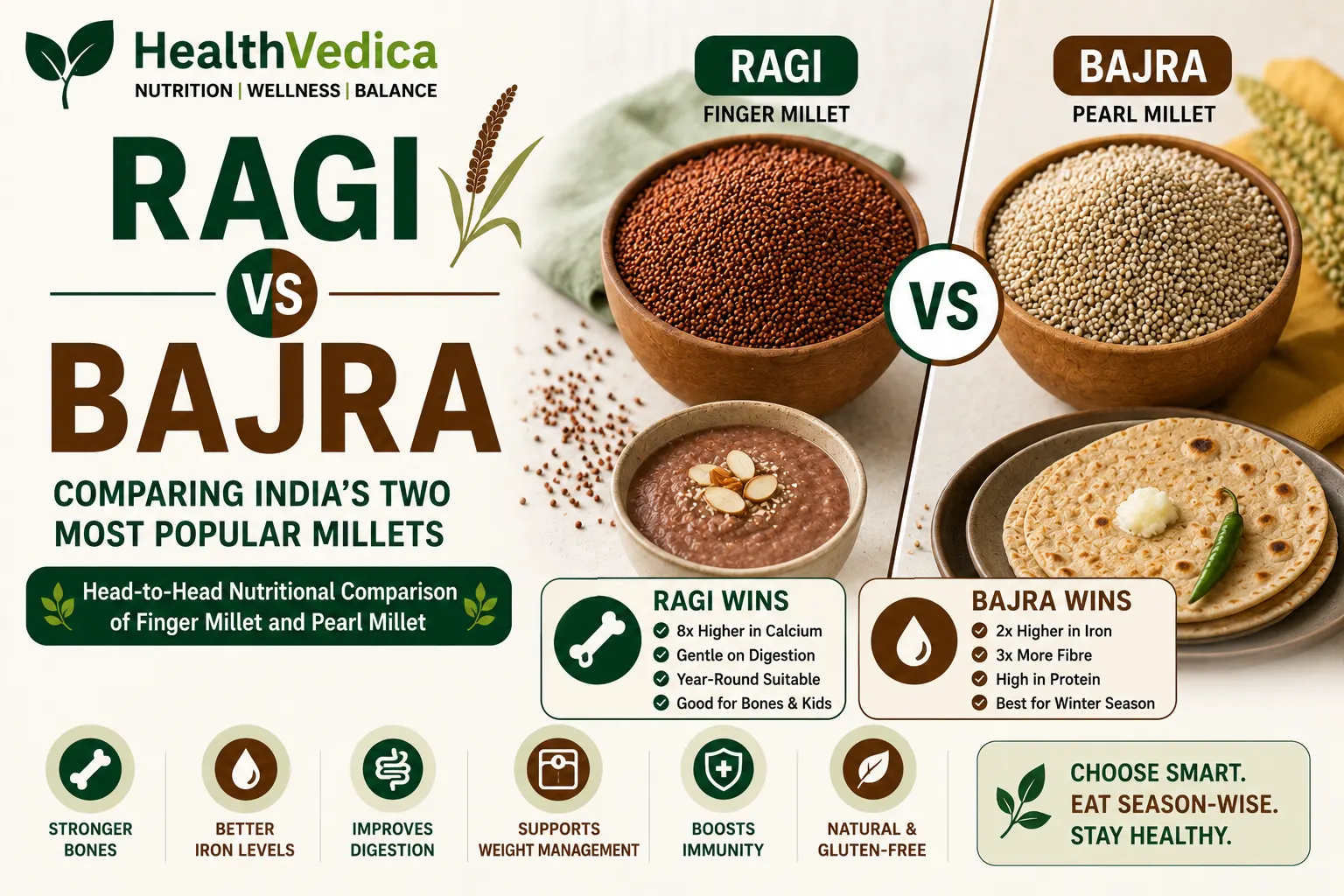
Ragi (finger millet) and bajra (pearl millet) are both nutrient-dense traditional grains, but they shine in different areas and are traditionally eaten in different seasons across India. Bajra is a warming grain typically associated with winter consumption in North India, while ragi is consumed year-round, especially in South Indian households. Understanding their distinct strengths helps decide when and how to include each.

πŸ“Š Ragi vs Bajra: Nutritional Comparison (per 100g, raw flour)

NutrientRagiBajraAdvantage
Calcium344mg42mgRagi (8x higher)
Iron3.9mg8.0mgBajra (2x higher)
Protein7.3g11.6gBajra
Fibre3.6g11.5gBajra (3x higher)
Glycaemic Index~54~55Roughly equal
Fat content1.3g5.0gBajra (higher, mostly unsaturated)
Best seasonYear-roundWinter (warming food)Context-dependent

βœ… Where Ragi Wins

Ragi's calcium density remains unmatched among commonly eaten millets, making it the clear choice for bone health, growing children, and anyone managing low calcium intake from limited dairy. Ragi is also generally easier to digest for people with sensitive stomachs and is a traditional first grain for infants.

βœ… Where Bajra Wins

Bajra's iron content is roughly double that of ragi, making it valuable for managing iron deficiency anaemia, which remains highly prevalent among Indian women. Its significantly higher fibre content (11.5g vs 3.6g per 100g) supports digestive health and prolonged satiety. Bajra's higher fat content, primarily unsaturated, also makes it a more calorie-dense, warming food traditionally eaten in colder months to support body heat β€” a practice with real physiological basis, since digesting bajra generates slightly more metabolic heat.

🍽️ Seasonal and Practical Guidance

Traditional Indian food wisdom pairs bajra with winter and ragi with summer or year-round use, and this isn't arbitrary β€” bajra's warming, higher-fat profile suits colder weather, while ragi's lighter, cooling profile (in Ayurvedic terms) suits warmer months. For someone managing iron deficiency, bajra rotis through winter months can meaningfully contribute to iron intake. For someone focused on bone health regardless of season, ragi should remain a constant. Many households benefit from including both across the year rather than choosing permanently between them.
❓ Frequently Asked Questions

Common questions about Ragi vs Bajra Comparison

Bajra is the better choice for managing iron deficiency anaemia, containing roughly double the iron of ragi (8mg vs 3.9mg per 100g). Combining bajra with vitamin C rich foods like lemon, tomato, or amla in the same meal further improves iron absorption, since vitamin C enhances non-heme iron uptake from plant sources. Ragi remains valuable for other purposes, particularly calcium, but bajra has the clear edge for anaemia management.
Bajra has a higher fat content and generates more metabolic heat during digestion compared to lighter grains, which traditional Indian food wisdom associates with a 'warming' effect suited to cold weather. This aligns with Ayurvedic principles of eating foods that match seasonal body needs. While modern nutrition science frames this differently (higher calorie density, slower digestion generating more thermic effect), the practical outcome supports the traditional pattern of increased bajra consumption in winter months, particularly in North India.
Bajra has a notable advantage for weight loss due to its significantly higher fibre content (11.5g vs 3.6g per 100g), which promotes greater fullness and can reduce overall calorie intake across the day. However, bajra is also more calorie-dense due to higher fat content, so portion control matters more with bajra than with ragi. Both are better choices than refined grains for weight management goals.
Yes, combining ragi and bajra flour, sometimes with a third grain like jowar or wheat, is a common practice for creating a multigrain roti with a more complete nutrient profile β€” gaining ragi's calcium alongside bajra's iron and fibre. This combination flour is often easier to roll into rotis than ragi alone, since bajra's texture helps with binding.
Ragi is generally considered easier to digest, particularly for people with sensitive digestion, young children, or the elderly, which is why ragi porridge is a traditional first food for infants. Bajra's higher fibre content, while beneficial for most people, can occasionally cause bloating in those unaccustomed to high-fibre grains, so introducing bajra gradually is advisable for those new to millet-based diets.
Related Blogs
Chia vs Flax Seeds Comparison Food Comparisions
Chia vs Flax Seeds Comparison
🌱 Two Tiny Seeds With Big ReputationsChia seeds and flax seeds (alsi) are both frequently recommend...
Read More
Foods That Boost Energy Nutrition
Foods That Boost Energy
⚑ IntroductionIf you feel tired all the time β€” exhausted after a full night's sleep, drained by mid...
Read More
Thyroid Diet Plan for Hypothyroidism Health Conditions
Thyroid Diet Plan for Hypothyroidism
πŸ¦‹ Understanding Thyroid Health in IndiaThyroid disorders affect over 42 million Indians, making it...
Read More
Migraine Diet Foods Health Conditions
Migraine Diet Foods
🧠 What Is a Migraine?Migraine is a neurological condition characterized by recurring headaches that...
Read More
Best Winter Warming Foods Diet Plans
Best Winter Warming Foods
❄️ Why Winter Nutrition Matters More Than You ThinkWinter is one of the most pleasant seasons in Ind...
Read More
Best Protein Powder in India Fitness & Lifestyle
Best Protein Powder in India
πŸ’ͺ India's Protein Problem β€” and the Supplement SolutionIndia has a severe and underappreciated prot...
Read More
Electrolytes Foods Natural Sources Vitamins & Minerals
Electrolytes Foods Natural Sources
πŸ’§ What Are Electrolytes?Electrolytes are minerals that carry an electrical charge when dissolved in...
Read More
Prediabetes Diet India Health Conditions
Prediabetes Diet India
🩺 Prediabetes Is a Critical Window, Not a Diagnosis to FearPrediabetes β€” blood sugar levels higher...
Read More
Vitamin A Rich Foods India Vitamins & Minerals
Vitamin A Rich Foods India
πŸ‘οΈ Two Forms of Vitamin A, One Important DistinctionVitamin A exists in two distinct dietary forms:...
Read More
HealthVedica Editorial Team

HealthVedica Editorial Team

Written by Raviteja

Our content is AI-assisted and editorially reviewed to ensure accuracy against Ayurvedic guidelines and Indian health research. Learn more β†’