🧬 What Is Copper?
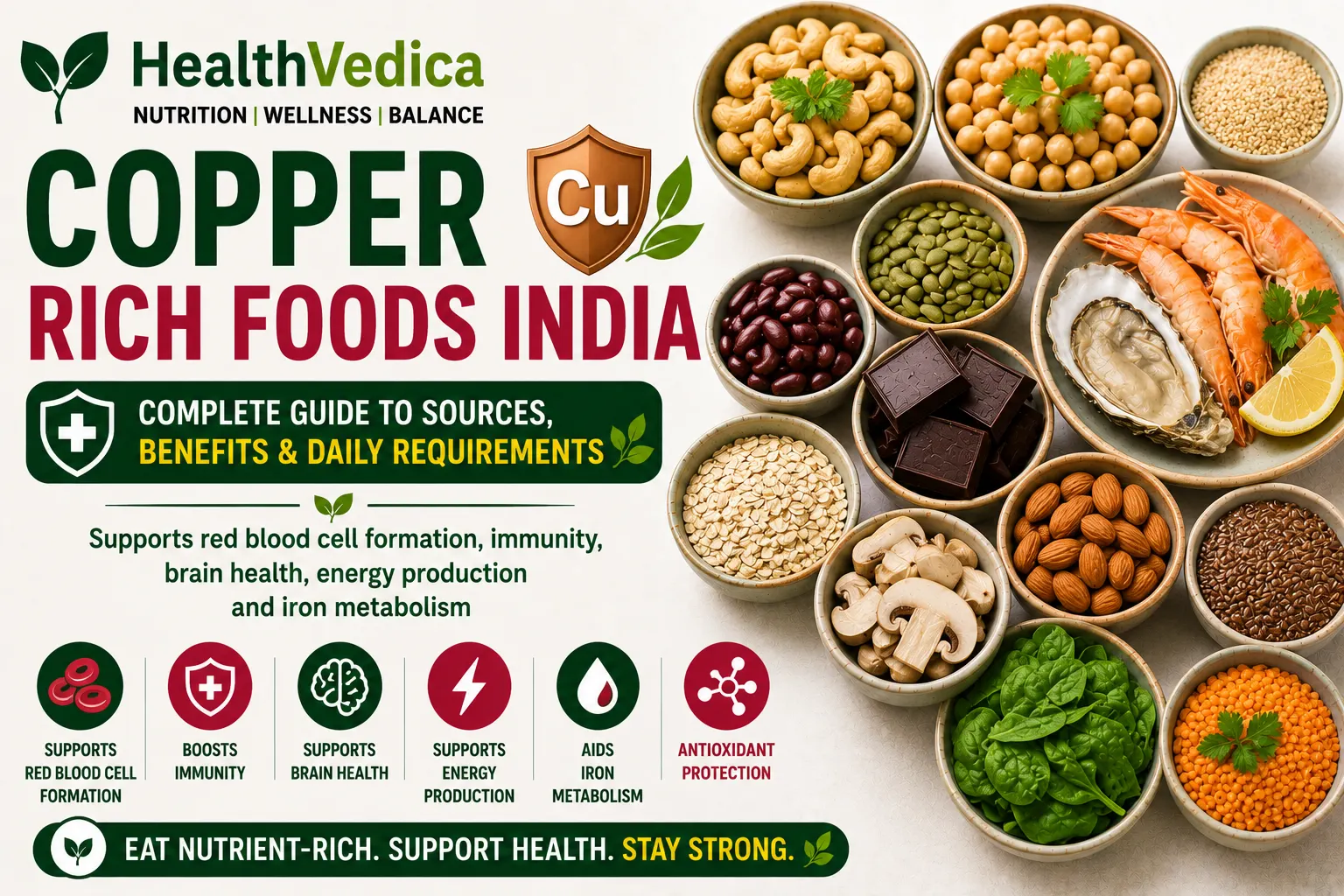
Copper is an essential trace mineral required for many important functions in the body. Although needed in small amounts, copper plays a major role in energy production, iron metabolism, nervous system function, immunity and the formation of red blood cells.
The body cannot produce copper on its own, so it must be obtained regularly through food.
🔬 Why Copper Is Important
Copper works with enzymes throughout the body and contributes to numerous biological processes.
- Supports red blood cell production
- Helps iron absorption and utilization
- Supports brain and nervous system function
- Strengthens immunity
- Supports collagen formation
- Provides antioxidant protection
Copper works closely with iron, zinc and Vitamin C for overall health.
📊 Best Copper Rich Foods in India
| Food | Category | Copper Content |
|---|---|---|
| Cashews | Nuts | Very High |
| Sesame Seeds | Seeds | Very High |
| Sunflower Seeds | Seeds | High |
| Dark Chocolate | Food | High |
| Chickpeas | Legume | High |
| Rajma | Legume | High |
| Lentils | Legume | Good |
| Mushrooms | Vegetable | Good |
| Oats | Whole Grain | Good |
| Seafood | Animal Source | Very High |
🥜 Nuts Rich in Copper
Nuts are among the best plant-based sources of copper.
- Cashews
- Almonds
- Hazelnuts
- Walnuts
- Pistachios
Besides copper, nuts provide healthy fats, protein and antioxidants.
🌻 Seeds – Copper Powerhouses
Seeds are one of the easiest ways to increase copper intake naturally.
- Sesame seeds (Til)
- Sunflower seeds
- Pumpkin seeds
- Flaxseeds
Adding a spoonful of mixed seeds daily can significantly improve mineral intake.
🫘 Legumes and Pulses
Indian diets already contain several copper-rich legumes.
- Chickpeas (Chana)
- Rajma
- Black chana
- Masoor dal
- Moong dal
These foods also provide protein, fiber, iron and folate.
🍄 Mushrooms
Mushrooms are among the better vegetable sources of copper.
They also contain:
- B vitamins
- Antioxidants
- Fiber
- Selenium
Mushrooms can be added to curries, soups and stir-fries.
🍫 Dark Chocolate
Dark chocolate contains a surprisingly high amount of copper.
Choose varieties with higher cocoa content and consume in moderation as part of a balanced diet.
🐟 Seafood and Animal Sources
Seafood contains highly bioavailable copper.
- Oysters
- Crab
- Prawns
- Fish
These foods also provide protein, zinc and selenium.
🌾 Whole Grains
Whole grains contribute useful amounts of copper.
- Oats
- Whole wheat
- Millets
- Brown rice
- Barley
Replacing refined grains with whole grains improves overall nutrient intake.
🩸 Copper and Iron Metabolism
Copper plays an important role in helping the body utilize iron properly.
Without adequate copper, iron transport and red blood cell production may be affected.
This is one reason why copper is important for maintaining healthy blood health.
🧠 Copper and Brain Health
Copper contributes to normal nervous system function and the production of neurotransmitters.
It helps support:
- Brain development
- Nerve communication
- Cognitive function
- Overall neurological health
🛡️ Copper and Immunity
Copper supports several immune system processes and antioxidant enzymes that help protect cells from oxidative stress.
A balanced intake contributes to overall immune health.
⚠️ Symptoms of Copper Deficiency
Copper deficiency is uncommon but may occur in certain situations.
- Fatigue
- Weakness
- Frequent infections
- Anemia
- Pale skin
- Poor immunity
Medical evaluation is required to diagnose deficiency accurately.
📋 Daily Copper Requirements
| Group | Recommended Intake |
|---|---|
| Adult Men | 900 mcg/day |
| Adult Women | 900 mcg/day |
| Pregnant Women | 1000 mcg/day |
| Breastfeeding Women | 1300 mcg/day |
🍽️ Sample Copper Rich Indian Meal Plan
Breakfast: Oats with nuts and seeds
Mid-Morning: Banana and cashews
Lunch: Rajma, brown rice and vegetable salad
Evening: Roasted chickpeas and sunflower seeds
Dinner: Mushroom curry with millet roti
Dessert: Small piece of dark chocolate
⚠️ Can Too Much Copper Be Harmful?
Yes. Excessive copper intake from supplements can cause nausea, stomach upset and other health issues.
For most people, obtaining copper through food is safe and sufficient.
💪 Benefits of Adequate Copper Intake
- Supports healthy blood formation
- Improves iron utilization
- Supports immunity
- Promotes nervous system health
- Supports collagen production
- Provides antioxidant protection
💡 Final Thoughts
Copper is an essential trace mineral that supports immunity, brain health, iron metabolism and red blood cell formation. Indian foods such as cashews, sesame seeds, sunflower seeds, chickpeas, rajma, mushrooms, oats and seafood provide excellent amounts of copper.
A balanced diet containing nuts, seeds, legumes and whole grains is usually sufficient to meet daily copper requirements and support long-term health.