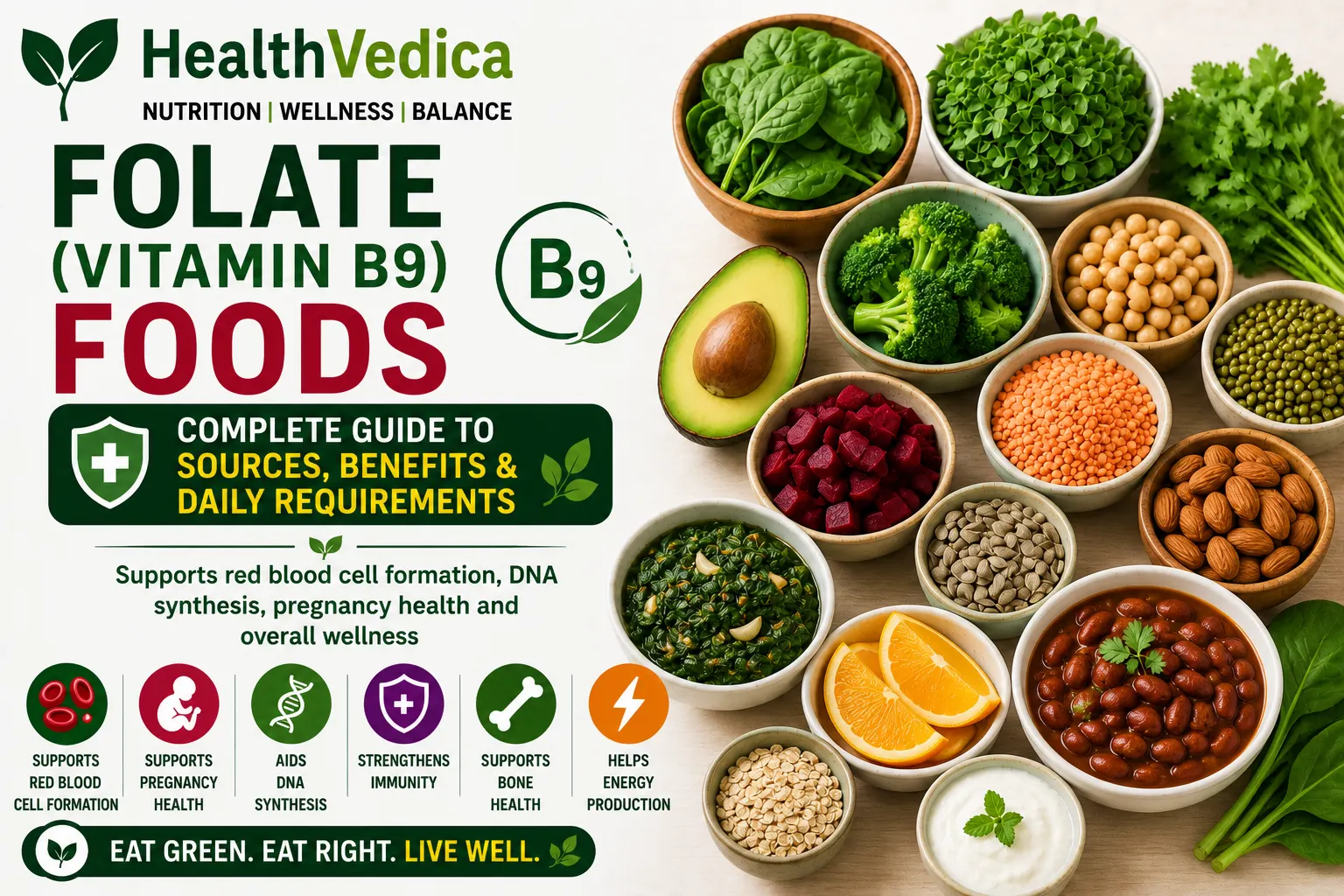
🥬 What Is Folate (Vitamin B9)?
Folate, also known as Vitamin B9, is a water-soluble vitamin essential for DNA synthesis, cell growth, red blood cell formation and proper nervous system function. It is especially important during periods of rapid growth such as pregnancy, infancy and adolescence.
Folate naturally occurs in foods, while folic acid is the synthetic form commonly found in supplements and fortified foods.
Since the body cannot produce folate on its own, regular dietary intake is necessary.
🔬 Why Folate Is Important
Vitamin B9 participates in several critical biological processes.
- Supports DNA production
- Helps form healthy red blood cells
- Supports fetal development during pregnancy
- Contributes to brain function
- Supports healthy cell division
- Helps prevent certain types of anemia
Adequate folate intake is important throughout life but becomes particularly crucial during pregnancy.
📊 Best Folate-Rich Foods
| Food | Category | Folate Content |
|---|---|---|
| Spinach | Leafy Green | Very High |
| Methi Leaves | Leafy Green | High |
| Amaranth Leaves | Leafy Green | High |
| Moong Dal | Legume | High |
| Masoor Dal | Legume | High |
| Chickpeas | Legume | High |
| Black Chana | Legume | High |
| Avocado | Fruit | Good |
| Orange | Fruit | Good |
| Beetroot | Vegetable | Good |
🥬 Leafy Greens – The Best Natural Sources
Dark green leafy vegetables are among the richest natural sources of folate.
Excellent choices include:
- Spinach (Palak)
- Methi leaves
- Amaranth leaves
- Drumstick leaves
- Mustard greens
- Coriander leaves
Including leafy vegetables regularly can significantly improve folate intake.
🫘 Lentils and Legumes
Legumes are nutritional powerhouses that provide folate, protein, fiber and minerals.
Top options include:
- Moong dal
- Masoor dal
- Toor dal
- Chickpeas
- Black chana
- Rajma
Regular dal consumption makes it easier for Indians to meet daily folate requirements.
🍊 Fruits Rich in Folate
Several fruits contribute useful amounts of folate.
- Orange
- Mosambi
- Papaya
- Banana
- Avocado
- Pomegranate
- Mango
Combining fruits with vegetables helps maximize nutrient diversity.
🥦 Vegetables That Contain Folate
Many vegetables provide moderate amounts of Vitamin B9.
- Broccoli
- Beetroot
- Cauliflower
- Cabbage
- Okra
- Asparagus
- Green peas
A varied vegetable intake helps ensure adequate vitamin and mineral consumption.
🥜 Nuts and Seeds
While not as rich as leafy greens and legumes, certain nuts and seeds contribute folate.
- Sunflower seeds
- Peanuts
- Almonds
- Sesame seeds
These foods also provide healthy fats, protein and minerals.
🤰 Folate During Pregnancy
Folate is especially important before conception and during early pregnancy because it supports proper fetal neural tube development.
Adequate folate intake helps reduce the risk of certain birth defects affecting the brain and spinal cord.
Pregnant women are often advised to take folic acid supplements in addition to consuming folate-rich foods.
⚠️ Symptoms of Folate Deficiency
Low folate intake over time may contribute to deficiency.
Possible symptoms include:
- Fatigue
- Weakness
- Pale skin
- Poor concentration
- Irritability
- Megaloblastic anemia
Many of these symptoms overlap with other nutritional deficiencies, so proper medical evaluation is important.
📋 Daily Folate Requirements
| Group | Recommended Intake (Approx.) |
|---|---|
| Adults | 400 mcg/day |
| Pregnant Women | 600 mcg/day |
| Breastfeeding Women | 500 mcg/day |
Individual needs may vary depending on age, health status and medical advice.
🍽️ Sample Folate-Rich Indian Meal Plan
Breakfast: Vegetable poha with peanuts and orange
Mid-Morning: Papaya and almonds
Lunch: Moong dal, spinach curry, brown rice and salad
Evening: Roasted chickpeas
Dinner: Rajma curry with vegetables and millet roti
Before Bed: Fruit bowl
💪 Benefits of Adequate Folate Intake
- Supports healthy red blood cells
- Promotes healthy pregnancy
- Supports DNA synthesis
- Aids cell growth and repair
- Supports brain function
- May help reduce certain anemia risks
Folate works together with Vitamin B12 and other B vitamins to support overall health.
⚠️ Folate vs Folic Acid
| Feature | Folate | Folic Acid |
|---|---|---|
| Source | Natural foods | Supplements & Fortified Foods |
| Form | Natural Vitamin B9 | Synthetic Form |
| Uses | Daily nutrition | Supplementation |
Both help meet Vitamin B9 requirements, but folate naturally occurs in foods while folic acid is manufactured.
💡 Final Thoughts
Folate is a vital nutrient required for healthy cell growth, DNA production, red blood cell formation and pregnancy health. Fortunately, many Indian foods such as spinach, methi leaves, lentils, chickpeas, oranges, papaya and beetroot provide significant amounts of Vitamin B9.
By regularly including leafy greens, legumes, fruits and vegetables in your diet, you can naturally support healthy folate levels and overall wellness.