🌿 Introduction
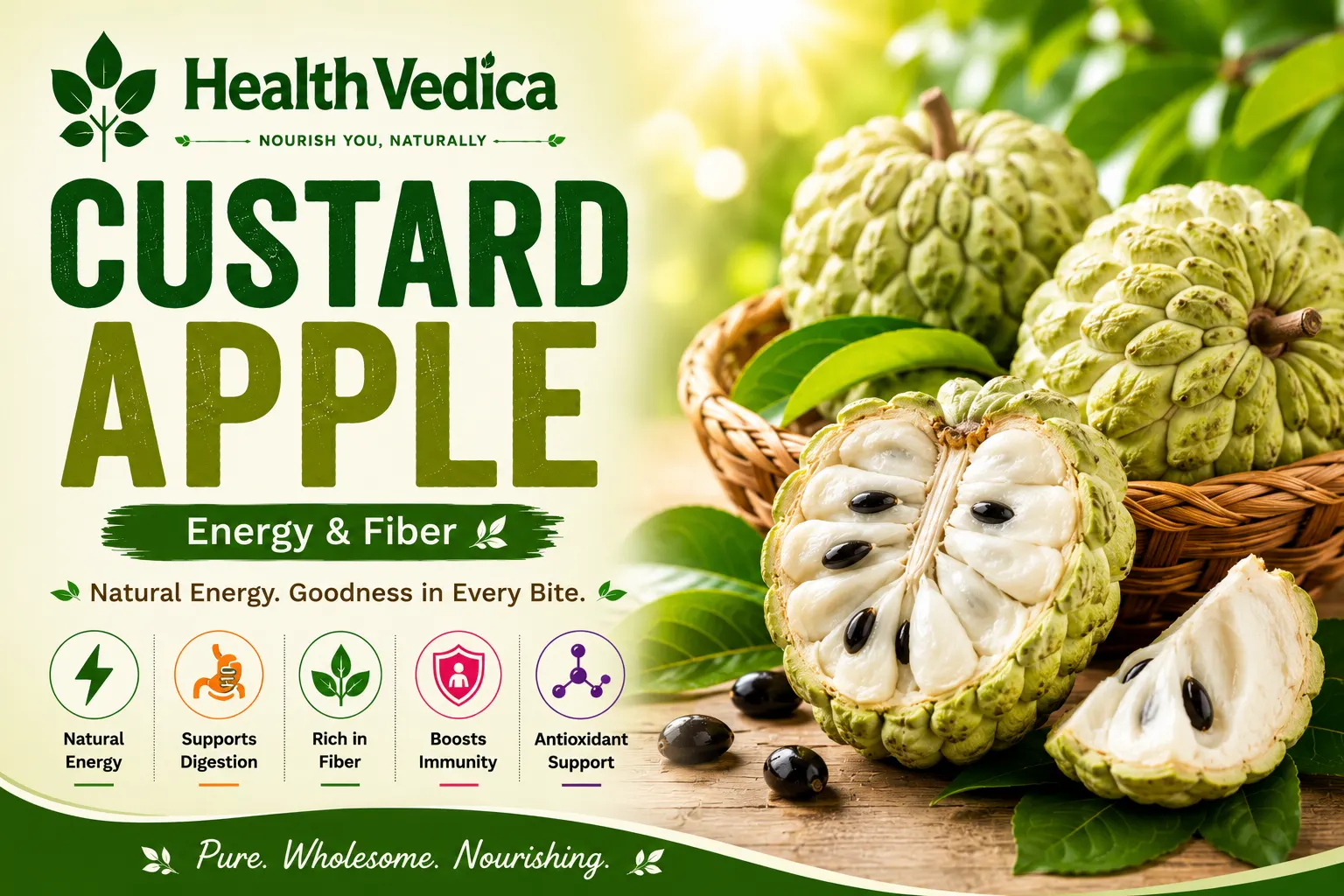
Custard Apple (Annona squamosa), popularly known as Sitaphal in India, is a delicious tropical fruit recognized for its creamy texture, naturally sweet flavor and exceptional nutrient density. Revered in traditional Indian diets, Sitaphal is packed with dietary fiber, vitamin C, vitamin B6, potassium and magnesium. It is particularly valued for supporting brain health, immunity, digestion, heart health and healthy weight gain in growing children and individuals recovering from illness.
📊 Nutritional Value Per 100g of Custard Apple
| Nutrient | Amount | % Daily Value (DV) |
|---|---|---|
| Calories | 94 kcal | 5% |
| Protein | 2.1 g | 4% |
| Total Fat | 0.4 g | <1% |
| Carbohydrates | 23.6 g | 9% |
| Natural Sugars | 18.5 g | — |
| Dietary Fiber | 4.4 g | 16% |
| Vitamin C | 19.2 mg | 21% |
| Vitamin B6 | 0.22 mg | 13% |
| Potassium | 247 mg | 5% |
| Magnesium | 21 mg | 5% |
| Copper | 0.08 mg | 9% |
| Water | 73 g | — |
📉 Glycemic Index
Custard Apple has a moderate glycemic index of approximately 54. Although naturally sweet, its dietary fiber helps slow sugar absorption. Individuals with diabetes should enjoy it in moderate portions.
🧬 Powerful Plant Compounds
Sitaphal contains beneficial phytochemicals including annonaceous acetogenins, flavonoids, quercetin, kaempferol, catechins, carotenoids, polyphenols and vitamin C. These compounds contribute to antioxidant protection and cellular health.
💊 Vitamins & Minerals Explained
Custard Apple provides vitamin C for immune support and collagen formation, vitamin B6 for normal brain function, potassium for healthy blood pressure, magnesium for muscles and nerves, and copper for healthy red blood cell production.
🕉️ Ayurvedic Properties & Dosha Effect
According to Ayurveda, ripe Sitaphal possesses a Madhura (sweet) taste and cooling potency (Sheeta Veerya). It nourishes body tissues, supports strength, promotes healthy weight gain and helps balance Vata and Pitta Doshas. Excessive intake may aggravate Kapha Dosha because of its sweetness.
💚 Evidence-Based Health Benefits
Supports Brain Health: Vitamin B6 contributes to normal neurotransmitter production and healthy brain function, while antioxidants help protect nerve cells from oxidative stress.
Boosts Immunity: Vitamin C supports immune cell activity, collagen formation and antioxidant defense.
Promotes Digestive Health: Dietary fiber supports regular bowel movements, nourishes beneficial gut bacteria and improves digestive comfort.
Supports Heart Health: Potassium helps regulate blood pressure, while antioxidants help protect blood vessels from oxidative damage.
Healthy Weight Gain: The fruit provides natural carbohydrates, calories and nutrients that make it suitable for children, athletes and individuals recovering from illness.
Supports Healthy Skin: Vitamin C and polyphenols contribute to collagen synthesis and help maintain youthful skin.
Antioxidant Protection: Polyphenols and carotenoids help neutralize harmful free radicals and support healthy ageing.
👨👩👧 Who Should Eat Custard Apple?
Custard Apple is an excellent choice for growing children, students, athletes, pregnant women, older adults, individuals recovering from illness and anyone seeking a naturally nutrient-dense fruit.
🚫 Who Should Limit Custard Apple?
People with diabetes should consume Sitaphal in moderate portions because of its natural sugar content. Individuals following calorie-restricted diets should also account for its relatively higher energy content compared to many other fruits.
🌿 Healthy Recipes & Home Remedies
Sitaphal Smoothie: Blend ripe Custard Apple pulp with yogurt and almonds for a creamy protein-rich breakfast.
Custard Apple Milkshake: Prepare with chilled milk and cardamom without adding refined sugar.
Fruit Bowl: Combine Sitaphal with kiwi, pomegranate and papaya for a colorful antioxidant-rich dessert.
Frozen Sitaphal Dessert: Freeze fresh pulp to prepare a naturally sweet frozen treat.
🥗 Best Ways to Eat Custard Apple
Enjoy fully ripe Custard Apple fresh by scooping out the pulp. It can also be used in smoothies, yogurt bowls, healthy desserts and homemade ice creams without excessive added sugar.
🍽️ Best Food Combinations
Sitaphal pairs well with yogurt, milk, almonds, pistachios, oats, chia seeds, cinnamon and cardamom.
🧊 Storage Tips
Allow the fruit to ripen naturally at room temperature. Once ripe, refrigerate and consume within 2–3 days for the best taste and nutritional value.
📅 Daily Recommended Intake
One medium Custard Apple (150–200 grams of edible pulp) is generally suitable for most healthy adults during the season.
⚠️ Precautions
Do not consume the seeds, as they contain naturally occurring compounds that are toxic if crushed and ingested. Avoid getting crushed seed powder into the eyes, as it can cause severe irritation. Individuals with diabetes should monitor portion size because of the fruit's natural sugars.
🔬 Scientific Highlights
Scientific studies have identified numerous antioxidant compounds in Custard Apple that help reduce oxidative stress. Research continues to investigate the biological properties of annonaceous acetogenins and other phytochemicals. Most evidence for medicinal applications comes from laboratory studies, while eating the ripe fruit remains a nutritious part of a balanced diet.
📚 Traditional Ayurvedic References
- Bhavaprakasha Nighantu
- Modern Ayurvedic Dietetics
- Ayurvedic Nutrition Principles
❌ Common Myths & Facts
❌ Myth: Custard Apple is unhealthy because it is sweet.
✅ Fact: Although naturally sweet, it also provides dietary fiber, vitamin C, vitamin B6, potassium and antioxidants that make it a nutritious seasonal fruit when consumed in moderation.
❌ Myth: The seeds are edible.
✅ Fact: Custard Apple seeds should never be eaten. They contain naturally occurring toxic compounds and should always be discarded.
❌ Myth: Custard Apple causes colds.
✅ Fact: There is no strong scientific evidence that ripe Custard Apple causes colds in healthy individuals. It can be enjoyed as part of a balanced diet.
🌍 Fun Facts
- The name Sitaphal translates to 'Fruit of Sita' in Sanskrit, giving it cultural significance in India.
- Custard Apple belongs to the Annonaceae family, which includes cherimoya and soursop.
- India is among the leading producers of Custard Apple.
- The creamy pulp is naturally sweet and often used to prepare premium ice creams and desserts.