🌿 Introduction
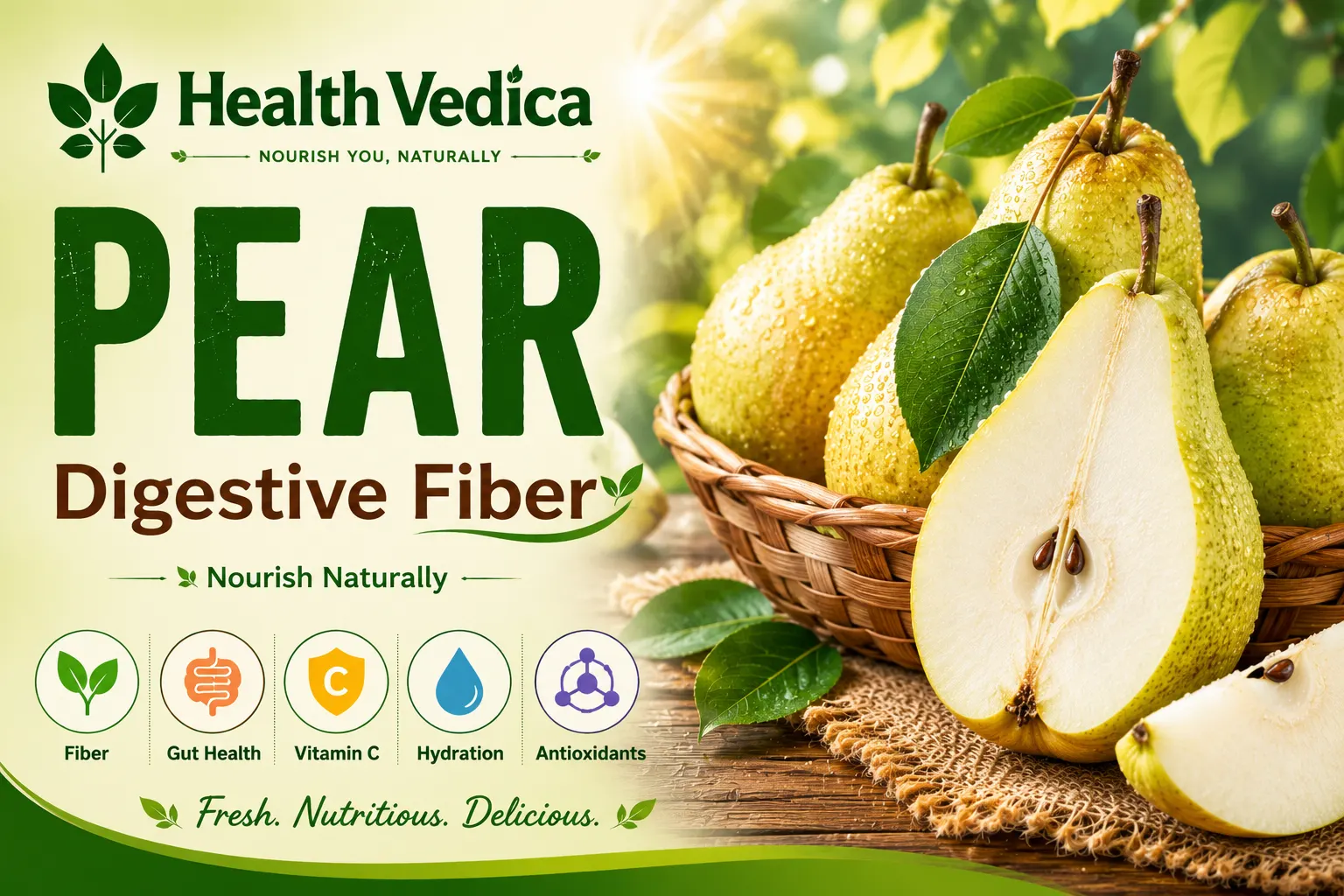
Pear (Pyrus communis), commonly known as Nashpati in India, is one of the oldest cultivated fruits in the world. With its naturally sweet taste, juicy texture and impressive fibre content, pears are considered one of the healthiest everyday fruits. They are particularly valued for supporting digestive health, heart wellness, hydration and healthy weight management. Pears are naturally low in calories yet rich in dietary fibre, vitamin C, potassium and beneficial plant compounds that help protect the body from oxidative stress.
📊 Nutritional Value Per 100g of Pear
| Nutrient | Amount | % Daily Value (DV) |
|---|---|---|
| Calories | 57 kcal | 3% |
| Protein | 0.4 g | 1% |
| Total Fat | 0.1 g | <1% |
| Carbohydrates | 15.2 g | 6% |
| Natural Sugars | 9.8 g | — |
| Dietary Fiber | 3.1 g | 11% |
| Vitamin C | 4.3 mg | 5% |
| Vitamin K | 4.4 mcg | 4% |
| Potassium | 116 mg | 2% |
| Copper | 0.08 mg | 9% |
| Water | 84 g | — |
📉 Glycemic Index
Pears have a low glycemic index of approximately 38, making them a smart fruit choice for people aiming to maintain healthy blood sugar levels when eaten in moderation.
🧬 Powerful Plant Compounds
Pears contain pectin, chlorogenic acid, quercetin, catechins, anthocyanins (especially in red pears), flavonoids and numerous antioxidant polyphenols that contribute to their anti-inflammatory and heart-supporting properties.
💊 Vitamins & Minerals Explained
Pears provide vitamin C for immune support and collagen production, potassium for healthy blood pressure, copper for connective tissue formation and fibre for digestive wellness and cholesterol management.
🕉️ Ayurvedic Properties & Dosha Effect
According to Ayurveda, ripe pears have a Madhura (sweet) and mildly Kashaya (astringent) taste with a cooling nature. They help balance Pitta Dosha while gently nourishing Vata when fully ripe. Pears are traditionally recommended during hot weather because of their hydrating and cooling properties.
💚 Evidence-Based Health Benefits
Supports Digestive Health: Pears are among the richest fruits in pectin, a soluble fibre that nourishes beneficial gut bacteria, supports regular bowel movements and promotes overall digestive wellness.
Heart Health: Soluble fibre helps maintain healthy cholesterol levels, while potassium supports healthy blood pressure and cardiovascular function.
Supports Healthy Blood Sugar: Their low glycemic index and fibre slow glucose absorption, helping reduce rapid blood sugar spikes.
Weight Management: Low calories combined with high fibre increase satiety, helping control appetite naturally.
Powerful Antioxidants: Polyphenols help reduce oxidative stress and support healthy ageing.
Supports Immunity: Vitamin C contributes to normal immune function and collagen formation.
Hydration: With approximately 84% water content, pears help maintain hydration during warm weather.
👨👩👧 Who Should Eat Pears?
Pears are ideal for children, older adults, pregnant women, athletes, individuals seeking digestive support, those managing cholesterol and anyone looking for a nutritious, low-calorie snack.
🚫 Who Should Limit Pears?
Individuals with fructose malabsorption or IBS may experience bloating because pears contain sorbitol and FODMAP carbohydrates. Portion control may be beneficial in such cases.
🌿 Healthy Recipes & Home Remedies
Pear Smoothie: Blend pear with yogurt, oats and cinnamon for a fibre-rich breakfast.
Pear & Walnut Salad: Combine sliced pears, walnuts, spinach and olive oil for a heart-healthy meal.
Poached Pears: Simmer pears with cinnamon and cloves for a naturally sweet dessert.
Pear Chia Bowl: Mix diced pears with chia seeds and Greek yogurt for sustained energy.
🥗 Best Ways to Eat Pears
Eat pears with their skin whenever possible because much of the fibre and antioxidants are concentrated just beneath the peel. Enjoy them fresh, sliced into salads, blended into smoothies or baked as a healthy dessert.
🍽️ Best Food Combinations
Pears pair well with walnuts, almonds, oats, yogurt, cottage cheese, cinnamon, ginger and leafy greens for balanced nutrition.
🧊 Storage Tips
Store unripe pears at room temperature until they soften naturally. Once ripe, refrigerate them to maintain freshness for up to one week.
📅 Daily Recommended Intake
One medium pear (150–180 g) per day fits well into a balanced diet and provides a significant portion of the daily fibre requirement.
⚠️ Precautions
Wash pears thoroughly before eating, especially if consuming the peel. Individuals with IBS or sensitivity to FODMAP foods should start with smaller portions.
🔬 Scientific Highlights
Research suggests regular pear consumption is associated with improved digestive health, better dietary fibre intake, healthy cholesterol levels and reduced oxidative stress. Much of these benefits are attributed to pectin and naturally occurring polyphenols.
📚 Traditional Ayurvedic References
- Bhavaprakasha Nighantu
- Modern Ayurvedic Dietetics
- Ayurvedic Nutrition Principles
❌ Common Myths & Facts
❌ Myth: Pears contain too much sugar for diabetics.
✅ Fact: Pears have a low glycemic index and high fibre, making moderate portions suitable for many people with diabetes as part of an overall balanced diet.
❌ Myth: Pear skin should always be removed.
✅ Fact: The peel contains a significant amount of fibre and antioxidants, so eating it after proper washing offers additional nutritional benefits.
❌ Myth: Pears are only good for digestion.
✅ Fact: Besides digestive health, pears support heart health, hydration, weight management and antioxidant protection.
🌍 Fun Facts
- Pear trees can produce fruit for more than 100 years under suitable conditions.
- There are over 3,000 varieties of pears cultivated worldwide.
- Pears ripen best after being harvested rather than on the tree.
- Pears are among the least allergenic fruits and are often introduced early in infant diets after appropriate age and preparation.