🌰 Protein and Calcium vs Omega-3 and Brain Health
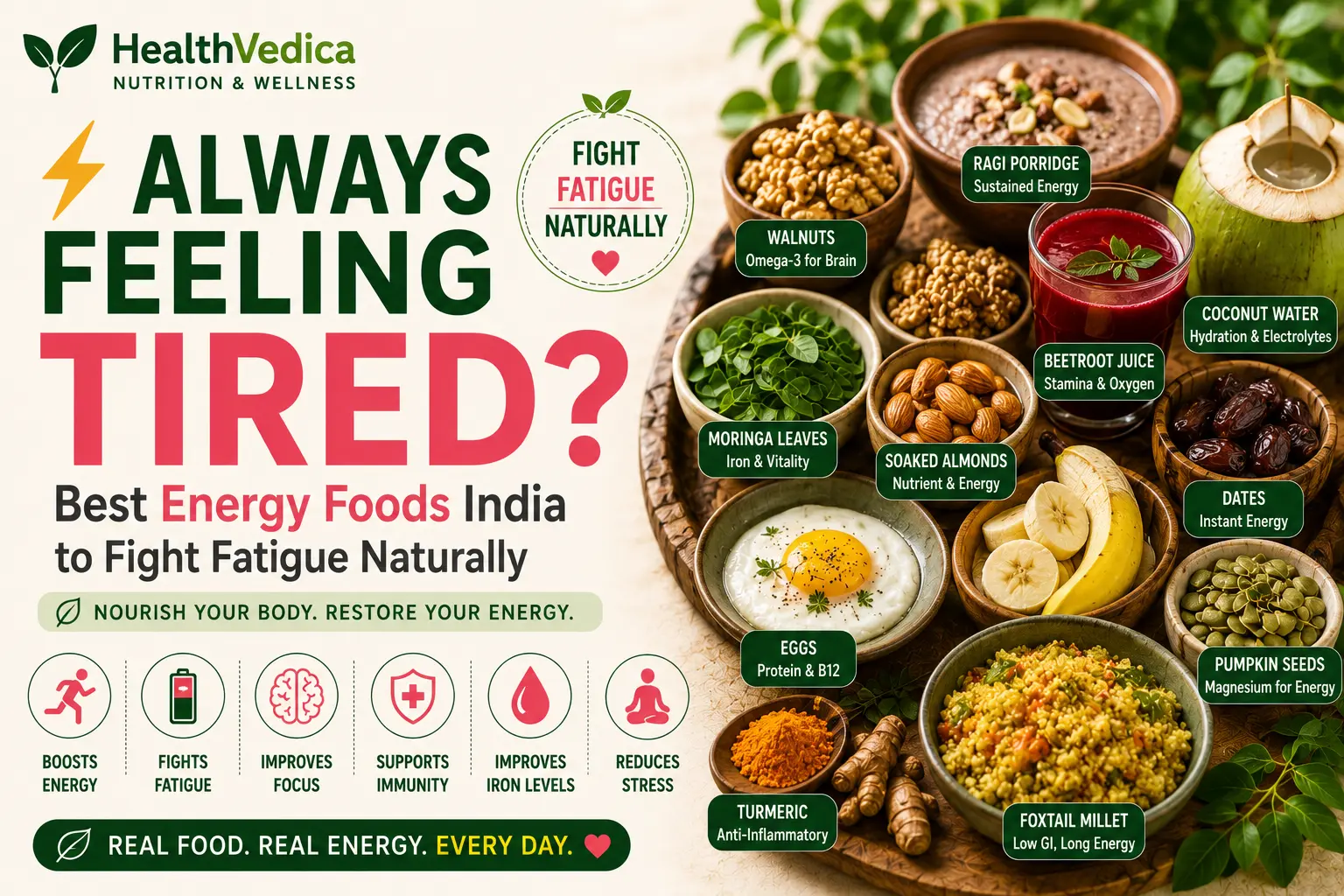
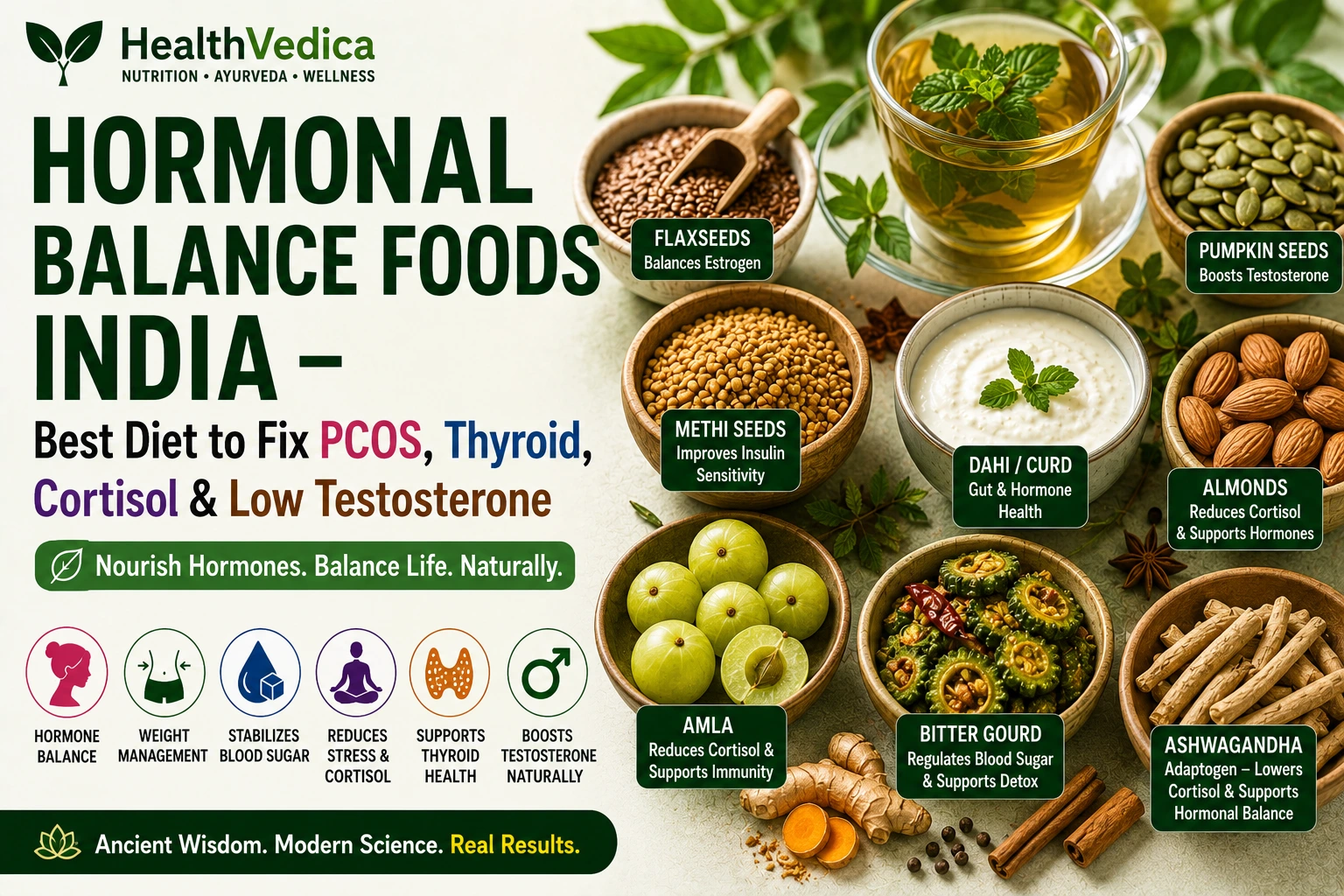
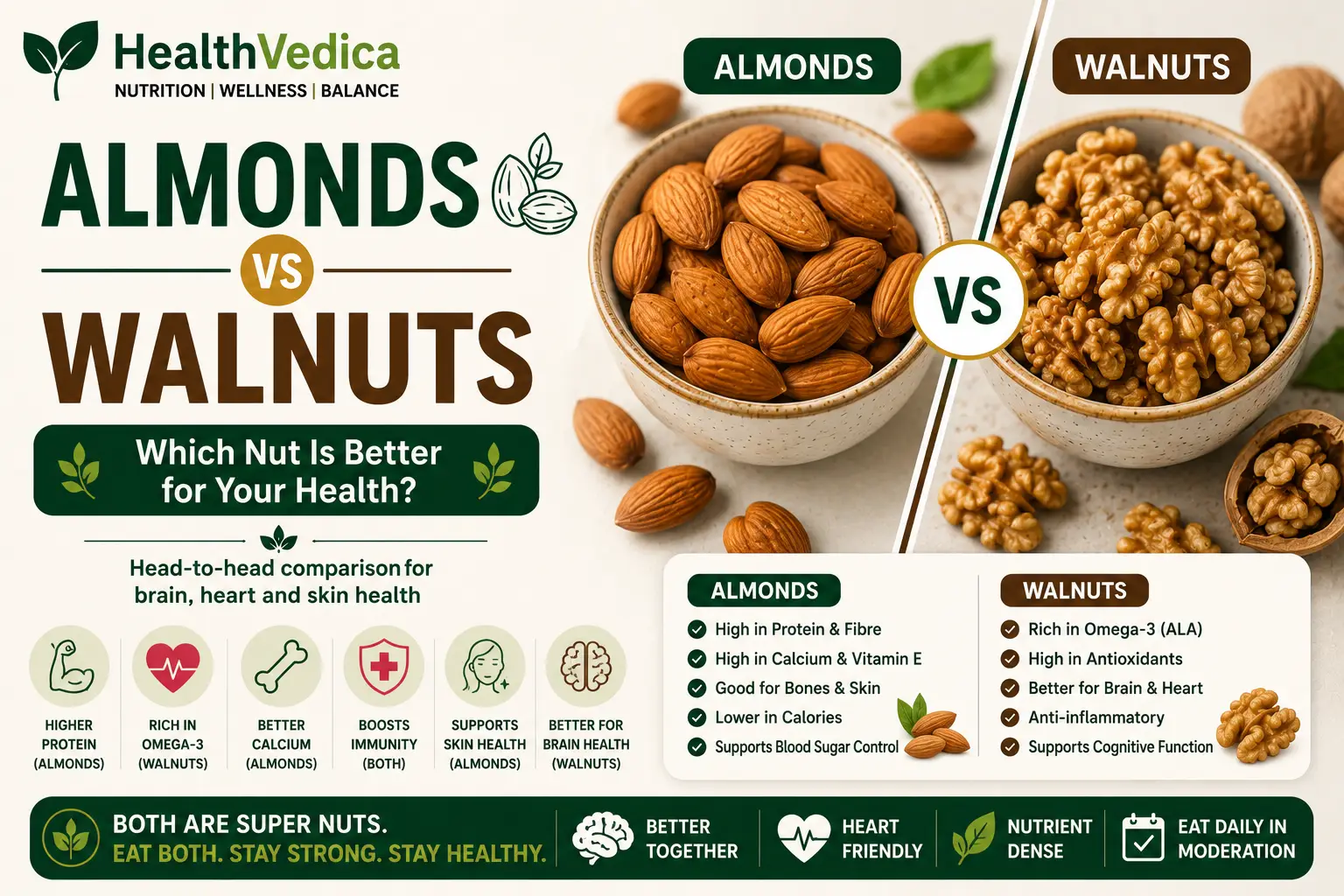
Almonds (badam) and walnuts (akhrot) are the two most commonly recommended daily nuts in Indian households, often eaten together as a soaked breakfast snack. While both are nutritionally excellent, they have genuinely different strengths — almonds lead on protein, calcium, and vitamin E, while walnuts stand out distinctly for their omega-3 fatty acid content, a feature almost no other nut matches.
📊 Almonds vs Walnuts: Nutritional Comparison (per 100g)
| Nutrient | Almonds | Walnuts | Advantage |
|---|---|---|---|
| Protein | 21g | 15g | Almonds |
| Omega-3 (ALA) | 0g (negligible) | 9g | Walnuts (significant) |
| Calcium | 270mg | 98mg | Almonds (3x higher) |
| Vitamin E | 25.6mg | 0.7mg | Almonds (significant) |
| Magnesium | 270mg | 158mg | Almonds |
| Polyphenols (antioxidants) | Moderate | High | Walnuts |
| Fibre | 12.5g | 6.7g | Almonds |
| Calories | 579 kcal | 654 kcal | Almonds (lower) |
✅ Where Almonds Win
Bone and muscle support: Almonds' high calcium and protein combination makes them particularly valuable for bone density and muscle maintenance, especially relevant for vegetarians seeking plant-based protein and calcium together.
Skin health: Almonds' exceptional vitamin E content (among the highest of any commonly eaten food) supports skin health by protecting cell membranes from oxidative damage — a benefit walnuts do not match.
Blood sugar management: Almonds have demonstrated favourable effects on post-meal blood sugar response in several studies, partly due to their fibre and protein combination slowing carbohydrate digestion in mixed meals.
✅ Where Walnuts Win
Omega-3 fatty acids: Walnuts are exceptional among tree nuts for ALA (alpha-linolenic acid), a plant-based omega-3 fat that supports heart and brain health. This is walnuts' single most distinguishing advantage — no other commonly eaten Indian nut comes close to matching this.
Brain health association: Walnuts' shape resembling a brain is a popular mnemonic, but there's genuine science behind the association — the combination of omega-3s and polyphenols in walnuts has been linked to cognitive benefits in several studies, more so than almonds.
Antioxidant density: Walnuts contain higher levels of certain polyphenol antioxidants compared to almonds, contributing to anti-inflammatory effects.
🍽️ Which Should You Choose?
The honest answer is both, eaten together, since they offer complementary rather than overlapping benefits — almonds provide protein, calcium, and vitamin E, while walnuts uniquely deliver omega-3s that almonds simply do not contain. A traditional Indian practice of soaking a small handful of both overnight and eating them together in the morning is well-supported nutritionally, not just by tradition. For those who must choose one due to cost or preference, walnuts are slightly favoured for heart and brain-focused goals, while almonds are favoured for bone, muscle, and skin-focused goals.