Nutrition

High Fiber Foods India 🌾: Complete List for Digestion and Heart Health

Last updated:
High Fiber Foods India β€” Nutrition, Health Benefits & Remedies
High Fiber Foods India: Complete List for Digestion | Health Vedica
⚠️ Medical Disclaimer: This content is for informational purposes only and does not constitute medical advice. Always consult a qualified healthcare professional for diagnosis and treatment.

🌾 The Nutrient Most Indians Quietly Fall Short On

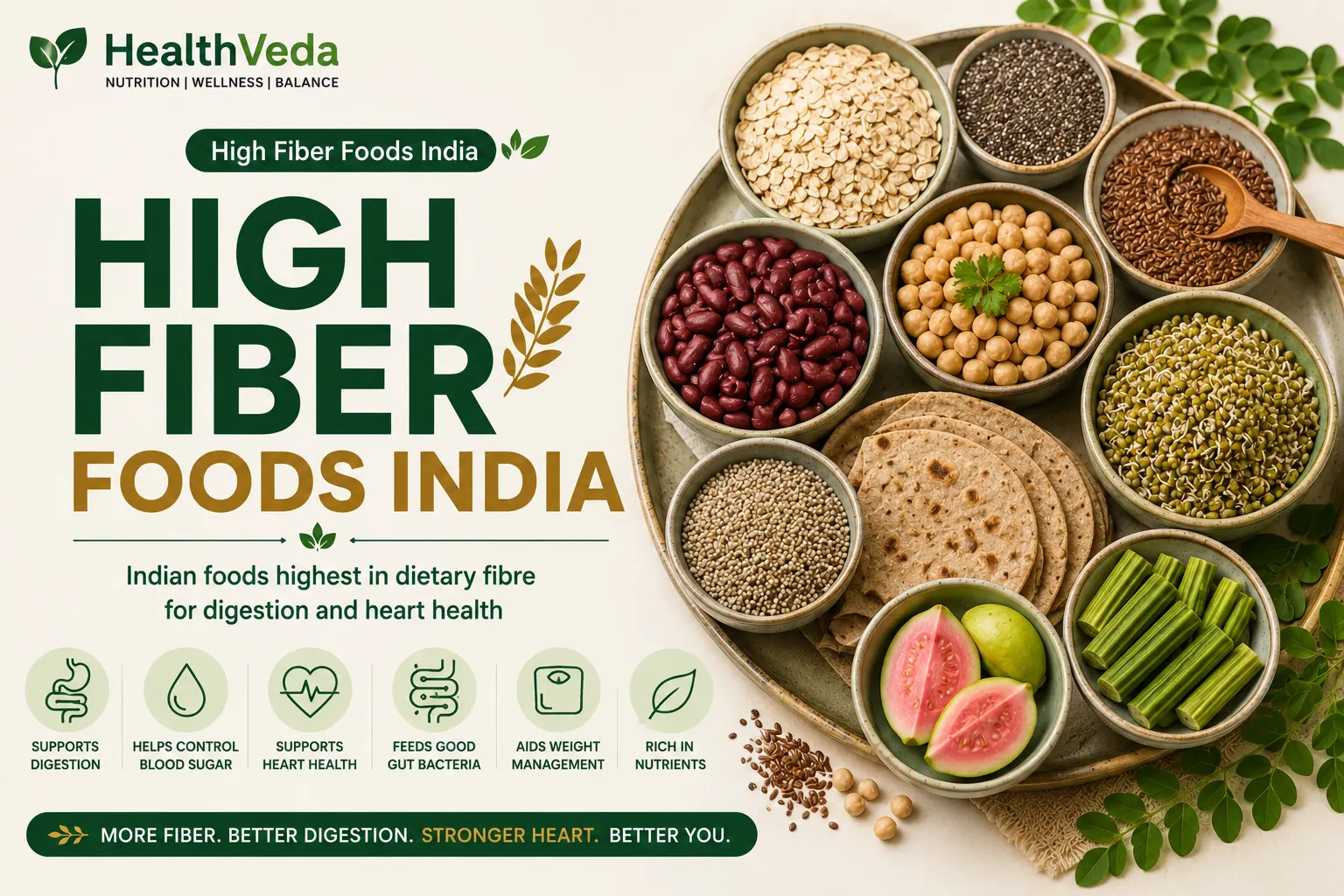
Dietary fibre is one of the most consistently under-consumed nutrients in modern Indian diets, despite India's traditional cuisine having strong fibre potential through legumes, vegetables, and whole grains. The shift toward polished rice, refined wheat (maida), and processed snacks over the past few decades has steadily eroded average fibre intake, contributing to rising rates of constipation, and indirectly, to metabolic conditions where fibre plays a protective role.

πŸ”¬ Why Fibre Matters Beyond Digestion

Digestive regularity: Insoluble fibre adds bulk to stool and speeds transit through the intestines, directly addressing constipation, one of the most common digestive complaints linked to low-fibre diets.

Blood sugar control: Soluble fibre forms a gel-like substance in the gut that slows carbohydrate digestion and glucose absorption, blunting post-meal blood sugar spikes β€” directly relevant to India's high rates of insulin resistance and diabetes.

Cholesterol management: Certain soluble fibres (like beta-glucan in oats) bind to bile acids in the gut, reducing cholesterol reabsorption and supporting healthier LDL cholesterol levels over time.

Gut microbiome fuel: Fibre serves as the primary food source for beneficial gut bacteria, which ferment it into short-chain fatty acids that support gut lining health and have wider effects on immune and metabolic function.

Satiety and weight management: High-fibre foods take longer to chew and digest, promoting fullness with fewer calories, making fibre intake a practical, sustainable lever for weight management without restrictive calorie counting.

πŸ“Š Top High Fiber Indian Foods (per 100g)

FoodFibre (g/100g)TypeEasy Way to Add
Chia seeds34Soluble + insolubleSoaked pudding, smoothie
Flaxseeds (alsi), ground27Soluble + insolubleStirred into atta, curd
Rajma (kidney beans)15.2Mostly solubleCurry, salad
Chickpeas (chana)12.2Mostly solubleCurry, chaat, sprouts
Bajra (pearl millet)11.5MixedRoti, khichdi
Oats10.1Soluble (beta-glucan)Breakfast, savoury upma
Guava5.4MixedDaily fruit, with seeds
Drumstick (moringa)3.2MixedSambar, sabzi
Whole wheat (atta)11.2InsolubleRoti, daily staple

*Daily target: approximately 25-30g for adults.

⚠️ Increasing Fibre the Right Way

Increasing fibre intake too quickly can cause bloating, gas, and discomfort, since gut bacteria need time to adapt to higher fibre loads. A gradual increase over several weeks, paired with adequate water intake (fibre needs water to function effectively, particularly insoluble fibre, which can worsen constipation if water intake is inadequate), produces a much smoother transition than dramatically overhauling fibre intake overnight.

🍽️ Practical Daily Fibre Plan

Breakfast: Oats or a millet-based preparation, with a tablespoon of chia or ground flaxseed mixed in, provides a substantial fibre start to the day.

Lunch and dinner: Building meals around dal (any variety) and at least one generous vegetable portion ensures consistent fibre intake at every main meal, which is more effective than trying to get all fibre from a single food.

Snacks: Whole fruits with edible skin or seeds (guava, with seeds, rather than peeled and deseeded) and roasted chana retain more fibre than processed snack alternatives.

Hydration: Increasing water intake alongside fibre intake is essential β€” fibre without adequate water can worsen rather than improve constipation.

❓ Frequently Asked Questions

Common questions about High Fiber Foods India

Most guidelines recommend approximately 25-30g of dietary fibre daily for adults, though actual average intake in urban Indian diets is often considerably lower, frequently in the range of 10-15g daily due to reliance on refined grains and lower vegetable and legume intake. Closing this gap through legumes, whole grains, vegetables, and fruits can meaningfully improve digestive and metabolic health over time.
Increasing fibre intake too rapidly, rather than too much fibre overall, is the more common issue, causing bloating, gas, and abdominal discomfort as gut bacteria adjust. Very high fibre intake without adequate water can also worsen constipation rather than relieve it, since fibre needs water to function properly in the digestive tract. A gradual increase paired with sufficient water intake generally avoids these issues even at higher fibre intake levels.
Soluble fibre dissolves in water to form a gel-like substance, found in foods like oats, legumes, and chia seeds, and is particularly effective at slowing glucose absorption and binding cholesterol. Insoluble fibre does not dissolve and instead adds bulk to stool, found in foods like whole wheat bran and vegetable skins, and is more directly associated with relieving constipation. Most fibre-rich foods contain a mix of both types, which is why eating a variety of fibre sources is more effective than relying on just one type.
Among commonly available foods, chia seeds and ground flaxseeds have exceptionally high fibre content per 100g (34g and 27g respectively), though they're typically eaten in small quantities (a tablespoon or two). For foods eaten in larger typical portions, legumes like rajma and chickpeas, along with millets like bajra, contribute substantially more total fibre across a typical day simply due to the larger amounts consumed as a meal staple.
Yes, high fibre foods support weight management by promoting satiety with fewer calories, since fibre-rich foods generally require more chewing and digest more slowly, helping control overall calorie intake without deliberate restriction. This makes increasing fibre intake β€” through legumes, vegetables, and whole grains rather than refined alternatives β€” one of the more sustainable, less restrictive dietary strategies for weight management.
Related Blogs
Best Foods for Strong Teeth & Gum Health Health Conditions
Best Foods for Strong Teeth & Gum Health
🦷 India's Oral Health CrisisOral diseases affect nearly 95% of Indian adults, according to the Indi...
Read More
Cheat Day Guilt Free Snacks India Recipes
Cheat Day Guilt Free Snacks India
🍿 What Is a Guilt-Free Cheat Snack?A cheat snack does not have to mean overeating junk food. The go...
Read More
Top Brain Foods for Memory and Focus Nutrition
Top Brain Foods for Memory and Focus
🧠 IntroductionIn 2025, brain health and cognitive performance have overtaken weight loss as the num...
Read More
Best Foods for Joint Pain and Arthritis Relief Health Conditions
Best Foods for Joint Pain and Arthritis Relief
🦴 Arthritis in India: A Growing CrisisArthritis affects over 180 million Indians β€” a prevalence hig...
Read More
Copper Rich Foods India Vitamins & Minerals
Copper Rich Foods India
🧬 What Is Copper?Copper is an essential trace mineral required for many important functions in the...
Read More
High Fiber Foods India Nutrition
High Fiber Foods India
🌾 The Nutrient Most Indians Quietly Fall Short OnDietary fibre is one of the most consistently unde...
Read More
Best Gluten-Free Indian Foods Food Comparisions
Best Gluten-Free Indian Foods
🌾 Gluten in the Indian Diet: A Growing ConcernCoeliac disease and non-coeliac gluten sensitivity ar...
Read More
Teen Nutrition India Pregnancy & Family
Teen Nutrition India
πŸ§‘β€πŸŽ“ Why Teen Nutrition MattersAdolescence is one of the fastest growth periods in life. During the...
Read More
Foods That Should Not Be Eaten Together Fitness & Lifestyle
Foods That Should Not Be Eaten Together
🍽️ Food Combining: Ancient Wisdom or Modern Myth?Almost every Indian household has food rules passed...
Read More
HealthVedica Editorial Team

HealthVedica Editorial Team

Written by Raviteja

Our content is AI-assisted and editorially reviewed to ensure accuracy against Ayurvedic guidelines and Indian health research. Learn more β†’