🛡️ Why Zinc Deserves More Attention
Zinc is a trace mineral required for immune cell function, wound healing, protein synthesis, DNA synthesis, and taste and smell perception. It is the second most abundant trace mineral in the human body after iron, yet zinc deficiency remains common in India — particularly among vegetarians, since zinc from plant sources is less bioavailable than from animal sources due to phytates that bind zinc and inhibit absorption.
Zinc deficiency contributes to a weakened immune response, slower wound healing, hair thinning, reduced taste sensitivity, and in children, impaired growth. Given that a large proportion of India's population follows a predominantly plant-based diet, understanding which foods deliver meaningful zinc — and how to improve absorption — is particularly relevant.
🔬 What Zinc Does Inside the Body
Immune defence: Zinc is essential for the development and function of neutrophils and natural killer cells, frontline immune cells that respond to infections. Zinc deficiency is strongly linked to increased susceptibility to respiratory infections.
Wound healing and skin health: Zinc supports collagen synthesis and cell division required for tissue repair. Chronic low zinc is associated with slow-healing wounds and certain skin conditions including acne flare-ups.
Hormone and reproductive health: Zinc is required for testosterone synthesis and plays a role in fertility for both men and women.
Taste and appetite: Zinc is a structural component of gustin, a protein involved in taste bud function. Deficiency can blunt taste perception and reduce appetite, which can compound nutritional issues, particularly in elderly individuals.
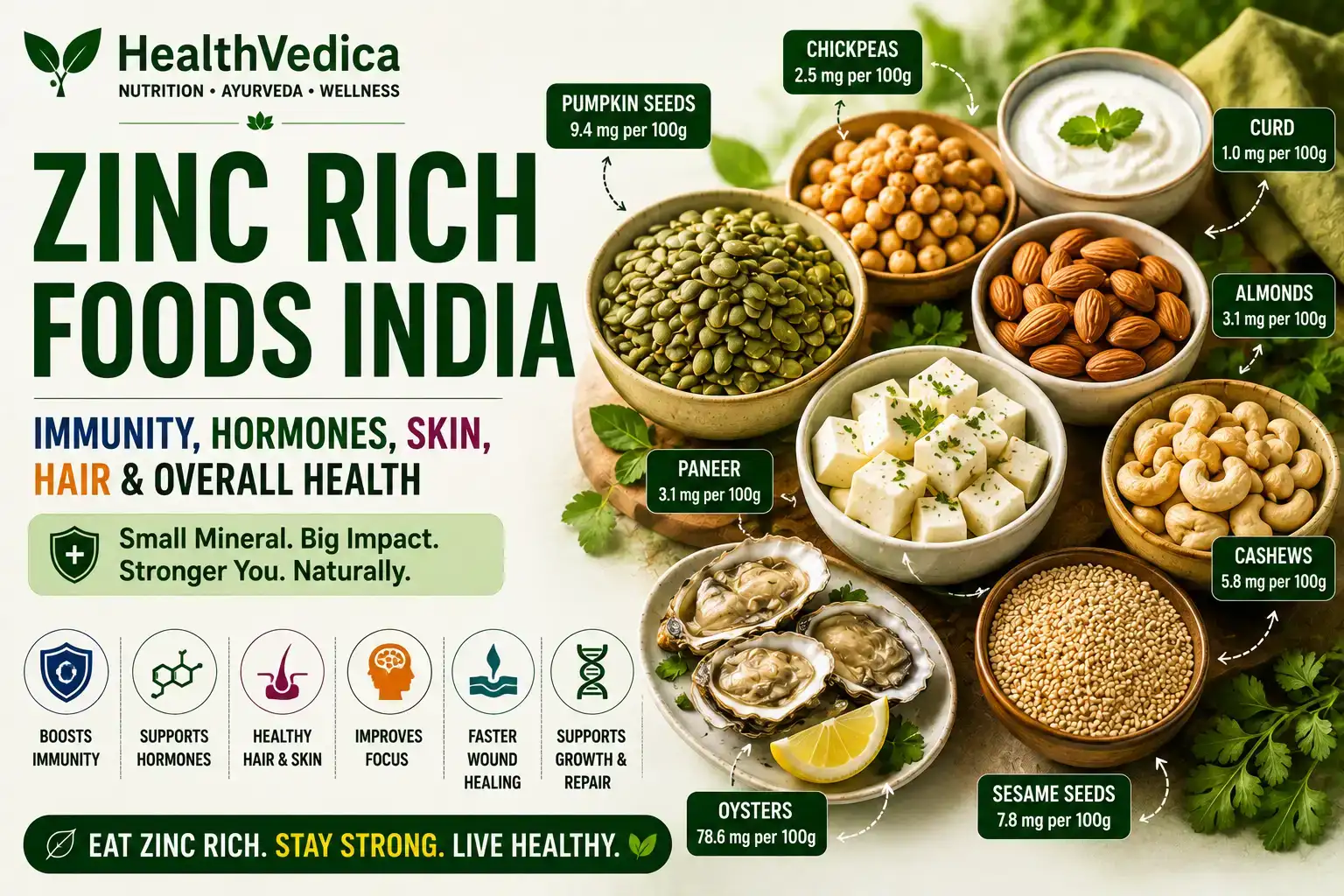
📊 Top Zinc Rich Indian Foods (per 100g)
| Food | Zinc (mg/100g) | % Daily Value* | Type |
|---|---|---|---|
| Pumpkin seeds (magaz) | 7.6 | 69% | Vegetarian |
| Sesame seeds (til) | 7.8 | 71% | Vegetarian |
| Chickpeas (chana) | 2.5 | 23% | Vegetarian |
| Cashews (kaju) | 5.6 | 51% | Vegetarian |
| Paneer | 1.0 | 9% | Vegetarian |
| Mutton | 4.0 | 36% | Non-vegetarian |
| Chicken (dark meat) | 2.4 | 22% | Non-vegetarian |
| Egg (whole) | 1.3 | 12% | Non-vegetarian |
| Prawns / shrimp | 1.6 | 15% | Non-vegetarian |
| Rajma (kidney beans) | 2.8 | 25% | Vegetarian |
*Based on 11mg/day reference for adult men; women require approximately 8mg/day.
🚫 Why Vegetarians Need to Be More Strategic
Plant foods like legumes and grains contain phytic acid, which binds zinc and reduces its absorption — meaning the zinc content listed on paper does not fully reflect what the body actually absorbs. This makes traditional Indian food preparation techniques particularly valuable: soaking dals and legumes overnight, fermenting batters (idli, dosa), and sprouting grains all reduce phytic acid content and improve zinc bioavailability. Vegetarians following these traditional preparation methods absorb meaningfully more zinc than those eating the same foods unsoaked and unfermented.
⚠️ Signs of Zinc Deficiency
Watch for frequent colds or infections, slow-healing cuts or wounds, hair thinning or hair fall beyond normal shedding, white spots on nails, reduced sense of taste or smell, and in some cases, acne that does not respond to typical skincare. These signs are nonspecific individually but worth investigating collectively, particularly in strict vegetarians or vegans without adequate seed and legume intake.
🍽️ Practical Zinc Plan
Vegetarians: Combine soaked chana or rajma with a tablespoon of pumpkin or sesame seeds daily. Sprouted moong salads improve absorption further. Fermented foods like idli and dosa batter offer a modest zinc absorption advantage over unfermented grain preparations.
Non-vegetarians: Two to three weekly servings of mutton, chicken, or prawns easily meet zinc requirements alongside a normal diet, as animal zinc sources lack the phytate-binding issue seen in plant sources.