Vitamins & Minerals

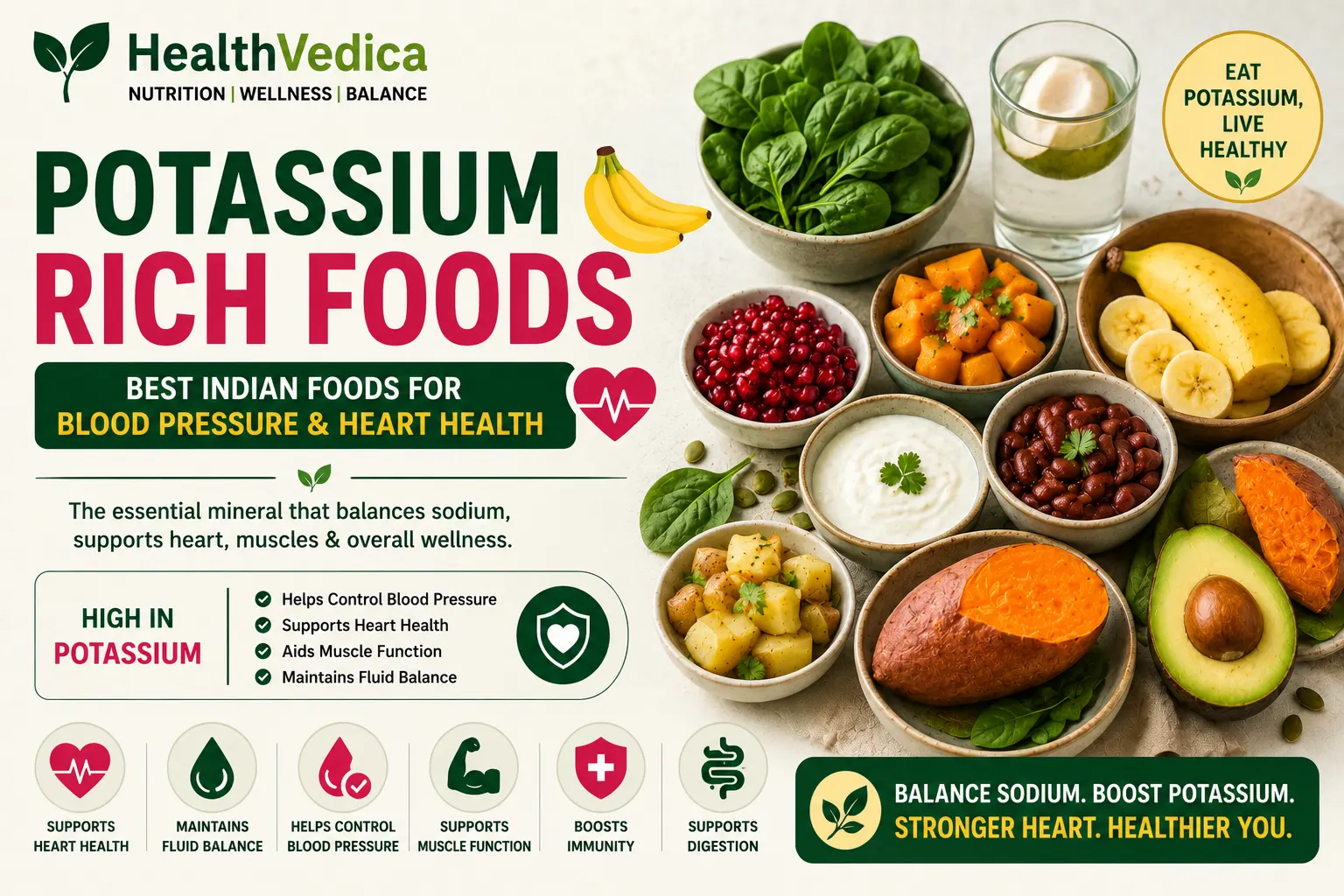
Potassium Rich Foods ๐ŸŒ: Best Indian Foods for Blood Pressure and Heart Health

Last updated:
Potassium Rich Foods India โ€” Nutrition, Health Benefits & Remedies
Potassium Rich Foods India: Top Foods for Blood Pressure | Health Vedica
โš ๏ธ Medical Disclaimer: This content is for informational purposes only and does not constitute medical advice. Always consult a qualified healthcare professional for diagnosis and treatment.

๐ŸŒ The Mineral That Balances Sodium

Potassium works in a finely tuned partnership with sodium to regulate fluid balance, nerve transmission, and muscle contraction, including the contraction of the heart muscle itself. Most discussions about blood pressure focus exclusively on reducing sodium, but increasing potassium intake is equally โ€” and for many people, more practically โ€” effective, since potassium helps the kidneys excrete excess sodium and relaxes blood vessel walls.

India's dietary pattern often combines high sodium intake (pickles, papad, packaged snacks, generous cooking salt) with comparatively low potassium intake, particularly when fresh fruit and vegetable consumption is limited. This imbalance is a meaningfully underappreciated contributor to India's high rates of hypertension.

๐Ÿ”ฌ How Potassium Supports the Heart and Blood Pressure

Sodium-potassium balance: Cells maintain electrical and fluid balance through the sodium-potassium pump. Adequate potassium intake helps shift this balance favourably, supporting lower blood pressure even without dramatically cutting sodium.

Vascular relaxation: Potassium has a direct relaxing effect on the smooth muscle lining blood vessels, reducing peripheral resistance and supporting healthier blood pressure readings.

Cardiac rhythm regulation: Potassium is essential for normal electrical signalling in heart muscle cells. Both very low and very high potassium levels can disrupt heart rhythm, which is why potassium balance matters for cardiac health, not just blood pressure.

Kidney stone prevention: Potassium-rich diets, particularly from fruits and vegetables, are associated with reduced kidney stone risk by altering urine composition favourably.

๐Ÿ“Š Top Potassium Rich Indian Foods (per 100g)

FoodPotassium (mg/100g)% Daily Value*Easy Way to Add
Coconut water250 (per 100ml)5%Daily drink, post-workout
Banana3588%Daily fruit, smoothie
Potato (with skin)4259%Boiled, not fried
Sweet potato (shakarkandi)3377%Roasted, chaat
Spinach (palak), cooked46610%Palak dal, sabzi
Rajma (kidney beans), cooked4039%Curry, salad
Pomegranate (anar)2365%Snack, juice
Curd / dahi1413%Daily side dish
Pumpkin (kaddu)3407%Sabzi, soup
Avocado48510%Chutney, salad

*Based on 4700mg/day adequate intake reference for adults.

โš ๏ธ Who Needs to Be Cautious

While most healthy individuals benefit from increasing potassium through food, people with chronic kidney disease must be careful, as impaired kidneys cannot efficiently excrete excess potassium, leading to dangerous blood levels. Certain blood pressure medications (potassium-sparing diuretics, ACE inhibitors) also affect potassium handling. Anyone with kidney disease or on these medications should consult a doctor before significantly increasing potassium-rich foods or considering supplements.

๐Ÿฝ๏ธ Practical Potassium Plan for Indians

Morning: A banana or a glass of fresh coconut water provides an easy potassium boost, particularly valuable in hot climates where sweating increases potassium loss.

Lunch: Rajma or any legume curry alongside a leafy green sabzi like palak combines two strong potassium sources in one meal.

Snack: Roasted sweet potato chaat or a small bowl of pomegranate seeds offers a flavourful potassium-rich alternative to fried snacks.

Dinner: A side of curd and a vegetable like pumpkin or potato (boiled, not fried) rounds out daily intake.

Reducing high-sodium accompaniments โ€” pickles, papad, namkeen โ€” while increasing these foods produces a more favourable sodium-potassium ratio than focusing on either change alone.
โ“ Frequently Asked Questions

Common questions about Potassium Rich Foods India

The adequate intake for potassium in adults is approximately 4700mg per day according to most international guidelines, though Indian dietary surveys suggest average intake often falls below this target, particularly in urban diets lower in fresh fruits and vegetables. Athletes, people in hot climates, and those sweating heavily may have proportionally higher needs due to potassium loss through perspiration.
Banana is a well-known and convenient potassium source, but it is not actually the highest. Foods like spinach, potatoes, sweet potatoes, avocado, and rajma (kidney beans) contain comparable or higher potassium per 100g. Banana's popularity comes from convenience and portability rather than superior potassium density, though it remains a genuinely good everyday choice.
Yes, increasing dietary potassium is one of the most well-supported nutritional strategies for supporting healthy blood pressure, working by helping the kidneys excrete excess sodium and relaxing blood vessel walls. This effect is most noticeable when potassium intake increases alongside reduced sodium intake, rather than as an isolated change. People with existing hypertension on medication should continue their prescribed treatment and discuss dietary changes with their doctor rather than replacing medication with diet alone.
People with chronic kidney disease, those on certain blood pressure medications like ACE inhibitors or potassium-sparing diuretics, and individuals with adrenal gland disorders should consult a doctor before significantly increasing potassium intake, since impaired kidney function or certain medications can cause potassium to accumulate to dangerous levels in the blood. For the general healthy population without these conditions, increasing potassium through food is considered safe and beneficial.
Yes, similar to magnesium, potassium is water-soluble and leaches out into cooking water, particularly during boiling. Boiling potatoes or leafy greens and discarding the water can reduce potassium content noticeably. Steaming, roasting, or using the cooking liquid in soups and dals helps retain more potassium compared to boiling and draining.
Related Blogs
Foods for Eye Health Health Conditions
Foods for Eye Health
๐Ÿ‘๏ธ Why Eye Health MattersHealthy eyes are essential for daily activities, learning, work and overall...
Read More
High-Protein Vegetarian Foods for Muscle Building Nutrition
High-Protein Vegetarian Foods for Muscle Building
๐Ÿƒ IntroductionIndia is a predominantly vegetarian nation โ€” with 30โ€“40% of the population eating no...
Read More
Best Foods for Liver Detox Fitness & Lifestyle
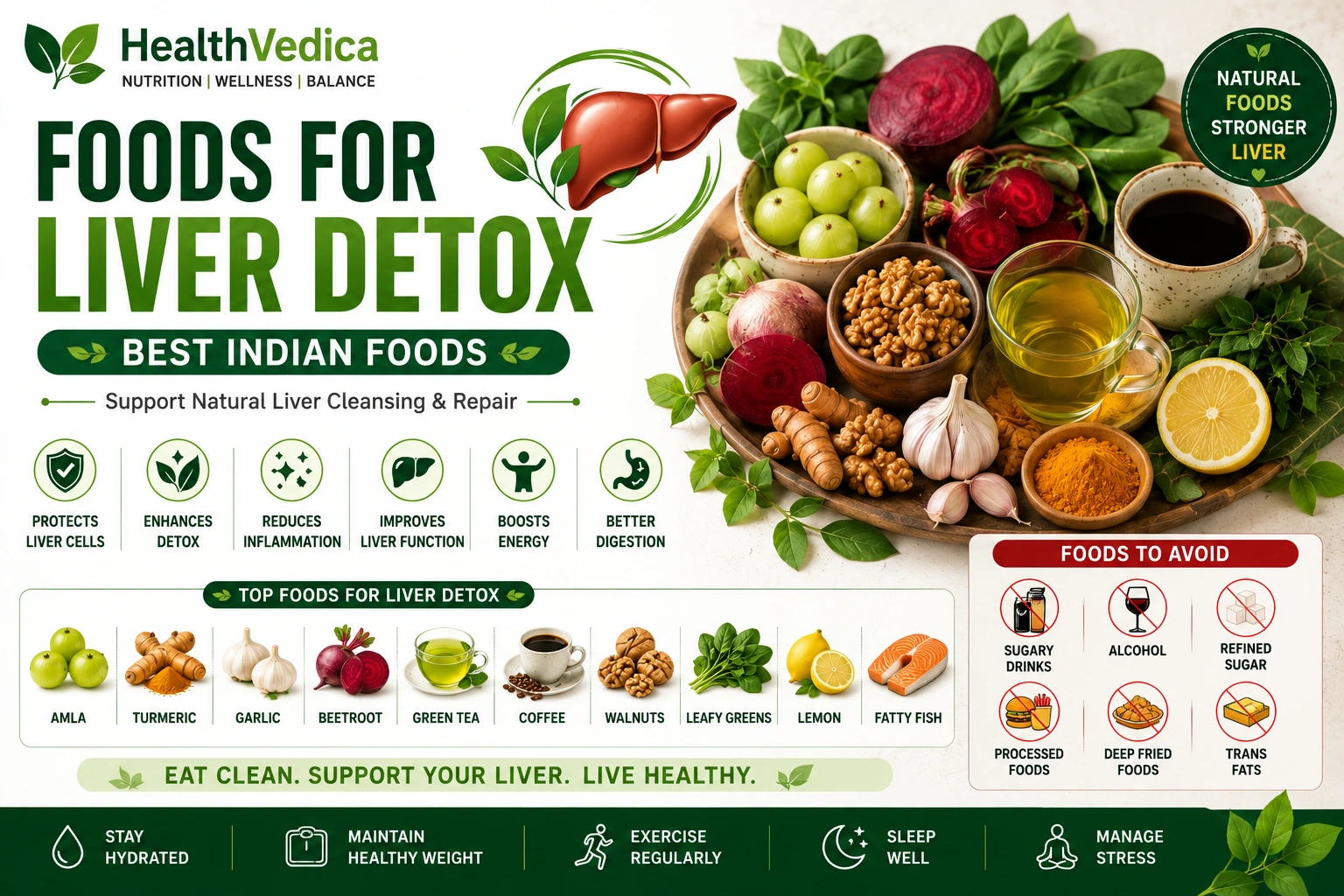
Best Foods for Liver Detox
๐Ÿงฌ Your Liver: The Hardest Working Organ You Never Think AboutYour liver is one of the most importan...
Read More
Fatty Liver Diet India Health Conditions
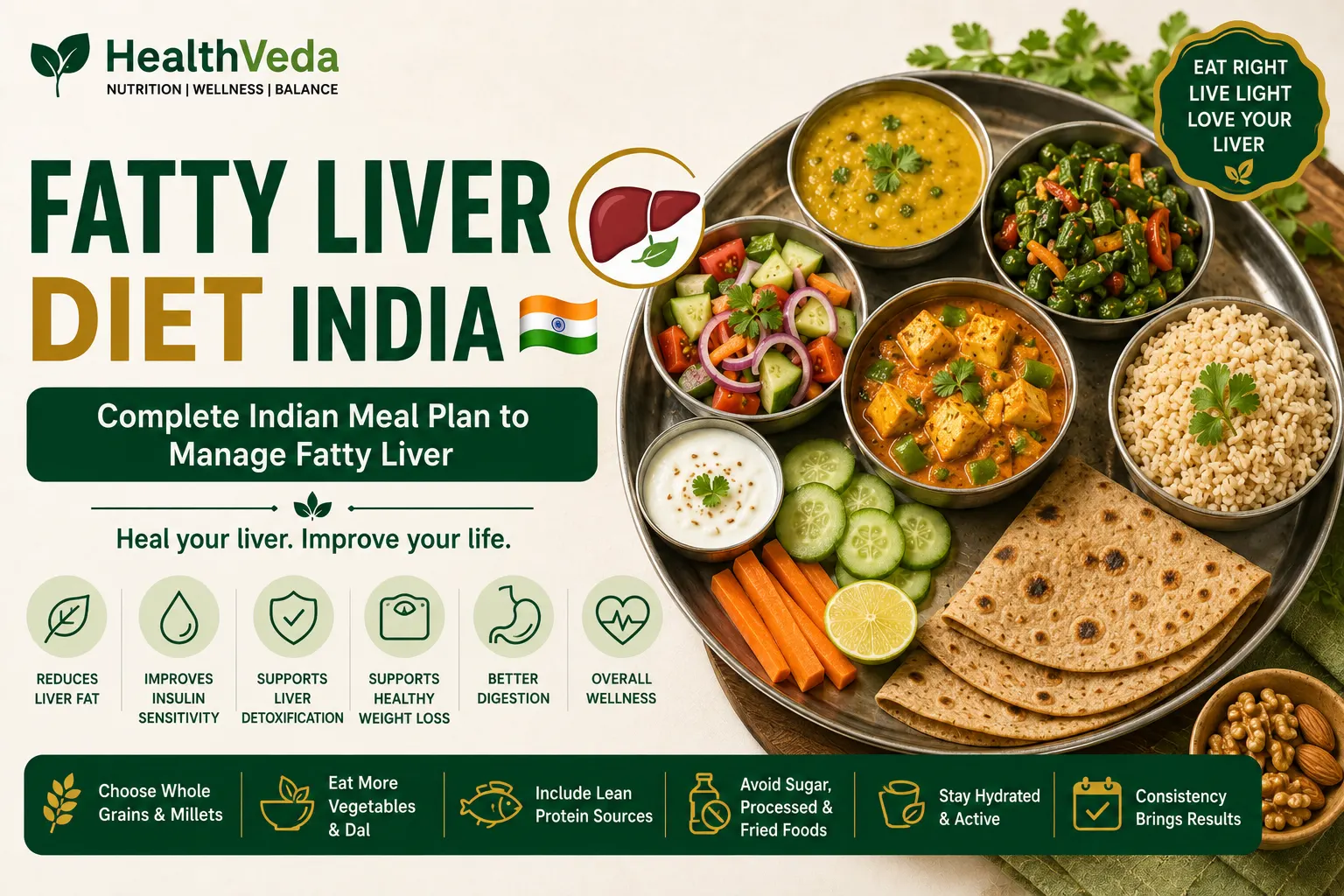
Fatty Liver Diet India
๐Ÿ‡ฎ๐Ÿ‡ณ Building a Fatty Liver Diet Around Indian StaplesManaging fatty liver in an Indian context does n...
Read More
Neem Health Benefits and Uses Nutrition
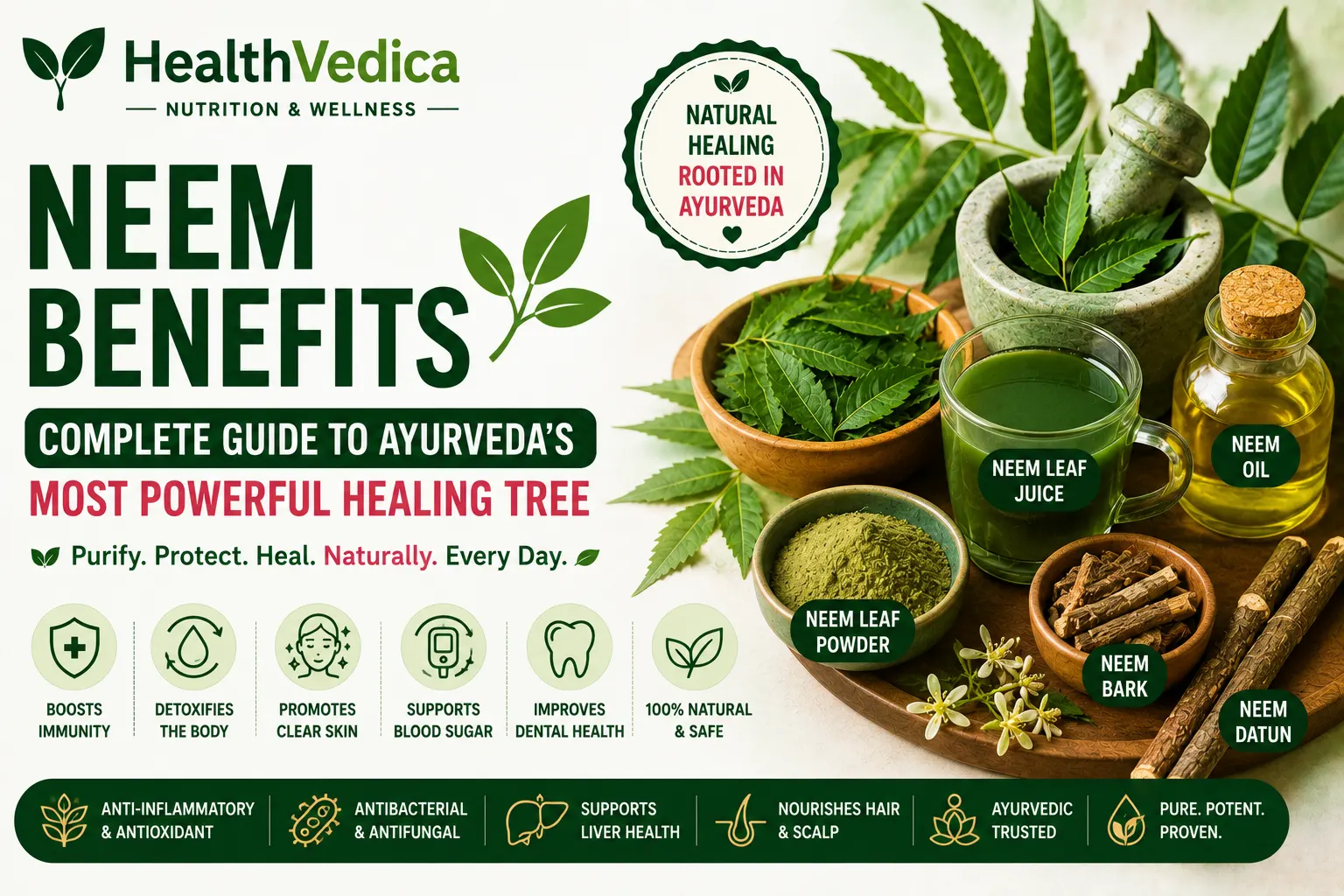
Neem Health Benefits and Uses
๐ŸŒฟ Neem: India's Village PharmacyNeem (Azadirachta indica) โ€” called Sarva Roga Nivarini (the curer o...
Read More
Diet After Surgery Recovery India Nutrition
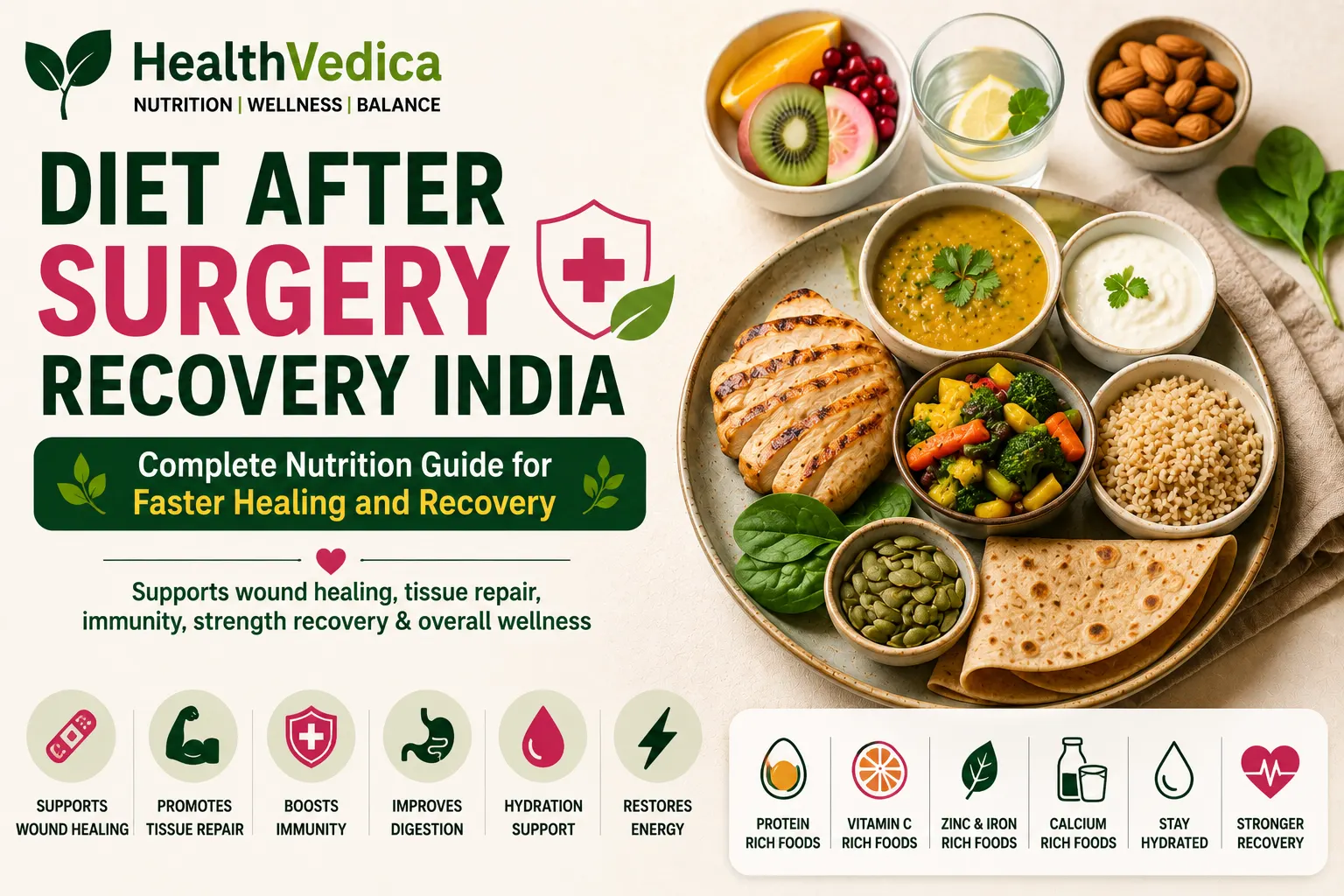
Diet After Surgery Recovery India
๐Ÿฅ Why Nutrition Is Important After SurgerySurgery places significant stress on the body. Recovery r...
Read More
Mediterranean Diet Plan in India Diet Plans
Mediterranean Diet Plan in India
๐ŸŒ The World's Healthiest Diet โ€” and How It Applies to IndiaThe Mediterranean diet consistently rank...
Read More
Potassium Rich Foods India Vitamins & Minerals
Potassium Rich Foods India
๐ŸŒ The Mineral That Balances SodiumPotassium works in a finely tuned partnership with sodium to regu...
Read More
Health Benefits of Fermented Foods for Gut Health Recipes
Health Benefits of Fermented Foods for Gut Health
๐Ÿฆ  Your Inner Universe: The Indian Gut MicrobiomeInside every Indian lives a vast microbial ecosyste...
Read More
HealthVedica Editorial Team

HealthVedica Editorial Team

Written by Raviteja

Our content is AI-assisted and editorially reviewed to ensure accuracy against Ayurvedic guidelines and Indian health research. Learn more โ†’