Food Comparisions

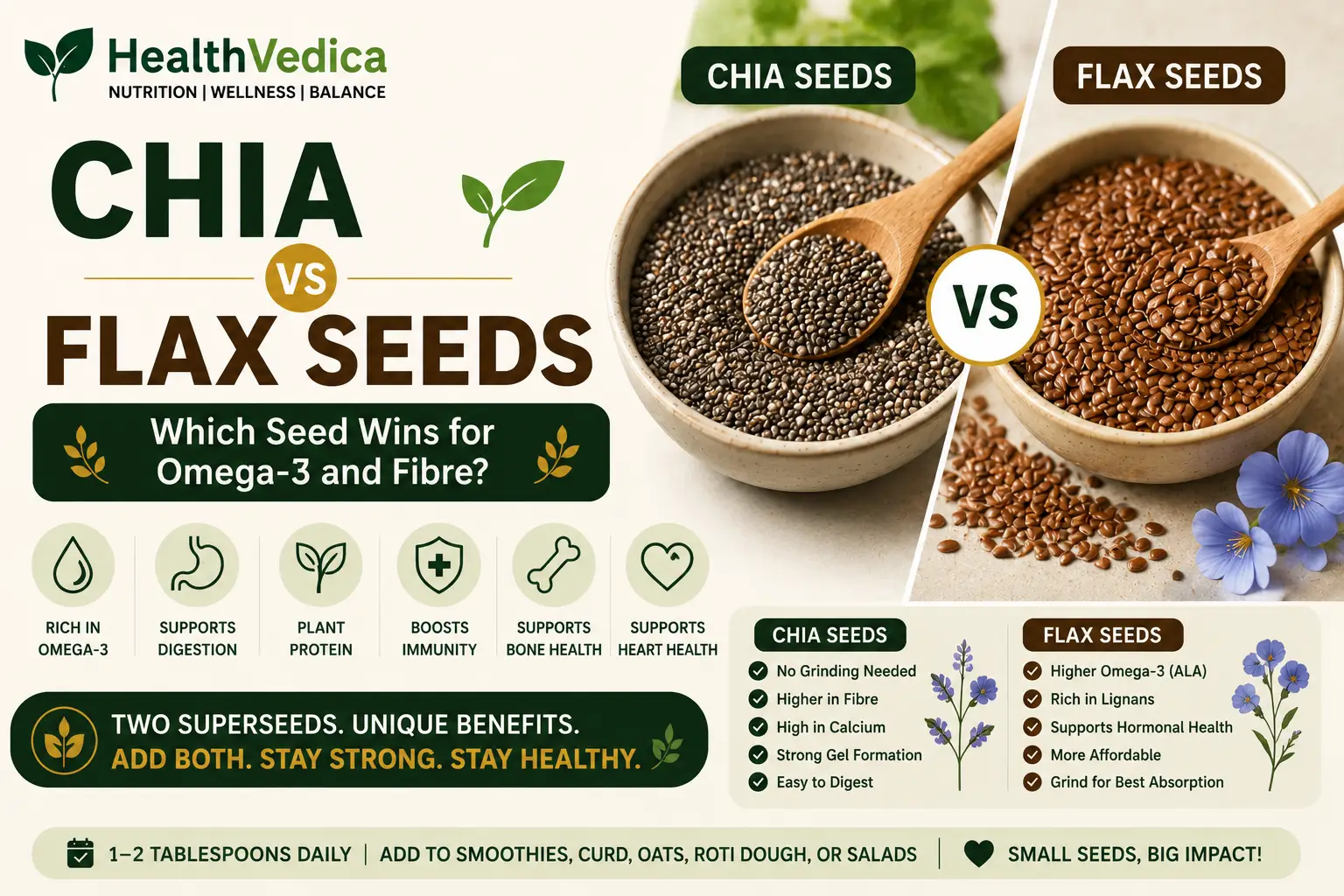
Chia vs Flax Seeds 🌱: Which Seed Wins for Omega-3 and Fibre?

Last updated:
Chia vs Flax Seeds Comparison β€” Nutrition, Health Benefits & Remedies
Chia vs Flax Seeds: Which Is Better for You? | Health Vedica
⚠️ Medical Disclaimer: This content is for informational purposes only and does not constitute medical advice. Always consult a qualified healthcare professional for diagnosis and treatment.

🌱 Two Tiny Seeds With Big Reputations

Chia seeds and flax seeds (alsi) are both frequently recommended as omega-3 and fibre powerhouses, and they're nutritionally similar in many respects. However, there are practical differences in how the body processes them, how they should be consumed, and which specific health goals each serves slightly better.

πŸ“Š Chia vs Flax Seeds: Nutritional Comparison (per 100g)

NutrientChia SeedsFlax Seeds (Alsi)Advantage
Omega-3 (ALA)17.8g22.8gFlax seeds (slightly higher)
Fibre34g27gChia
Protein16.5g18.3gFlax seeds
Calcium631mg255mgChia (significant)
Lignans (phytoestrogens)LowVery highFlax seeds (notably)
Need to grind for absorptionNo, digestible wholeYes, whole seeds pass undigestedChia
Gel-forming when soakedYes, stronglyMildlyChia

βœ… Where Chia Wins

No grinding required: Chia seeds can be absorbed by the body whether whole or ground, while flax seeds must be ground for the body to access their nutrients β€” whole flax seeds largely pass through the digestive system undigested due to their hard outer shell. This makes chia significantly more convenient for casual daily use.

Calcium content: Chia contains roughly 2.5 times the calcium of flax seeds, making it a more meaningful contributor to bone health alongside its other benefits.

Gel-forming texture: Chia's strong gel-forming property when soaked in liquid makes it excellent for puddings, smoothie thickening, and as an egg substitute in baking β€” a texture flax does not replicate as effectively.

βœ… Where Flax Seeds Win

Higher omega-3 content: Flax seeds contain marginally more ALA omega-3 per 100g than chia, making them a very slightly more concentrated source, though the practical difference is small given both are eaten in similar tablespoon-sized portions.

Lignans for hormonal health: Flax seeds contain dramatically higher levels of lignans, plant compounds with phytoestrogen activity that have been studied for potential benefits in hormonal balance and certain cancer risk reduction, particularly breast cancer research. This is flax seed's standout distinguishing feature that chia does not share to the same degree.

Cost: Flax seeds (alsi) are typically more affordable and widely available in Indian markets compared to chia, which is often imported or sold at a premium.

🍽️ Which Should You Choose?

For pure convenience and calcium, chia has the edge β€” it requires no preparation and can be added directly to food or soaked for pudding. For lignan-related hormonal health benefits and cost-effectiveness, flax seeds (ground) are the better choice. Critically, flax seeds must always be ground (a coffee grinder works well, or buying pre-ground alsi powder) β€” whole flax seeds eaten without grinding provide minimal nutritional benefit since the seed coat resists digestion. Chia has no such requirement. Many households benefit from keeping both: ground flax stirred into atta or smoothies, and chia for puddings or soaked drinks.
❓ Frequently Asked Questions

Common questions about Chia vs Flax Seeds Comparison

Yes, flax seeds must be ground to access their nutritional benefits, since the seed's hard outer shell resists digestion and whole seeds largely pass through the body undigested. Grinding flax seeds just before use (or buying pre-ground alsi powder and storing it in the refrigerator) ensures the omega-3s, fibre, and lignans are actually absorbed. Chia seeds do not have this requirement and can be eaten whole.
Chia seeds generally have a stronger and more immediate effect on digestion due to their pronounced gel-forming property when they absorb liquid, which adds bulk and softness to stool, supporting regularity. Flax seeds also support digestion well, particularly once ground, but chia's gel-forming texture tends to be more noticeable. Both are excellent fibre sources for digestive health when consumed with adequate water intake.
Yes, combining chia and flax seeds is a common and nutritionally sound practice, since they offer overlapping but not identical benefits β€” flax seeds contribute notably higher lignan content, while chia offers convenience and higher calcium. A combined daily intake of about 1-2 tablespoons total (split between both) fits well into smoothies, curd, or oatmeal without requiring large quantities of either.
Flax seeds have a slightly higher omega-3 (ALA) content at approximately 22.8g per 100g compared to chia's 17.8g per 100g. However, this difference is fairly small in real-world terms since both are typically consumed in small quantities (a tablespoon or two), and the practical omega-3 intake difference between the two at typical serving sizes is modest.
Flax seeds have a distinct advantage for hormonal health due to their very high lignan content, plant compounds with mild phytoestrogen activity that have been studied for potential roles in supporting hormonal balance, particularly in relation to menstrual and menopausal health. Chia seeds contain comparatively low levels of lignans, making flax the more relevant choice specifically for hormone-related goals, though both remain nutritionally valuable overall.
Related Blogs
Best Anti-Inflammatory Foods Diet Plans
Best Anti-Inflammatory Foods
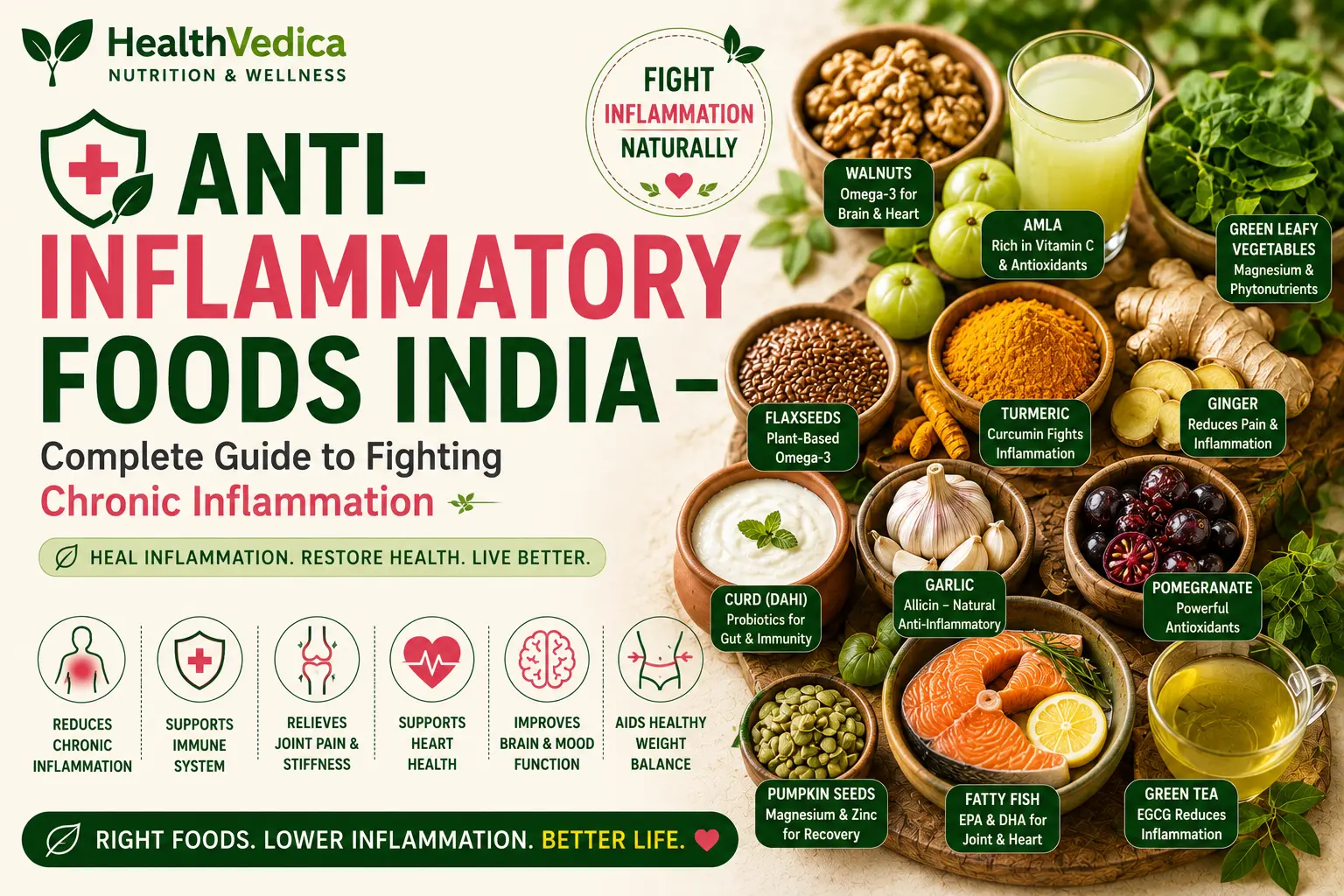
🩺 IntroductionChronic inflammation is now called the silent epidemic of the 21st century β€” and Indi...
Read More
Best Gluten-Free Indian Foods Food Comparisions
Best Gluten-Free Indian Foods
🌾 Gluten in the Indian Diet: A Growing ConcernCoeliac disease and non-coeliac gluten sensitivity ar...
Read More
Foods for PCOS Weight Loss Health Conditions
Foods for PCOS Weight Loss
🌸 Understanding PCOS and Weight GainPolycystic Ovary Syndrome (PCOS) is a hormonal condition that o...
Read More
Best Foods for Gut Health Nutrition
Best Foods for Gut Health
🫁 IntroductionGut health is the #1 trending health topic globally in 2025 and 2026 β€” and for very g...
Read More
Foods to Strengthen Lungs Naturally. Nutrition
Foods to Strengthen Lungs Naturally.
🫁 India's Lung Crisis: Why Nutrition Matters More Than EverIndia faces a catastrophic respiratory h...
Read More
Foods That Should Not Be Eaten Together Fitness & Lifestyle
Foods That Should Not Be Eaten Together
🍽️ Food Combining: Ancient Wisdom or Modern Myth?Almost every Indian household has food rules passed...
Read More
Postpartum Weight Loss Diet India Pregnancy & Family
Postpartum Weight Loss Diet India
🀱 Understanding Postpartum Weight LossWeight gain during pregnancy is normal and necessary for a he...
Read More
Antioxidant Rich Foods India Nutrition
Antioxidant Rich Foods India
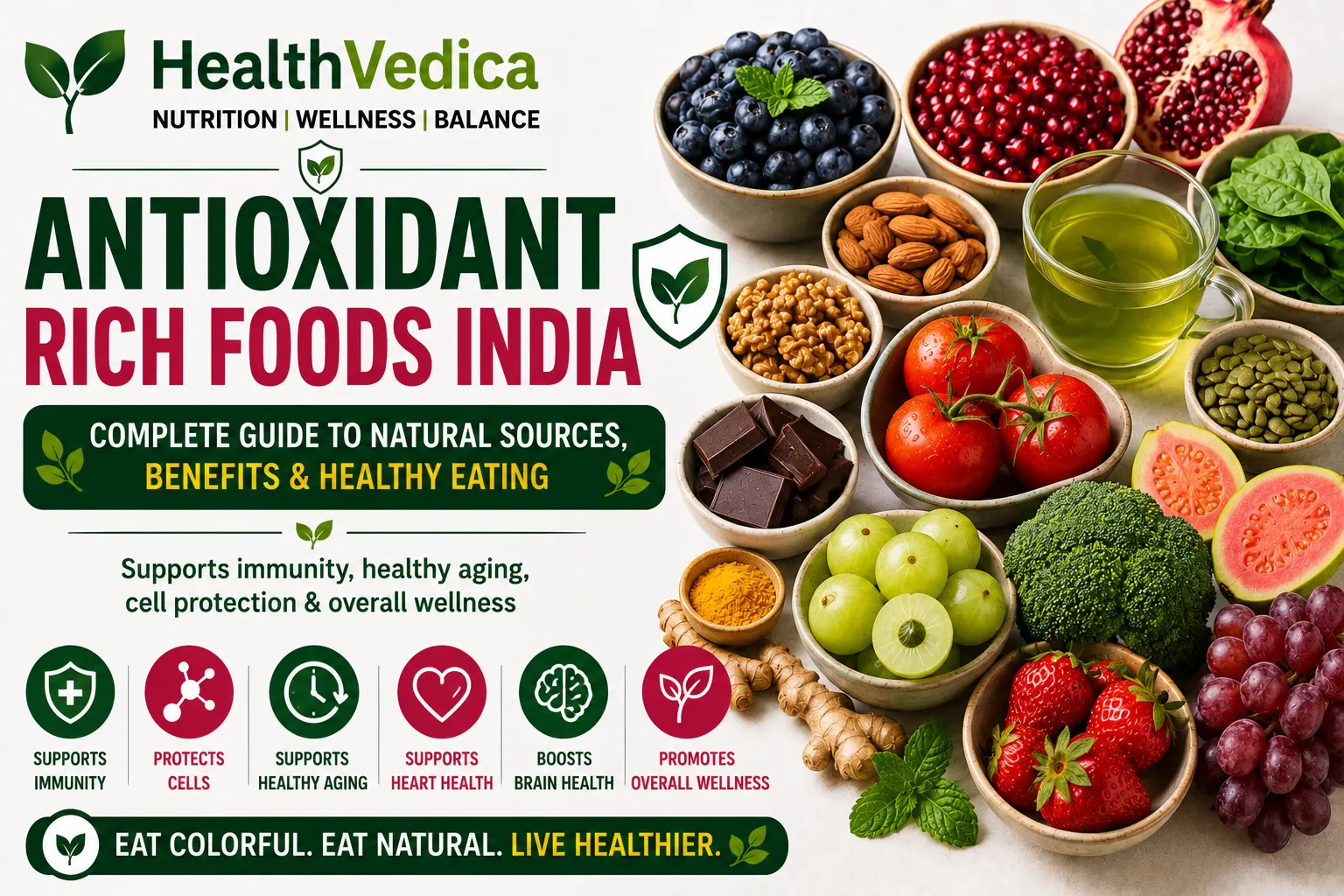
πŸ›‘οΈ What Are Antioxidants?Antioxidants are natural compounds found in foods that help protect the bod...
Read More
Almonds vs Walnuts Comparison Food Comparisions
Almonds vs Walnuts Comparison
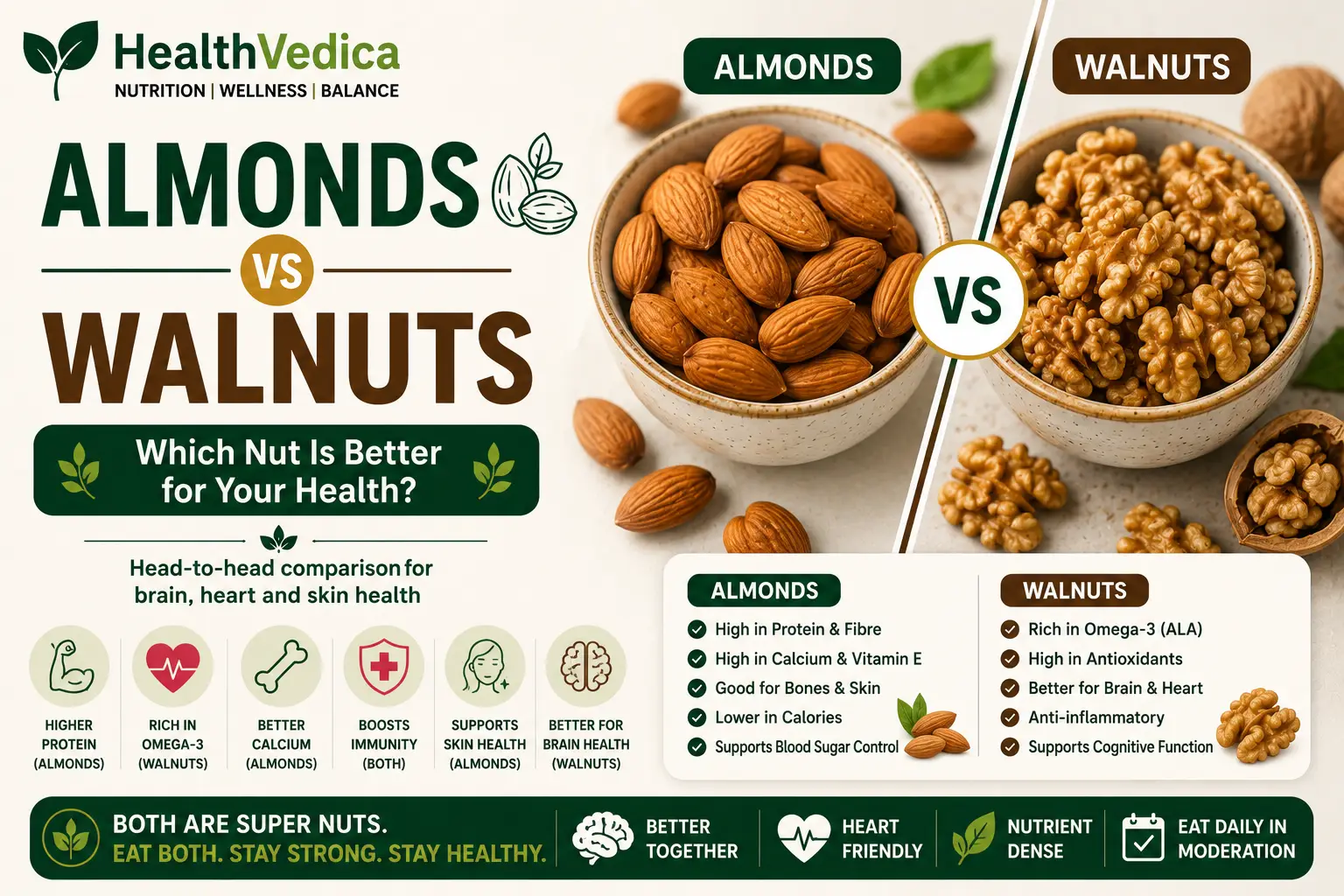
🌰 Protein and Calcium vs Omega-3 and Brain HealthAlmonds (badam) and walnuts (akhrot) are the two m...
Read More
HealthVedica Editorial Team

HealthVedica Editorial Team

Written by Raviteja

Our content is AI-assisted and editorially reviewed to ensure accuracy against Ayurvedic guidelines and Indian health research. Learn more β†’