👁️ Two Forms of Vitamin A, One Important Distinction
Vitamin A exists in two distinct dietary forms: preformed vitamin A (retinol), found in animal sources like liver, eggs, and dairy, which the body can use directly; and provitamin A carotenoids (primarily beta-carotene), found in colourful plant foods like carrots and orange-fleshed vegetables, which the body must convert into active vitamin A. This distinction matters because the conversion of beta-carotene to active vitamin A is not perfectly efficient — the body converts only a fraction of consumed beta-carotene, meaning vegetarians need to eat larger quantities of plant sources to achieve equivalent vitamin A status compared to those eating animal sources.
Vitamin A deficiency remains a recognised public health concern in parts of India, particularly among children, where it is a leading preventable cause of vision problems, making awareness of good dietary sources genuinely important rather than simply a wellness trend.
🔬 What Vitamin A Does in the Body
Vision: Vitamin A is a structural component of rhodopsin, the light-sensing pigment in the retina responsible for vision in low-light conditions. This is the basis for vitamin A deficiency's well-known association with night blindness as an early symptom.
Immune function: Vitamin A supports the integrity of mucosal surfaces (respiratory tract, gut lining) that serve as the body's first physical barrier against pathogens, and also supports white blood cell function.
Skin health: Vitamin A regulates skin cell turnover and is the basis for retinoid-based skincare ingredients, though dietary vitamin A works more gradually and systemically than topical retinoids.
Growth and development: Vitamin A is essential for normal growth in children and for reproductive health, which is why deficiency during pregnancy and childhood carries particular significance.
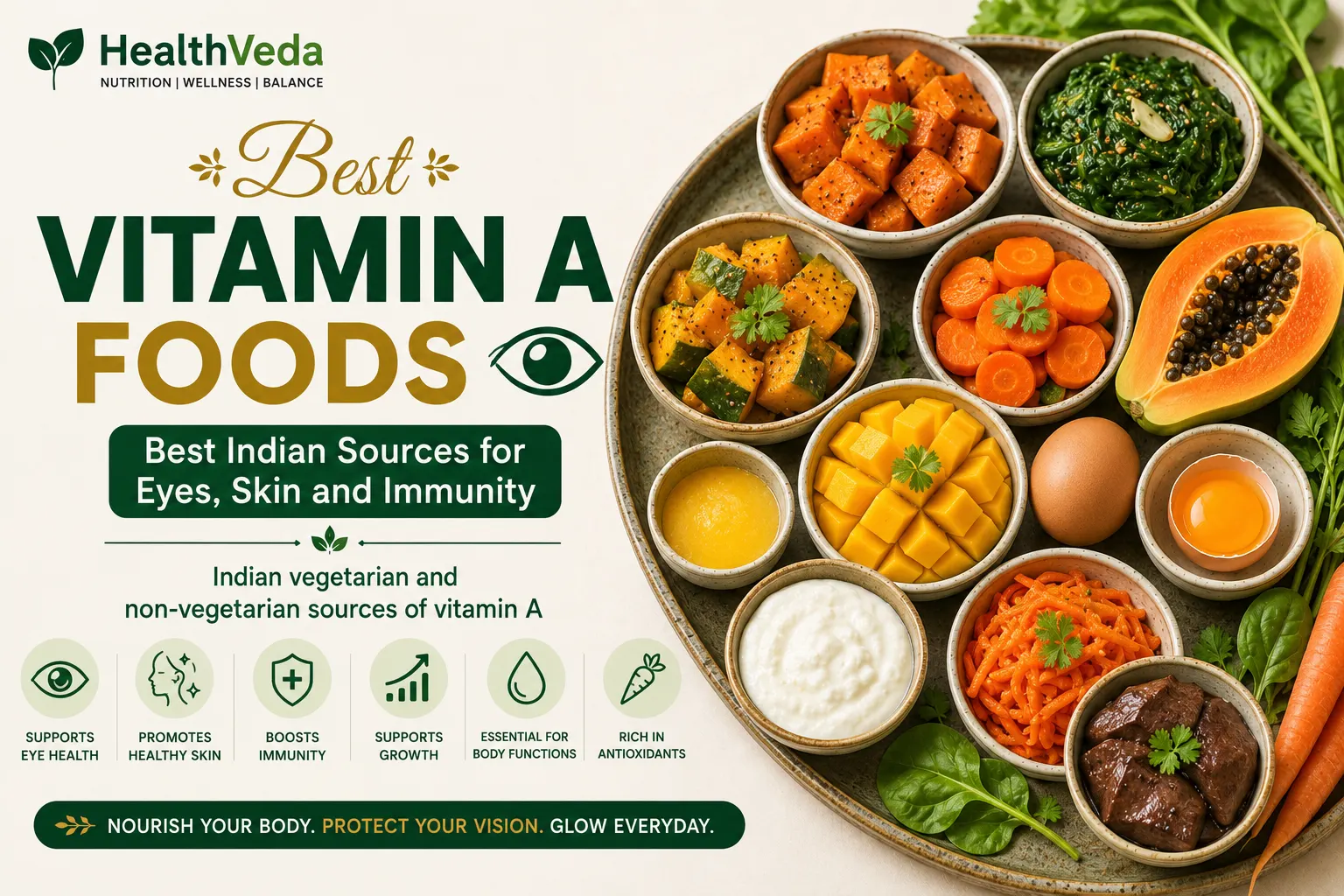
📊 Top Vitamin A Rich Indian Foods (per 100g)
| Food | Vitamin A Content | Form | Notes |
|---|---|---|---|
| Carrot (gajar) | 835 mcg RAE | Beta-carotene | Raw, juice, halwa (minimal sugar) |
| Sweet potato (shakarkandi) | 709 mcg RAE | Beta-carotene | Roasted, boiled |
| Spinach (palak), cooked | 469 mcg RAE | Beta-carotene | Sabzi, dal |
| Pumpkin (kaddu) | 426 mcg RAE | Beta-carotene | Sabzi, soup |
| Mango (ripe) | 54 mcg RAE | Beta-carotene | Seasonal fruit |
| Egg yolk | 140 mcg RAE | Retinol (direct) | Daily, more bioavailable |
| Liver (chicken/mutton) | 3,000+ mcg RAE | Retinol (direct) | Occasional, very concentrated |
| Full-fat dairy/ghee | Varies, moderate | Retinol (direct) | Daily moderate use |
| Papaya | 55 mcg RAE | Beta-carotene | Daily fruit |
*Based on 900 mcg RAE/day for adult men, 700 mcg RAE/day for adult women.
✅ Why Vegetarians Should Pay Extra Attention
Since beta-carotene conversion to active vitamin A is inefficient (roughly 12 units of beta-carotene are needed to yield 1 unit of active retinol, compared to direct 1:1 use of animal-source retinol), vegetarians relying solely on carrots and spinach need notably larger portions than the gram-for-gram numbers might suggest. Importantly, beta-carotene is fat-soluble, meaning it's absorbed far better when eaten with some fat — a carrot salad with a teaspoon of oil or ghee, or sautéed spinach rather than plain boiled, significantly improves actual vitamin A uptake compared to eating these foods completely fat-free.
🍽️ Practical Vitamin A Plan
Vegetarians: Combine carrots, spinach, pumpkin, and sweet potato regularly through the week, always with a small amount of fat (ghee, oil) in preparation to maximise absorption. Egg yolks and dairy, if included, provide more directly usable vitamin A.
Non-vegetarians: A modest serving of liver once every week or two provides an exceptionally concentrated, easily absorbed vitamin A dose, alongside regular egg consumption.
Children: Given vitamin A's importance for growth and immune function, ensuring regular intake of orange and dark green vegetables, alongside dairy or eggs, is particularly valuable during childhood years.