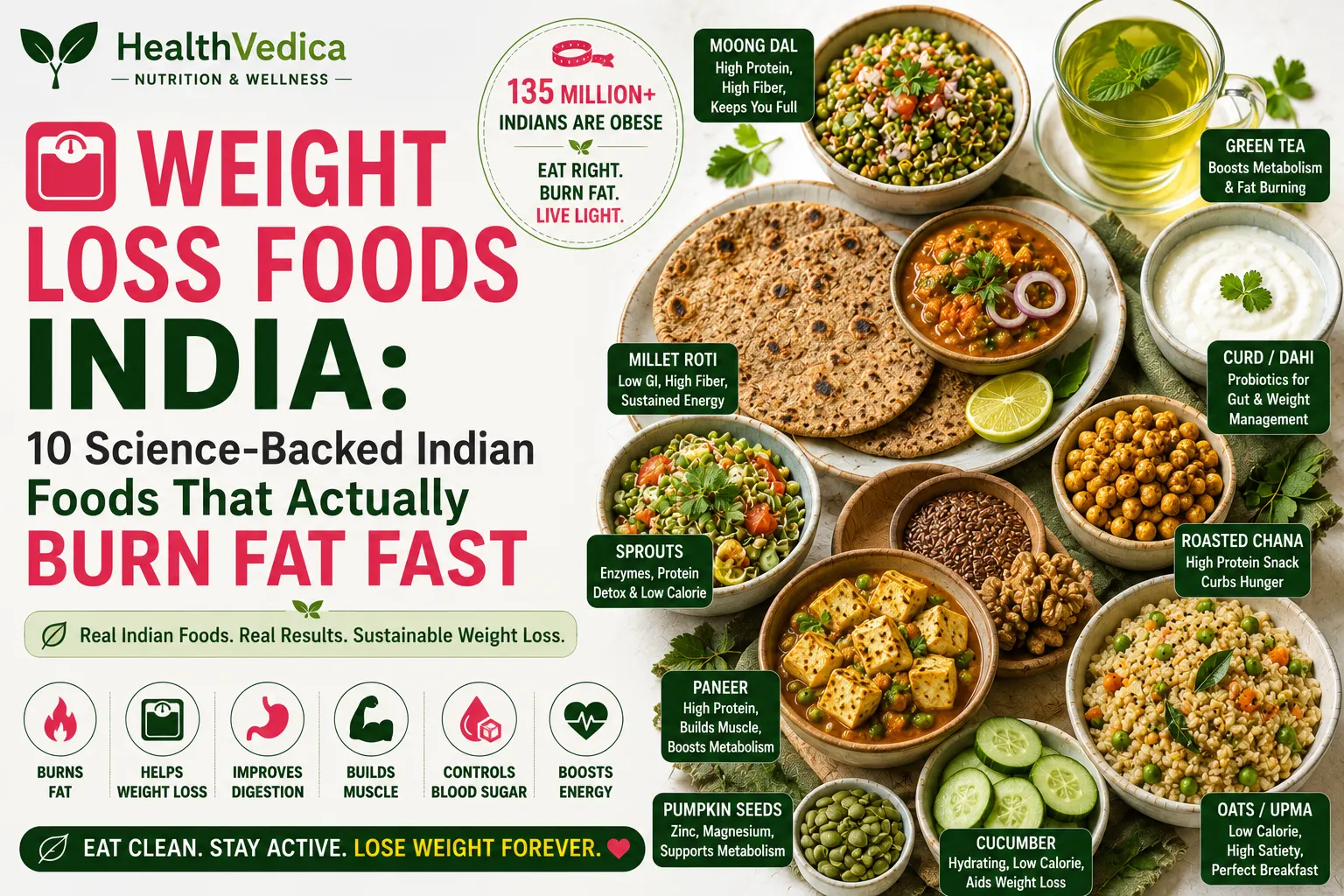
⚖️ Why Weight Loss Is Different for Indians
India is facing a paradoxical nutrition crisis: 135 million obese adults (second largest globally), yet widespread undernutrition. Indian obesity has unique characteristics — we tend to store visceral fat (around organs) even at lower BMIs, putting us at higher metabolic risk than Western populations at the same weight. The infamous 'thin-fat Indian' phenomenon — appearing slim but having high body fat percentage — affects even those who look healthy.
Traditional Indian weight loss advice often fails because it doesn't account for our food culture: high-carbohydrate staples (rice, roti, potato), celebration-heavy eating patterns, high-fat cooking methods (ghee, deep frying), and the sacred role of food in social life. Any sustainable weight loss strategy must work within — not against — Indian food culture.
The science is now clear: there's no single magic food for weight loss. But certain foods create satiety, boost metabolism, support gut health , stabilise blood sugar, and preserve muscle — all of which make fat loss easier and more sustainable. Fortunately, Indian cuisine is rich in these very foods.
🔬 The Science of Weight Loss Foods
Weight loss occurs when you create a caloric deficit, but the quality of those calories determines whether you lose fat or muscle, feel satisfied or hungry, and sustain the loss long-term. Here's the science:
Satiety hormones (GLP-1, PYY, CCK): Protein and fibre stimulate these hormones, signalling fullness. High-protein Indian foods like dal, paneer, and eggs are natural appetite suppressants.
Thermic Effect of Food (TEF): Protein requires 20–35% of its calories just for digestion, versus 5–15% for carbs and 0–3% for fat. This metabolic advantage of protein is significant.
Glycaemic response: Foods that spike blood sugar rapidly trigger insulin, promoting fat storage. Low-GI Indian foods like millets , legumes, and non-starchy vegetables prevent this cycle.
Gut microbiome: Fermented foods (dahi, idli, dosa batter) and prebiotic fibre (from legumes, vegetables) support beneficial bacteria linked to lower obesity risk and better metabolic health.
NEAT (Non-Exercise Activity Thermogenesis): Protein-rich diets preserve muscle mass, which increases resting metabolism and daily calorie burn even without exercise.
📊 Calorie & Satiety Index of Common Indian Foods
| Food (100g) | Calories | Protein (g) | Fibre (g) | Satiety Score | Weight Loss Rating |
|---|---|---|---|---|---|
| Moong Dal (cooked) | 105 | 7.0 | 4.1 | High | ⭐⭐⭐⭐⭐ |
| Bajra (Pearl Millet) | 361 | 11.6 | 1.2 | High | ⭐⭐⭐⭐⭐ |
| Jowar (Sorghum) | 349 | 10.4 | 6.3 | Very High | ⭐⭐⭐⭐⭐ |
| Boiled Egg | 155 | 13.0 | 0 | Very High | ⭐⭐⭐⭐⭐ |
| Low-fat Dahi | 61 | 3.5 | 0 | High | ⭐⭐⭐⭐ |
| Spinach | 23 | 2.9 | 2.2 | Medium | ⭐⭐⭐⭐⭐ |
| White Rice (cooked) | 130 | 2.7 | 0.4 | Low | ⭐⭐ |
| Aloo Paratha | 280 | 5.0 | 1.5 | Low | ⭐ |
| Rajma (cooked) | 127 | 8.7 | 6.4 | Very High | ⭐⭐⭐⭐⭐ |
| Cucumber | 15 | 0.7 | 0.5 | Medium | ⭐⭐⭐⭐ |
✅ Top 10 Indian Weight Loss Foods
1. Millets (Bajra, Jowar, Ragi)
Millets have a lower glycaemic index than rice, higher fibre, and more protein. They stay in the stomach longer, suppressing appetite. A millet-based lunch leaves you full for 4–5 hours versus 2–3 hours after white rice. Replace 50% of your rice with millets to reduce daily calorie intake by 150–200 calories effortlessly.
2. Dal & Legumes (Moong, Masoor, Rajma, Chana)
The original Indian weight-loss superfood. High protein + high fibre = maximum satiety at minimum calories. Studies show people who eat legumes daily consume 300–400 fewer calories per day without trying. Moong dal is especially effective — easy to digest, high protein, and metabolism-supportive.
3. Eggs
Multiple studies confirm: people who eat eggs for breakfast eat 300–400 fewer calories at lunch. Eggs provide complete protein that preserves muscle during calorie restriction. Two eggs for breakfast is one of the most evidence-based weight loss interventions.
4. Low-Fat Dahi (Curd)
The probiotics in dahi improve gut bacteria diversity linked to lower obesity. Calcium in dahi may inhibit fat storage. Protein in dahi supports satiety. A bowl of dahi with every meal is a calorie-smart, culture-appropriate weight loss tool.
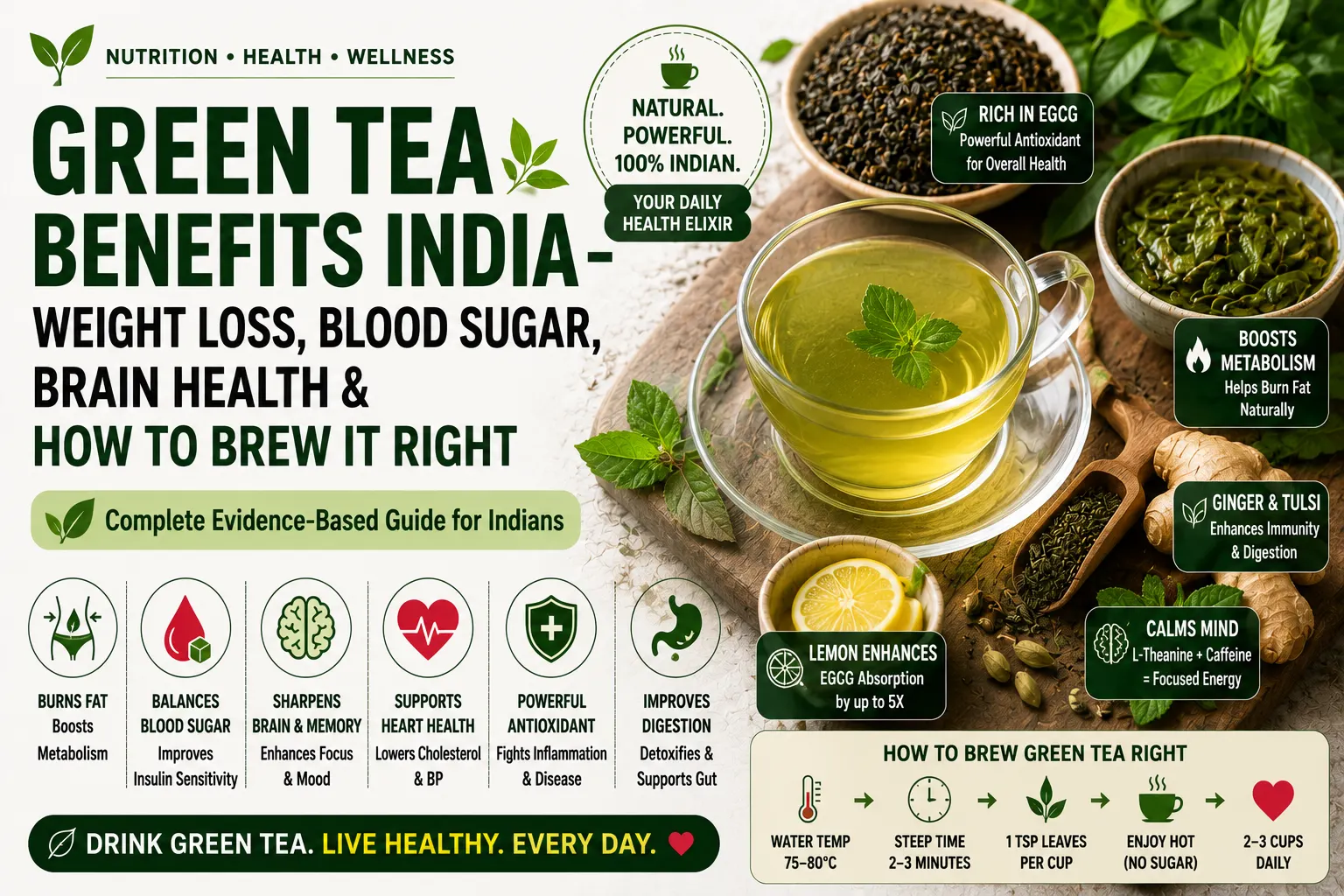
5. Green Tea (Matcha or Regular)
EGCG (epigallocatechin gallate) in green tea boosts fat oxidation by 17% and raises resting metabolism. Replacing your chai with 2 cups of unsweetened green tea daily can accelerate fat loss, especially around the abdomen.
6. Methi Seeds (Fenugreek)
Soluble fibre in methi seeds creates a gel in the stomach that slows digestion and glucose absorption. Pre-soaking 1 tsp methi in water overnight and drinking it in the morning significantly reduces hunger throughout the day and stabilises blood sugar.
7. Leafy Greens (Palak, Methi, Bathua)
Extremely low in calories (20–40 per 100g) but high in volume, fibre, and micronutrients. Build your plate with leafy greens to eat more while consuming fewer calories — the principle of volumetrics.
8. Apple Cider Vinegar (ACV)
1–2 tbsp before meals reduces appetite and post-meal blood sugar spike. Meta-analyses confirm modest weight loss effects. Dilute in water — never take undiluted as it damages tooth enamel.
9. Coconut (in moderation)
Despite being calorie-dense, MCTs in coconut are metabolised differently — burned for energy rather than stored as fat. Coconut chutney or small amounts in cooking may support weight loss better than polyunsaturated oils.
10. Amla (Indian Gooseberry)
Rich in Vitamin C (20× more than orange), amla reduces inflammation, boosts metabolism, and supports fat breakdown. Studies show amla extract reduces body fat percentage. Consume as fresh amla, amla juice, or amla murabba (without sugar).
🌿 Ayurvedic Weight Loss Wisdom
Ayurveda identifies Medo Dhatu Dushti (fat tissue imbalance) as the root of obesity, caused by Kapha-aggravating diet and lifestyle. The Ayurvedic approach focuses on:
Triphala at bedtime: Cleanses digestive tract, improves elimination, and has been shown in studies to reduce BMI over 12 weeks. Take 1 tsp in warm water at bedtime.
Warm water with ginger-lemon: Morning ritual that kindles Agni (digestive fire) and mobilises fat. Scientifically, this reduces appetite and supports hydration.
Trikatu (Black pepper + Ginger + Long pepper): Thermogenic spice combination that increases body temperature and fat burning. Use in cooking daily.
Lunch as the main meal: Ayurvedic principle that aligns with chronobiology — insulin sensitivity peaks at midday. Heaviest meal at lunch, lightest at dinner is scientifically validated for weight loss.
🚫 Indian Foods Sabotaging Your Weight Loss
Maida (Refined Flour) Products: Paratha, samosa, puri, biscuits, and bread made from maida spike blood sugar rapidly and provide zero fibre. A single samosa = 150+ calories; two with chutney = 400+ calories in minutes.
Packaged Namkeen & Chips: Loaded with refined oils, salt, and artificial flavours. No protein or fibre means no satiety — you'll eat the whole pack. One pack of potato chips = 500+ calories.
Sugar-laden Chai: 3 cups of chai with 2 tsp sugar each = 150 extra calories daily = 15 kg weight gain potential per year from chai alone.
Fruit Juices: Whole fruits are weight-loss friendly; juices are sugar water. A glass of mango juice = 120 calories, no fibre, 25g sugar. Eat the whole fruit instead.
Late Night Eating: Dinner after 9 PM significantly impairs fat burning as metabolic rate drops. Indian social culture of late dinners actively works against weight loss.
💡 Practical Indian Weight Loss Meal Plan
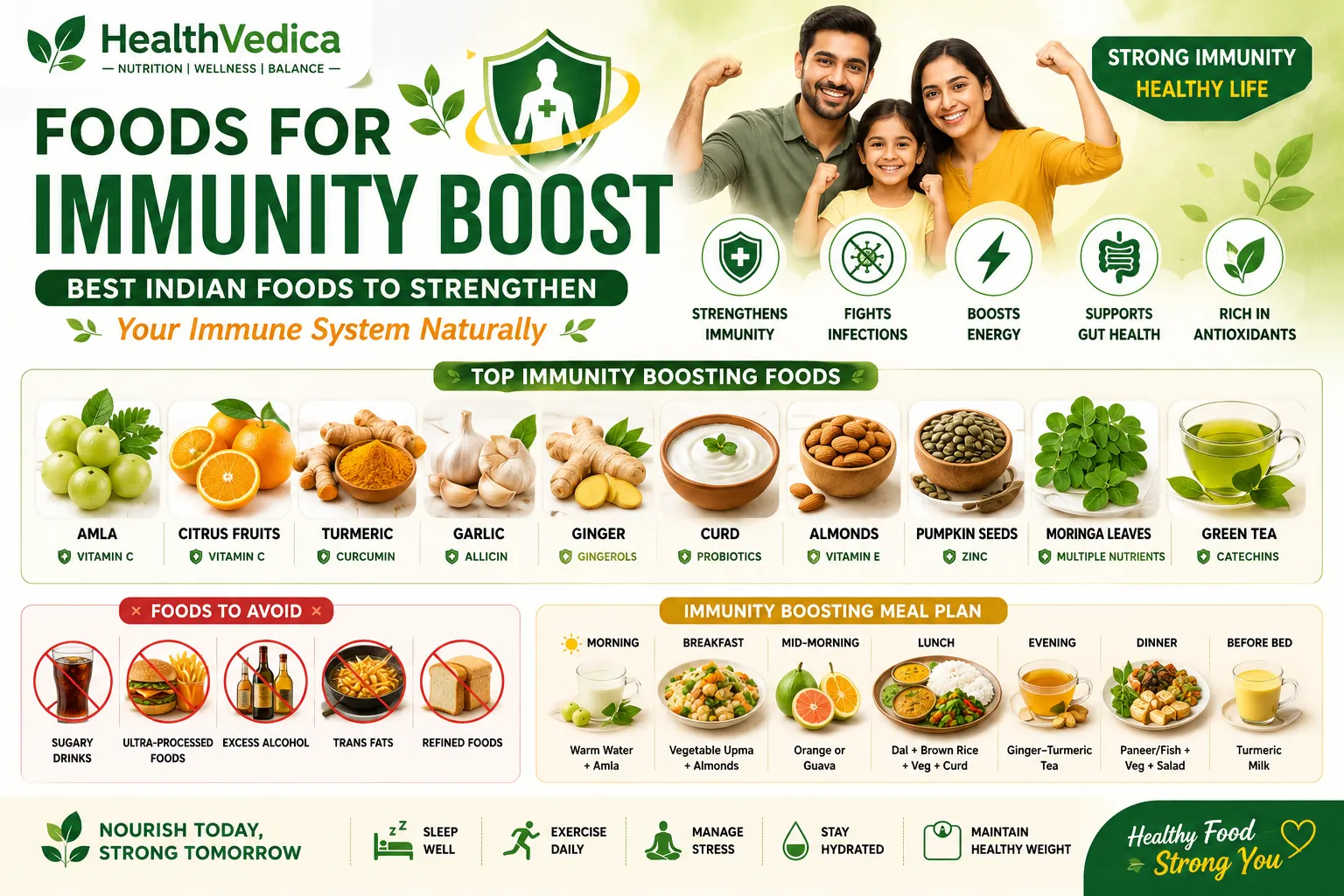
Core Strategy: Protein at every meal + Vegetables at 50% of plate + Millets replacing white rice at lunch
Breakfast (7–8 AM): 2 eggs (any style) + 1 cup green tea + seasonal fruit | OR Moong dal chilla + dahi
Mid-morning (10–11 AM): Handful of roasted chana + cucumber slices | OR a glass of buttermilk
Lunch (12–1 PM): 1 cup millet (bajra/jowar) + 1 cup dal + 2 cups sabzi (leafy green) + dahi + salad. Skip rice or have ½ cup max.
Evening (4–5 PM): Green tea + small handful of nuts (10 almonds/walnuts) | OR roasted pumpkin seeds
Dinner (7–8 PM, before 8:30 PM): Light khichdi with moong dal + stir-fried vegetables | OR soup + 2 chapati + sabzi. No rice at dinner.
Bedtime: 1 tsp Triphala in warm water (optional but effective)