🦟 Introduction
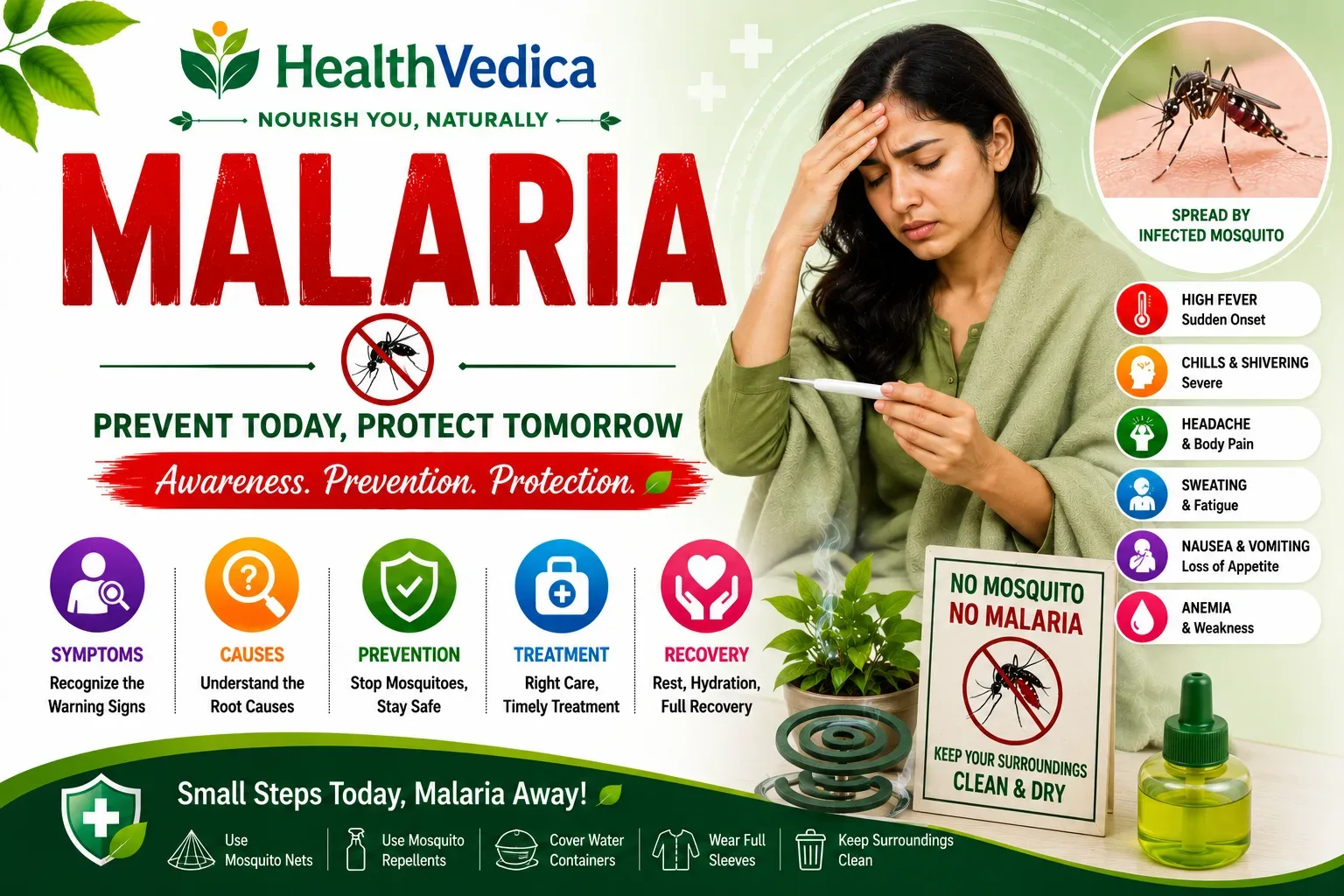
Malaria is a life-threatening parasitic disease caused by Plasmodium parasites, transmitted to humans through the bites of infected female Anopheles mosquitoes. India accounts for nearly 2% of global malaria cases and approximately 90% of malaria in South Asia. Four species infect humans — P. falciparum (most dangerous), P. vivax (most common in India), P. malariae, and P. ovale. Malaria remains a major public health challenge in states like Odisha, Jharkhand, Chhattisgarh, Madhya Pradesh, Meghalaya, and Andaman & Nicobar Islands.
🔬 Malaria Symptoms — Classic Pattern
| Stage | Duration | Symptoms |
|---|---|---|
| Cold Stage | 15–60 min | Sudden intense chills, shivering, teeth chattering, pale skin |
| Hot Stage | 2–6 hours | High fever (39–41°C), severe headache, vomiting, delirium |
| Sweating Stage | 2–4 hours | Profuse sweating, fever breaks, extreme fatigue, feels better |
| Cycle Repeats | Every 48–72 hrs | P.vivax every 48 hrs; P.malariae every 72 hrs (tertian/quartan) |
⚠️ Danger Signs (Severe Malaria): Impaired consciousness, severe anemia, respiratory distress, abnormal bleeding, multiple convulsions, jaundice, hemoglobinuria (black water fever). Seek EMERGENCY care immediately.
🧪 Diagnosis
| Test | Details |
|---|---|
| Peripheral Blood Smear (Gold Standard) | Identifies species and parasite load under microscope |
| Rapid Diagnostic Test (RDT) | Quick antigen-based test — available in rural India |
| PCR Test | Most sensitive — detects even low parasite counts |
| CBC | Shows anemia, thrombocytopenia (low platelets) typical in malaria |
💊 Medical Treatment
Malaria MUST be treated with prescription antimalarial drugs. Do not rely solely on home remedies. Standard treatments include: Artemisinin Combination Therapy (ACT) for P. falciparum — the most effective current treatment. Chloroquine still effective for P. vivax in many regions. Primaquine to eliminate liver stages and prevent relapse in P. vivax. Treatment must be completed even after fever resolves.
🥗 Diet During Malaria Recovery
| Recommended Foods | Reason |
|---|---|
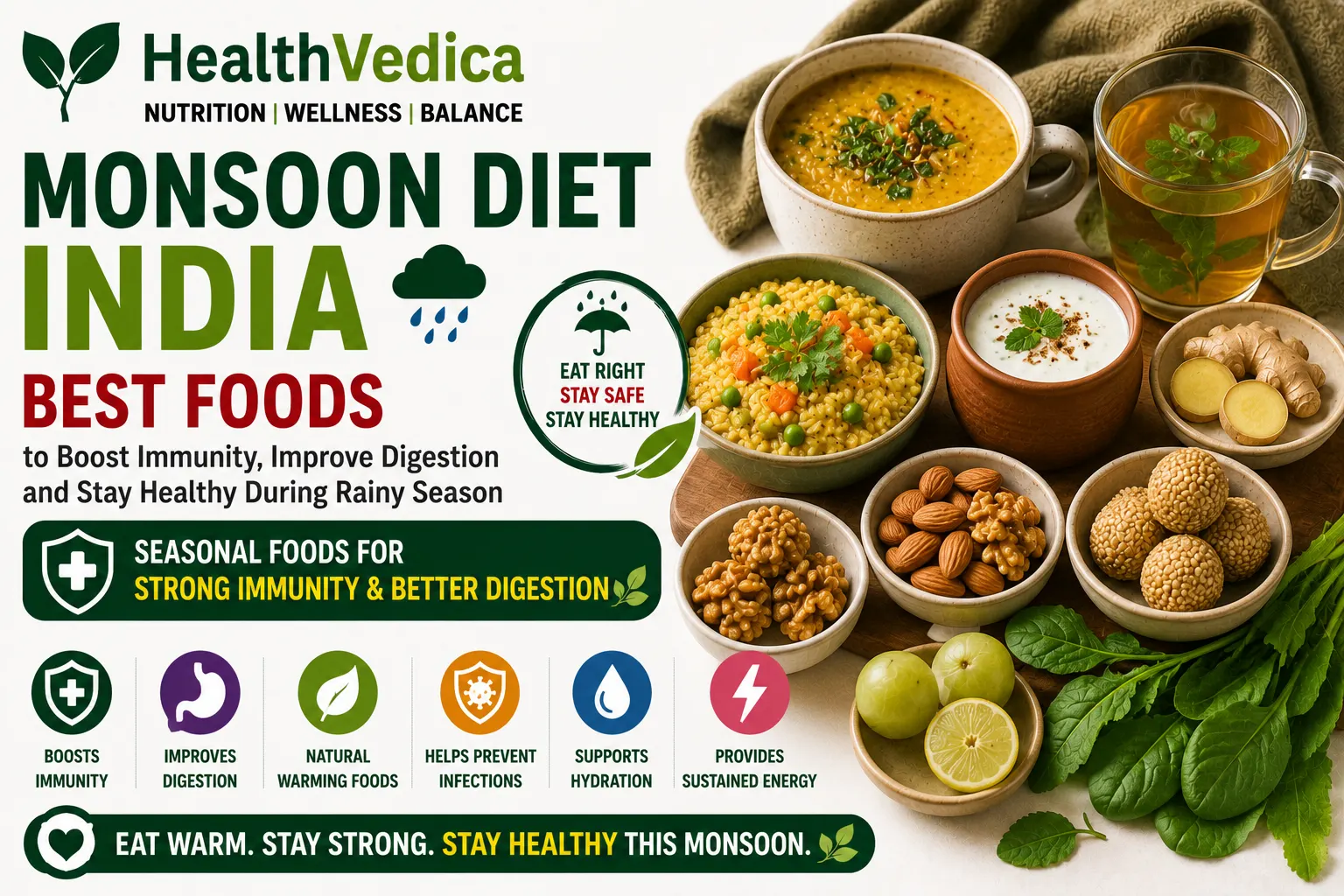
| Khichdi (Rice + Dal) | Easily digestible complete protein + carbohydrate for energy |
| Coconut Water | Replaces electrolytes lost through sweating and fever |
| Fresh Fruit Juices | Vitamin C boosts immunity, antioxidants reduce inflammation |
| Moong Dal Soup | Lightweight protein, easy to digest |
| Papaya | Papain aids digestion, Vitamin C immunity — papaya leaf juice raises platelets |
| Pomegranate Juice | Iron for malaria-induced anemia, antioxidants |
| Ginger Tea | Anti-nausea, anti-parasitic properties |
| Turmeric Milk | Curcumin has anti-malarial properties in lab studies |
| Dates + Honey | Iron and natural sugars for post-malarial weakness |
🚫 Foods to Avoid During Malaria
Heavy, oily, and spicy foods; red meat; raw vegetables (difficult to digest); acidic foods; alcohol completely; cold beverages; fried snacks; excess sugar; and any food that may trigger vomiting. Keep diet light, warm, and easily digestible throughout fever and 1–2 weeks after recovery.
🌿 Ayurvedic Perspective & Herbs
In Ayurveda, malaria (Vishama Jwara — irregular fever) is caused by Tridosha vitiation, particularly Vata and Kapha, with characteristic periodicity. Treatment focuses on Jwara Nashaka (fever-reducing) and Deepana-Pachana (digestive stimulation) herbs.
| Herb | Evidence & Use |
|---|---|
| Chirayata (Swertia chirata) | Classical anti-malarial bitter herb — antipyretic, anti-parasitic |
| Guduchi / Giloy (Tinospora cordifolia) | Clinically shown to boost immunity, reduce fever, anti-malarial properties |
| Kutaja (Holarrhena) | Anti-parasitic and anti-diarrheal in malaria with GI complications |
| Neem (Azadirachta indica) | Nimbolide compound has demonstrated anti-malarial activity in research |
| Papaya Leaf Juice | Multiple studies confirm rapid platelet count increase in dengue and malaria |
| Tulsi (Ocimum sanctum) | Anti-pyretic, immunomodulatory, anti-parasitic adjunct |
🍵 Recovery Drinks & Juices
Giloy Juice: 20ml Giloy juice with water twice daily — powerful immunomodulator and anti-malarial adjunct. Papaya Leaf Juice: 2 tbsp fresh papaya leaf extract — rapidly raises platelet count (critical in severe malaria). Neem + Tulsi Decoction: Boil neem leaves and tulsi in water — antipyretic and immune-supportive. Pomegranate + Ginger Juice: Iron and antioxidants for malaria-induced anemia. Ginger + Lemon + Honey Tea: Anti-nausea, anti-inflammatory, warming during cold stage.
🛡️ Prevention
Use bed nets (LLIN — Long-lasting insecticidal nets) every night. Apply DEET-based mosquito repellent. Wear full-sleeved clothing at dusk and dawn. Eliminate standing water — empty buckets, coolers, pots weekly. Use mosquito coils and plug-in repellents. Take chemoprophylaxis if traveling to high-risk areas. Report fever within 48 hours — early treatment is life-saving.