🌿 Introduction
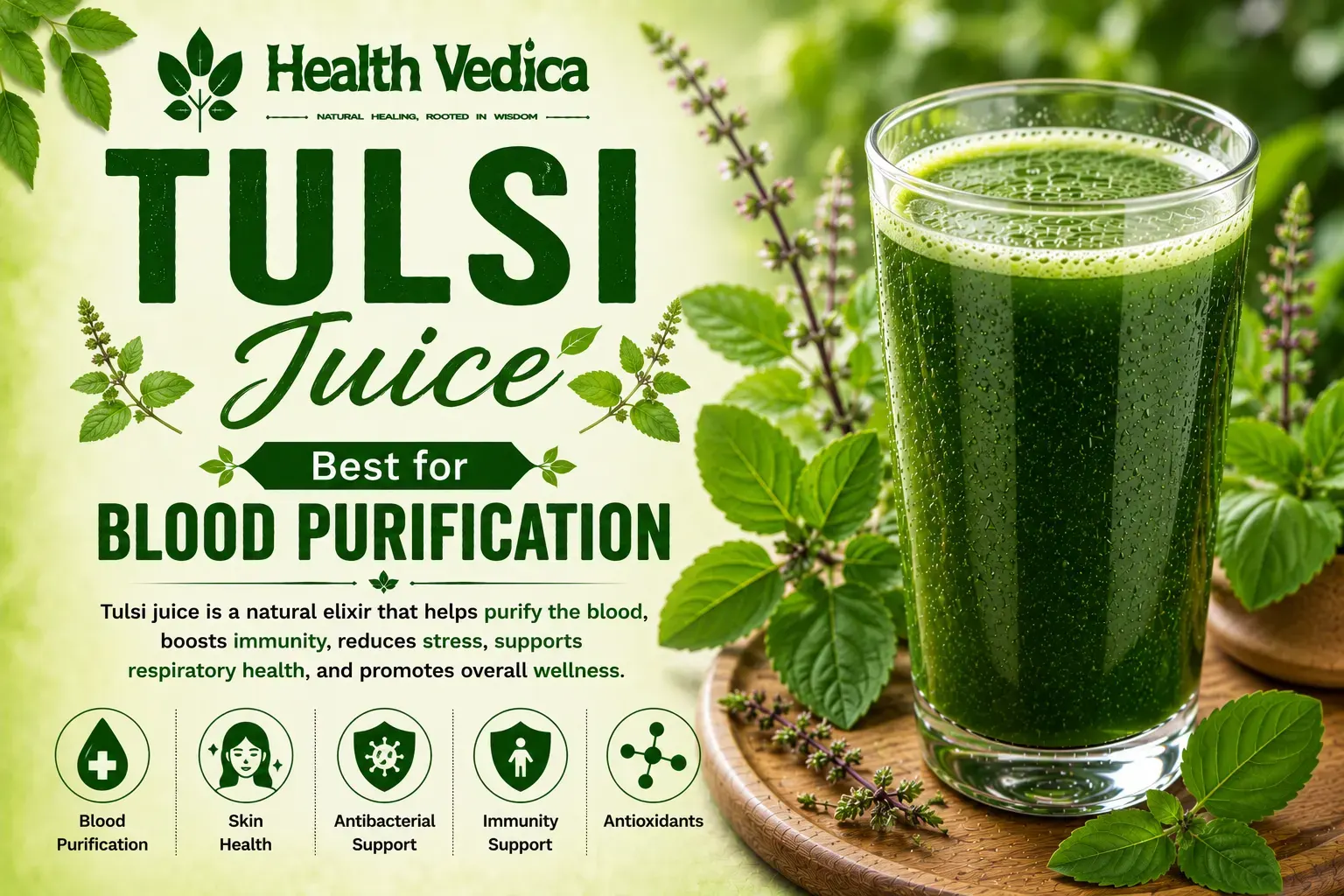
Tulsi Juice, extracted from the leaves of Ocimum sanctum/tenuiflorum — revered as Holy Basil in English and Tulsi in all Indian languages — is the most sacred medicinal herb in Hinduism. Present in virtually every Indian household as a potted plant, Tulsi is worshipped as the manifestation of the divine and simultaneously regarded as a complete pharmacy in a single plant. Modern science has validated over 300 phytochemical compounds in Tulsi with remarkable therapeutic applications. Tulsi juice is the most accessible and culturally significant herbal wellness drink in India.
🧪 Nutritional Value of Tulsi Juice (Per 100ml)
| Nutrient | Amount | Daily Value % |
|---|---|---|
| Calories | ~23 kcal | 1% |
| Vitamin K | 415 mcg | 346% |
| Vitamin A | 5275 IU | 106% |
| Vitamin C | 18 mg | 20% |
| Iron | 3.17 mg | 18% |
| Calcium | 177 mg | 18% |
| Magnesium | 64 mg | 16% |
| Eugenol (Essential Oil) | Very High | — |
| Rosmarinic Acid | High | — |
| Ursolic Acid | High | — |
| Ocimarin, Caryophyllene | Present | — |
🌺 Ayurvedic Properties
In Ayurveda, Tulsi (Surasa or Vishnu Priya) is classified as Katu (pungent) and Tikta (bitter) with a hot potency. It pacifies Vata and Kapha while mildly increasing Pitta. Tulsi is described as Deepana (digestive), Pachana (digestive enzyme stimulant), Kasahara (cough reliever), Shwashara (respiratory healer), Jwaraghna (fever reducer), and Medhya (brain tonic). It is classified as an Adaptogen — a substance that normalizes physiological processes during stress — one of only three plants (along with Ashwagandha and Ginseng) recognized as true adaptogens worldwide.
💚 Health & Healing Benefits
1. Immunity & Anti-Viral Powerhouse: Tulsi's eugenol, rosmarinic acid, and ursolic acid have broad-spectrum antiviral, antibacterial, and antifungal properties. Regular consumption significantly reduces frequency of infections and speeds recovery. Especially potent against respiratory viruses including influenza.
2. Adaptogen & Stress Relief: As a certified adaptogen, Tulsi normalizes cortisol levels, reduces anxiety, improves stress resilience, and prevents adrenal fatigue. Clinical studies show tulsi consumption for 6 weeks significantly improves cognitive function and reduces psychological stress scores.
3. Respiratory Health: Tulsi is India's most relied-upon natural remedy for all respiratory conditions — cough, cold, asthma, bronchitis, and sinusitis. It relieves bronchospasm, reduces mucus production, kills respiratory pathogens, and soothes inflamed airways.
4. Fever Reduction: Tulsi has proven antipyretic (fever-reducing) properties. In Indian households, tulsi-ginger-honey tea is the first remedy given for fever — a tradition supported by both clinical evidence and centuries of use.
5. Blood Sugar Control: Ursolic acid and other tulsi compounds improve pancreatic beta-cell function, enhance insulin secretion, and reduce post-meal glucose spikes. Studies show 200mg of tulsi extract daily can significantly improve blood sugar metrics.
6. Heart Health & Cholesterol: Eugenol in tulsi inhibits platelet aggregation (preventing blood clots), reduces LDL cholesterol, and has mild blood pressure-lowering effects — comprehensively protecting cardiovascular health.
7. Oral & Dental Health: Tulsi's antimicrobial properties make it one of the best natural oral hygiene agents — reducing plaque, fighting gingivitis, freshening breath, and preventing dental cavities when used as a mouth rinse.
8. Mental Health & Cognitive Function: Tulsi has significant anxiolytic (anti-anxiety) and antidepressant properties. It protects neurons from oxidative damage and improves memory and cognitive performance — particularly relevant in today's high-stress modern Indian urban life.
🕐 Best Time & How to Drink
Drink Tulsi juice or Tulsi-infused water in the morning on an empty stomach. 5–10 ml of concentrated tulsi juice or 2–3 cups of tulsi tea daily provides optimal benefits. Can be combined with ginger, honey, lemon, and black pepper for a comprehensive immunity tonic.
💡 Preparation Tips
Pluck 20–25 fresh tulsi leaves (use Rama Tulsi or Krishna Tulsi for maximum medicinal benefit), blend with 100 ml warm water, and strain. Add honey and lemon for taste. Alternatively, steep fresh leaves in boiling water for 5–10 minutes for tulsi tea. Avoid boiling for extended periods as it destroys volatile essential oils. Dry tulsi leaves into powder for convenient year-round use.
⚠️ Precautions
Avoid during pregnancy (may stimulate contractions in large amounts — small culinary amounts are safe). Not recommended if trying to conceive (may reduce male sperm motility at very high doses in animal studies — culinary amounts are fine). People on blood thinners (warfarin) should monitor INR. Avoid with medications for diabetes without blood sugar monitoring. Tulsi contains Vitamin K — people on warfarin should maintain consistent intake levels.
🇮🇳 Indian Dietary & Cultural Uses
Every observant Hindu household has a Tulsi plant in the courtyard, worshipped daily. Used in chai, kadha (traditional decoction), prasad (religious offerings), and puja rituals. Tulsi kadha with ginger, black pepper, and honey is the definitive Indian home remedy for colds. Tulsi seeds (Sabja) are used in summer coolers and falooda. One of India's most commercially successful herbal brands (Himalaya, Patanjali, Dabur) feature tulsi as a primary ingredient.