🌿 Introduction
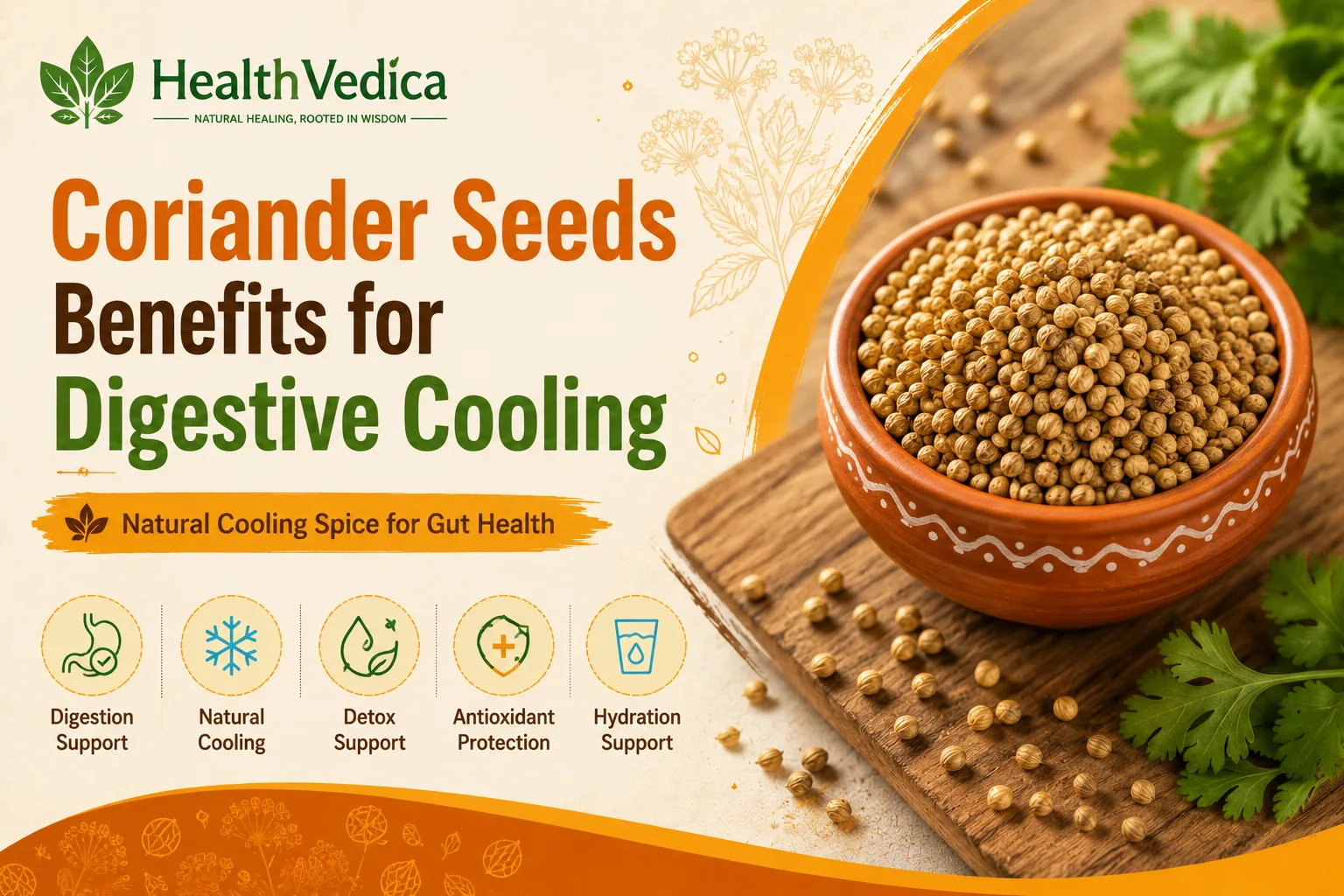
Coriander seeds, called Dhaniya or Dhania in India, are the dried fruits of the Coriandrum sativum plant — a herb whose leaves are also widely used as a fresh garnish (hara dhaniya). Coriander is one of the oldest known spices, with seeds discovered in Egyptian archaeological sites and referenced in ancient Indian, Chinese, and Greek medical texts. Today, India is the world's largest producer and consumer of coriander. Its warm, citrusy, slightly sweet flavor is the backbone of countless spice blends including garam masala, sambar powder, and curry powder. In Ayurveda, dhaniya is treasured for its cooling, digestive, and cholesterol-lowering properties — making it one of the most versatile healing spices.
📊 Nutritional Value Per 100g
| Nutrient | Amount | % Daily Value |
|---|---|---|
| Calories | 298 kcal | 15% |
| Carbohydrates | 54.9 g | 18% |
| Dietary Fiber | 41.9 g | 168% |
| Protein | 12.4 g | 25% |
| Fat | 17.8 g | 27% |
| Calcium | 709 mg | 71% |
| Iron | 16.3 mg | 91% |
| Magnesium | 330 mg | 83% |
| Phosphorus | 409 mg | 41% |
| Potassium | 1267 mg | 36% |
| Zinc | 4.7 mg | 31% |
| Manganese | 1.9 mg | 95% |
| Vitamin C | 21 mg | 35% |
| Vitamin K | 309 mcg | 386% |
| Folate | 150 mcg | 38% |
| Niacin (B3) | 2.1 mg | 11% |
⚗️ Key Bioactive Compounds
Linalool is the primary volatile compound in coriander (accounting for 60–70% of essential oil) with antimicrobial, anti-anxiety, and analgesic properties. Borneol, camphor, and geraniol contribute to coriander's distinctive citrusy-floral aroma and add to its antimicrobial effects. Quercetin and isoquercitrin are powerful flavonoids with antioxidant, anti-inflammatory, and anti-diabetic properties. Beta-sitosterol and other phytosterols in coriander reduce cholesterol absorption in the gut. Coriandrin has specific anti-diabetic and hypolipidemic (cholesterol-lowering) properties identified in research.
🕉️ Ayurvedic Properties & Dosha Effect
Coriander is uniquely described in Ayurveda as Tridoshic — balancing all three doshas (Vata, Pitta, and Kapha) when used appropriately. It is Sheetha Veerya (cooling in potency), pungent and sweet in taste, and light and dry in quality. Dhaniya is one of the rare cooling spices that kindles digestive fire without aggravating Pitta — making it ideal for summer preparations and for people with Pitta constitution. Classical texts describe it as Deepana, Pachana, Trishnahara (relieves excessive thirst), Jwarahara (fever relieving), and Mutrakricchrahara (urinary tract reliever).
💚 Health & Healing Benefits
Cholesterol Management: Coriander's most distinctive benefit is its action on cholesterol. It increases bile secretion (bile draws cholesterol from the blood) and contains phytosterols that block cholesterol absorption in the intestine. Animal studies show significant reduction in total cholesterol, LDL, and triglycerides with coriander supplementation.
Blood Sugar Control: Coriander stimulates insulin secretion and improves insulin sensitivity. It activates certain enzymes that control blood glucose levels. Coriander seed water is a traditional remedy for managing blood sugar spikes after meals.
Digestive Health: Coriander is one of the classic digestive spices. It relieves bloating, gas, nausea, and indigestion by relaxing digestive tract muscles and stimulating enzyme secretion. Its cooling nature makes it particularly effective for acidity and heartburn unlike hotter spices.
Anti-Inflammatory: Quercetin and other antioxidants in coriander suppress inflammatory cytokines and have demonstrated effectiveness in reducing inflammation comparable to some pharmaceutical anti-inflammatory drugs in research models.
Urinary Tract Health: Coriander has natural diuretic properties and is a traditional Ayurvedic remedy for urinary tract infections (UTIs), burning micturition, and kidney stones. Coriander seed water reduces UTI symptoms effectively.
Skin Health: Coriander's antibacterial and antifungal properties make it effective for treating acne, eczema, and fungal skin infections. Its cooling nature soothes inflamed skin. Coriander oil is used in natural skincare for its antimicrobial and antioxidant benefits.
Anxiety & Sleep: Linalool in coriander has proven sedative and anxiolytic effects. Coriander seed extract significantly reduces anxiety in research models and may improve sleep quality.
Heavy Metal Chelation: Coriander is one of very few foods with proven ability to help remove heavy metals (lead, mercury, cadmium) from tissues. This detoxification property is used in complementary medicine for heavy metal exposure.
Eye Health: Rich in antioxidants including quercetin and beta-carotene, coriander protects the eyes from oxidative stress and age-related macular degeneration.
💧 Coriander Seed Water — Cooling Detox Drink
Coriander seed water is a simple and powerful summer remedy. Preparation: Soak 2 teaspoons of coriander seeds in 1 glass of water overnight. Strain and drink in the morning on an empty stomach. For UTI relief, drink 2–3 times daily. For blood sugar management, drink before meals. This cooling drink reduces body heat, relieves UTI symptoms, controls blood sugar, and improves digestion.
🏠 Ayurvedic & Home Remedies Using Coriander Seeds
| Remedy | Preparation | Benefit |
|---|---|---|
| Dhaniya Water (Morning Drink) | Soak 2 tsp coriander seeds overnight, strain and drink water in morning | Cholesterol, blood sugar, digestion, cooling |
| Coriander UTI Relief Drink | Boil 1 tbsp coriander seeds in 2 cups water until half remains, cool and drink | UTI symptoms, burning urination, kidney health |
| Dhaniya Jeera Fennel Tea | Boil equal parts coriander, cumin, fennel seeds in water, strain and drink | IBS, bloating, indigestion, gas, Pitta balance |
| Coriander Paste for Acne | Grind soaked coriander seeds, mix with turmeric, apply on affected skin | Acne, skin infections, inflammation |
| Dhaniya Kadha for Fever | Boil coriander seeds + ginger + tulsi + black pepper in water, add honey, drink warm | Fever reduction, viral infections, immunity |
| Coriander Raita for Pitta | Crush roasted coriander into buttermilk with mint and salt | Cooling, acidity, Pitta balance in summer |
🍛 Indian Culinary Uses
Coriander seeds are the most widely used spice in Indian cooking after salt and chili. Ground dhaniya powder is the base of virtually all Indian curries, gravies, and masalas. Whole coriander seeds are roasted and ground fresh for the most vibrant flavor. They form the backbone of sambar powder, rasam powder, Chettinad masala, and garam masala. Whole seeds are used in pickling (achar), tadka for dals, and as a key ingredient in spice rubs for meats and vegetables. Fresh coriander leaves (hara dhaniya) are used as garnish, while dried seeds are the spice — both come from the same plant but have distinct flavors and uses.
💡 Tips for Best Use
Dry roasting unlocks full flavor: Dry roast coriander seeds on a medium-hot pan for 2–3 minutes, stirring continuously, until fragrant. Allow to cool before grinding — this step is essential for depth of flavor in serious Indian cooking. Freshly ground is best: Pre-ground coriander powder loses its volatile oils within weeks. Grind in small batches for the most aromatic results. Combination therapy: The Ayurvedic combination of coriander + cumin + fennel (equal parts) is called the three cooling seeds and is one of the most effective digestive remedies. Storage: Whole seeds last 2–3 years; ground powder 6–12 months in airtight containers away from heat and light.
⚠️ Precautions & Side Effects
Coriander is generally safe for all ages in culinary amounts. Some individuals (especially those with ragweed allergy) may experience cross-allergic reactions to coriander. Very large amounts may lower blood sugar excessively in diabetics on medication. Coriander has mild diuretic effects — stay well hydrated if consuming medicinal amounts. Avoid excessive medicinal doses during pregnancy as high amounts may stimulate uterine activity.