🩺 What Are Piles and Constipation?
Piles (hemorrhoids) are swollen veins in the rectum or anus that can cause pain, itching, discomfort and bleeding during bowel movements. Constipation is a condition characterized by infrequent, difficult or hard bowel movements.
Since constipation is one of the major causes of piles, dietary improvements are often a key part of prevention and management.
🔬 How Diet Helps Piles and Constipation
A proper diet helps soften stools and promotes easier bowel movements.
- Increases stool bulk
- Reduces straining during bowel movements
- Supports gut health
- Improves digestion
- Helps maintain hydration
- May reduce piles discomfort
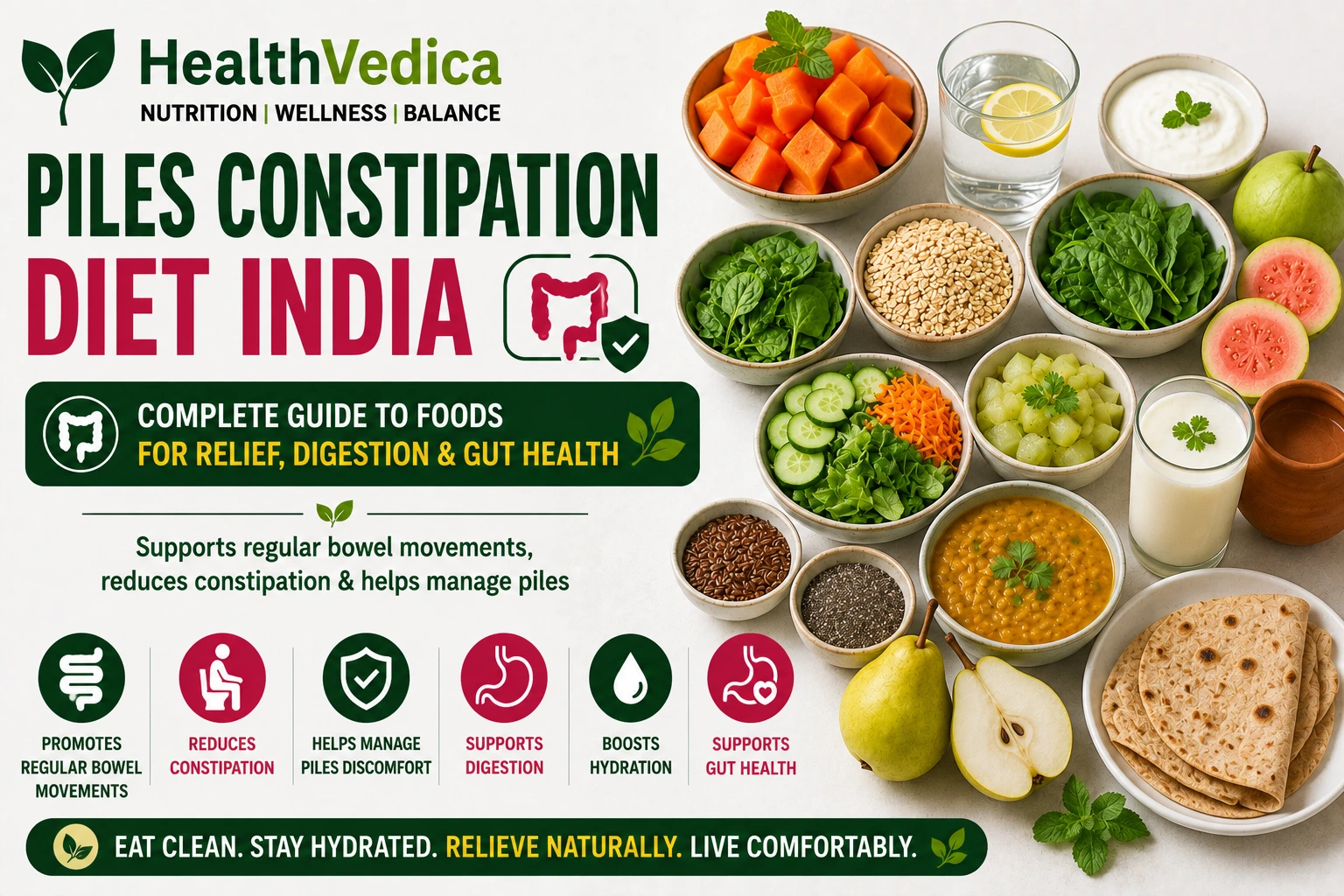
✅ Best Foods for Piles and Constipation
| Food | Main Benefit |
|---|---|
| Papaya | Supports digestion |
| Guava | High fiber |
| Pear | Improves bowel movements |
| Oats | Soluble fiber source |
| Whole Wheat | Supports regularity |
| Flaxseeds | Fiber and healthy fats |
| Chia Seeds | Absorbs water and softens stool |
| Spinach | Fiber-rich vegetable |
| Bottle Gourd | Hydrating vegetable |
| Curd | Supports gut bacteria |
🍈 Fruits That Help Relieve Constipation
Fruits provide fiber, water and natural compounds that support healthy bowel movements.
- Papaya
- Guava
- Pear
- Apple (with skin)
- Orange
- Mosambi
- Kiwi
- Prunes
Regular fruit intake can significantly improve digestive health.
🌾 Whole Grains and Fiber-Rich Foods
Fiber is one of the most important nutrients for constipation prevention.
- Oats
- Whole wheat roti
- Brown rice
- Barley
- Millets
- Broken wheat (Dalia)
Increasing fiber gradually helps prevent digestive discomfort.
🥬 Vegetables for Better Digestion
Vegetables contribute both fiber and water.
- Spinach
- Bottle gourd
- Ridge gourd
- Pumpkin
- Carrot
- Beans
- Cabbage
- Broccoli
Including vegetables in both lunch and dinner can improve bowel regularity.
🌱 Seeds That Support Bowel Movements
Seeds are highly beneficial due to their fiber content.
- Flaxseeds
- Chia seeds
- Pumpkin seeds
- Sunflower seeds
Soaked chia seeds and ground flaxseeds are commonly used to support digestive health.
🥛 Probiotic Foods
Healthy gut bacteria play an important role in digestion.
- Curd
- Buttermilk
- Traditional fermented foods
These foods may help maintain a healthy digestive environment.
💧 Hydration Is Essential
Fiber works best when combined with adequate water intake.
Helpful options include:
- Water
- Coconut water
- Buttermilk
- Lemon water
- Fresh fruit juices without added sugar
Poor hydration can worsen constipation even when fiber intake is high.
⚠️ Foods to Limit During Piles and Constipation
| Food | Reason |
|---|---|
| Deep Fried Foods | May worsen digestion |
| Fast Foods | Low fiber content |
| Refined Flour Foods | Can worsen constipation |
| Excess Cheese | May slow bowel movements |
| Sugary Snacks | Poor nutritional quality |
| Highly Processed Foods | Low fiber |
🚽 Healthy Toilet Habits
Diet works best when combined with proper bowel habits.
- Do not ignore the urge to pass stool
- Avoid excessive straining
- Do not spend long periods on the toilet
- Stay physically active
- Maintain regular meal timings
These habits help reduce pressure on hemorrhoidal veins.
🏃 Physical Activity and Digestion
Regular movement helps stimulate bowel activity.
- Walking
- Yoga
- Light stretching
- Cycling
Even 20–30 minutes of daily walking can support digestive health.
🍽️ Sample Piles and Constipation Friendly Indian Meal Plan
Early Morning: Warm water with lemon
Breakfast: Oats porridge with papaya
Mid-Morning: Guava or pear
Lunch: Brown rice, dal, spinach curry and salad
Evening: Buttermilk and roasted seeds
Dinner: Whole wheat roti, bottle gourd curry and vegetables
Before Bed: Warm water or soaked chia seeds
⚠️ Common Mistakes That Worsen Constipation
- Skipping breakfast
- Drinking insufficient water
- Eating excessive processed foods
- Ignoring bowel urges
- Sedentary lifestyle
- Suddenly increasing fiber without hydration
💪 Benefits of a High-Fiber Digestive Health Diet
- Promotes regular bowel movements
- Reduces constipation risk
- May reduce piles discomfort
- Supports gut health
- Improves digestive function
- Supports overall wellness
💡 Final Thoughts
A diet rich in fiber, fruits, vegetables, whole grains, seeds and fluids is one of the most effective natural approaches for managing constipation and reducing the risk of piles. Papaya, guava, oats, flaxseeds, spinach and adequate water intake are particularly helpful.
Consistency matters more than quick fixes. Combining proper nutrition, hydration, regular physical activity and healthy bowel habits can significantly improve digestive health and long-term comfort.