🌿 Introduction
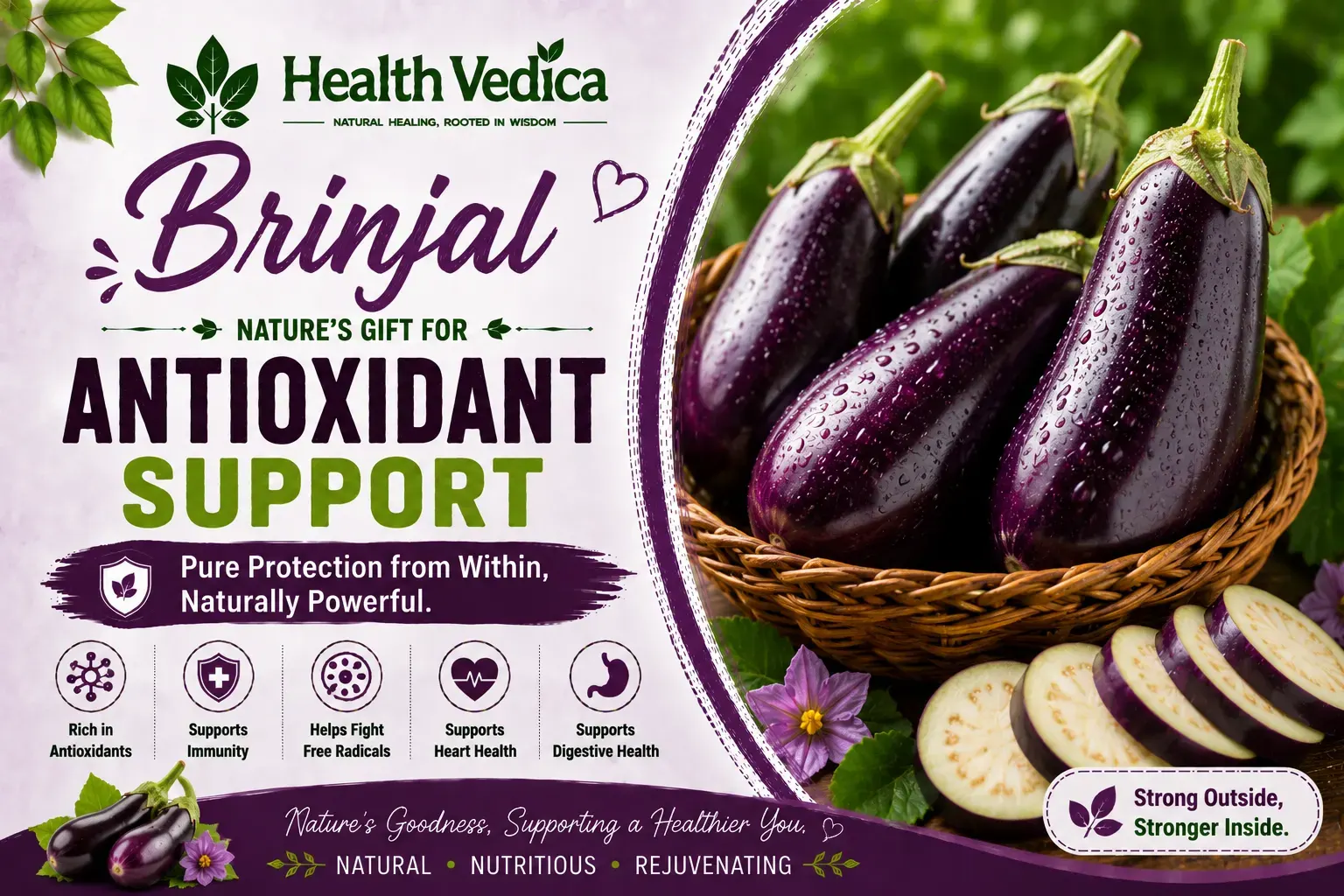
Brinjal, known as Baingan in India and Eggplant globally, is a deep purple, meaty vegetable widely used across Indian regional cuisines. It is one of the few vegetables richest in nasunin, a powerful brain-protective antioxidant. Brinjal is also notable for its chlorogenic acid content, which supports heart health and blood sugar regulation. From Baingan Bharta to Vangi Bath, it holds an iconic place in Indian culinary tradition.
📊 Nutritional Value Per 100g
| Nutrient | Amount | % Daily Value |
|---|---|---|
| Calories | 25 kcal | 1% |
| Carbohydrates | 5.9 g | 2% |
| Protein | 1 g | 2% |
| Fat | 0.2 g | 0% |
| Fiber | 3 g | 11% |
| Vitamin C | 2.2 mg | 2% |
| Vitamin K | 3.5 mcg | 3% |
| Folate | 22 mcg | 6% |
| Potassium | 229 mg | 7% |
| Manganese | 0.23 mg | 10% |
| Nasunin (Anthocyanin) | High | — |
| Chlorogenic Acid | High | — |
📉 Glycemic Index
Brinjal has a low glycemic index of around 15 and is rich in fiber, which slows the digestion of carbohydrates and prevents blood sugar spikes. It is recommended as a diabetes-friendly vegetable in Indian diet plans.
🕉️ Ayurvedic Properties & Dosha Effect
In Ayurveda, brinjal is considered Guru (heavy) and Ushna (heating in potency). It stimulates Agni (digestive fire) but may aggravate Pitta in excess. Purple brinjal balances Vata and Kapha. Ayurveda recommends consuming brinjal with warming spices like turmeric, ginger, and asafoetida (hing) to improve its digestibility and reduce its gas-causing potential.
💚 Health & Healing Benefits
Brinjal's rich purple color comes from nasunin, an anthocyanin antioxidant that protects brain cell membranes from oxidative damage and free radicals — making it one of the best brain-protective vegetables. Chlorogenic acid in brinjal is one of the most potent natural antioxidants, with proven benefits in lowering blood pressure, reducing LDL cholesterol, and supporting anti-cancer activity. Brinjal is high in dietary fiber (3g per 100g), supporting healthy gut bacteria, regular bowel movements, and reducing colorectal cancer risk. Its natural compounds support liver enzyme activity and detoxification. Brinjal is also helpful for blood sugar regulation and is frequently recommended in Type 2 diabetes management.
🍛 Indian Dietary Uses
Brinjal is used in iconic Indian dishes like Baingan Bharta (roasted mash), Begun Bhaja, Vangi Bath, Ennai Kathirikai (stuffed brinjal in Tamil cuisine), and Baingan ka Salan. It is one of the most versatile vegetables in Indian regional cooking.