🌿 Introduction
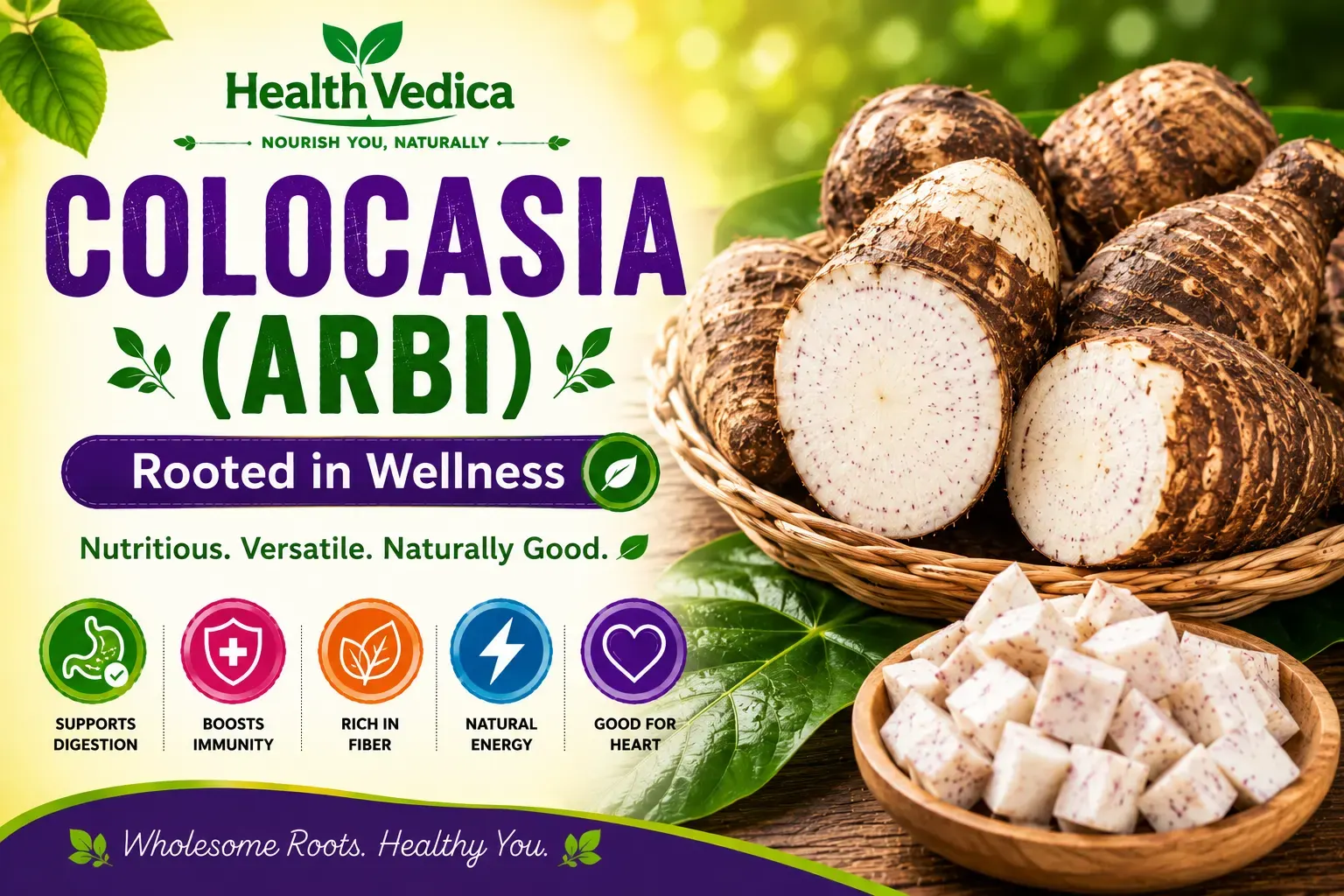
Colocasia (Colocasia esculenta), commonly known as Arbi, Taro Root or Chembu, is an ancient tropical root vegetable consumed across India, Southeast Asia and the Pacific regions. It belongs to the same family as elephant ear plants and has been valued for centuries as a nourishing source of energy, fiber and minerals.
Arbi is widely used in Indian cuisine through dishes like Arbi curry, dry fry, masala arbi and traditional festival preparations. It contains complex carbohydrates, resistant starch, potassium, manganese and antioxidants that support digestive health, energy production and overall wellness.
In Ayurveda, Colocasia is considered a strengthening food when properly prepared with digestive spices. Because of its heavy nature, traditional cooking methods always include spices like cumin, ajwain, ginger and hing to improve digestion.
📊 Nutritional Value Per 100g of Colocasia (Arbi)
| Nutrient | Amount | % Daily Value (DV) |
|---|---|---|
| Calories | 112 kcal | 6% |
| Protein | 1.5 g | 3% |
| Total Fat | 0.2 g | <1% |
| Carbohydrates | 26.5 g | 10% |
| Dietary Fiber | 4.1 g | 15% |
| Resistant Starch | Moderate amount | — |
| Vitamin C | 4 mg | 4% |
| Vitamin B6 | 0.28 mg | 16% |
| Potassium | 591 mg | 13% |
| Magnesium | 33 mg | 8% |
| Manganese | 0.38 mg | 17% |
| Iron | 0.55 mg | 3% |
📉 Glycemic Index
Colocasia has a moderate glycemic index (approximately 50–60 depending on preparation). Although it is a starchy vegetable, its fiber and resistant starch content slow digestion compared with refined carbohydrate foods.
Boiling and combining Arbi with protein-rich foods, vegetables and healthy fats can help improve blood sugar response.
🧬 Powerful Plant Compounds
Colocasia contains polyphenols, flavonoids, carotenoids, resistant starch and dietary fiber. These compounds contribute antioxidant activity and support healthy inflammatory balance.
💊 Vitamins & Minerals Explained
Potassium supports blood pressure regulation, fluid balance and muscle function. Vitamin B6 helps energy metabolism and nervous system function. Magnesium supports muscles, nerves and glucose metabolism. Manganese contributes to antioxidant protection.
🕉️ Ayurvedic Properties & Dosha Effect
According to Ayurveda, Arbi has a Madhura (sweet) taste and is considered Guru (heavy) and nourishing. It provides strength and energy but requires proper preparation for easy digestion.
Colocasia may help balance Vata due to its nourishing quality. However, excessive intake can increase Kapha because of its heavy and starchy nature. Adding ginger, ajwain, cumin, black pepper, turmeric and hing improves digestion and reduces gas formation.
💚 Evidence-Based Health Benefits
Supports Digestive Health: Colocasia provides fiber and resistant starch that promote healthy bowel movements and support beneficial gut bacteria.
Provides Long-Lasting Energy: Complex carbohydrates provide sustained energy, making Arbi useful for physically active individuals.
Heart Health Support: Potassium helps maintain healthy blood pressure and supports cardiovascular function.
Weight Management: Fiber increases fullness and may help control appetite when eaten in appropriate portions.
Supports Blood Sugar Balance: Resistant starch and fiber slow carbohydrate digestion, helping reduce sudden glucose spikes.
Supports Nervous System: Vitamin B6 contributes to healthy brain function and neurotransmitter production.
Antioxidant Protection: Plant compounds help protect cells from oxidative stress.
🌿 Colocasia Leaves Benefits
Colocasia leaves are traditionally consumed in many Indian regions. They contain fiber, vitamin A precursors, calcium and antioxidants. However, leaves must always be cooked properly because raw leaves contain calcium oxalate crystals that may irritate the mouth and throat.
👨👩👧 Who Should Eat Colocasia?
Colocasia is suitable for healthy adults, athletes, people requiring energy-rich foods, individuals following traditional Indian diets and those looking to increase fiber intake.
🚫 Who Should Limit Colocasia?
People with kidney stone history, calcium oxalate sensitivity or severe digestive issues should consume moderate amounts. Individuals with diabetes should monitor portion sizes because Arbi is carbohydrate-rich.
🌿 Healthy Recipes & Traditional Preparations
Arbi Masala: A popular North Indian preparation cooked with spices and herbs.
Arbi Fry: Boiled Arbi lightly sautéed with turmeric, chilli and cumin.
Patra: Traditional colocasia leaf rolls prepared with gram flour and spices.
Chembu Curry: South Indian style colocasia curry with coconut and spices.
Arbi with Yogurt: A cooling preparation combining spices and curd.
🥗 Best Ways to Eat Colocasia
Always cook Colocasia thoroughly before eating. Boiling or pressure cooking reduces irritation-causing compounds. Avoid frequent deep frying to maintain its nutritional benefits.
🍽️ Best Food Combinations
Arbi pairs well with yogurt, tamarind, cumin, ajwain, ginger, garlic, turmeric, coriander, coconut and lentils.
🧊 Storage Tips
Store raw Colocasia in a cool, dry place. Avoid washing before storage because excess moisture can accelerate spoilage.
📅 Daily Recommended Intake
100–150 grams of cooked Colocasia is suitable for most healthy adults as part of a balanced diet.
⚠️ Precautions
Never consume raw Colocasia because calcium oxalate crystals may cause itching, burning sensation and throat irritation. Always peel and cook thoroughly. People with kidney stone problems should seek personalized dietary advice.
🔬 Scientific Highlights
Research on Colocasia highlights its resistant starch content, antioxidant compounds, dietary fiber benefits and potential role in supporting gut health and metabolic wellness. Traditional use and modern research both recognize its nutritional value as an energy-rich root vegetable.
❌ Common Myths & Facts
❌ Myth: Arbi has no health benefits because it is starchy.
✅ Fact: Arbi provides fiber, resistant starch, potassium and important minerals.
❌ Myth: Colocasia can be eaten raw like some vegetables.
✅ Fact: It must always be properly cooked before consumption.
❌ Myth: People with diabetes must completely avoid Arbi.
✅ Fact: Controlled portions can be included depending on individual blood sugar response.
🌍 Fun Facts
- Colocasia is one of the oldest cultivated root crops in human history.
- Taro is a staple food in many Pacific island cultures.
- India has many regional recipes using both Arbi roots and leaves.
- The plant is famous for its large elephant-ear-shaped leaves.
- Taro flour is naturally gluten-free and used in some traditional foods.
🥬 Edible Parts & Their Benefits
| Edible Part | Health Benefits |
|---|---|
| Root (Corm) | Provides complex carbohydrates, fiber, potassium and resistant starch. |
| Leaves | Rich in fiber, antioxidants and vitamin A precursors when cooked properly. |
| Petiole (Leaf Stem) | Consumed traditionally and provides fiber. |
🌱 Seasonality in India
| Season | Availability |
|---|---|
| Peak Season | July – January |
| Best Quality | Monsoon and winter months |
| Buying Tip | Select firm, dry roots without soft patches or mold. |
⏰ Best Time to Eat
Colocasia is best consumed during lunch when digestion is naturally stronger. Pairing it with spices and protein-rich foods improves nutritional balance.