🌿 Introduction
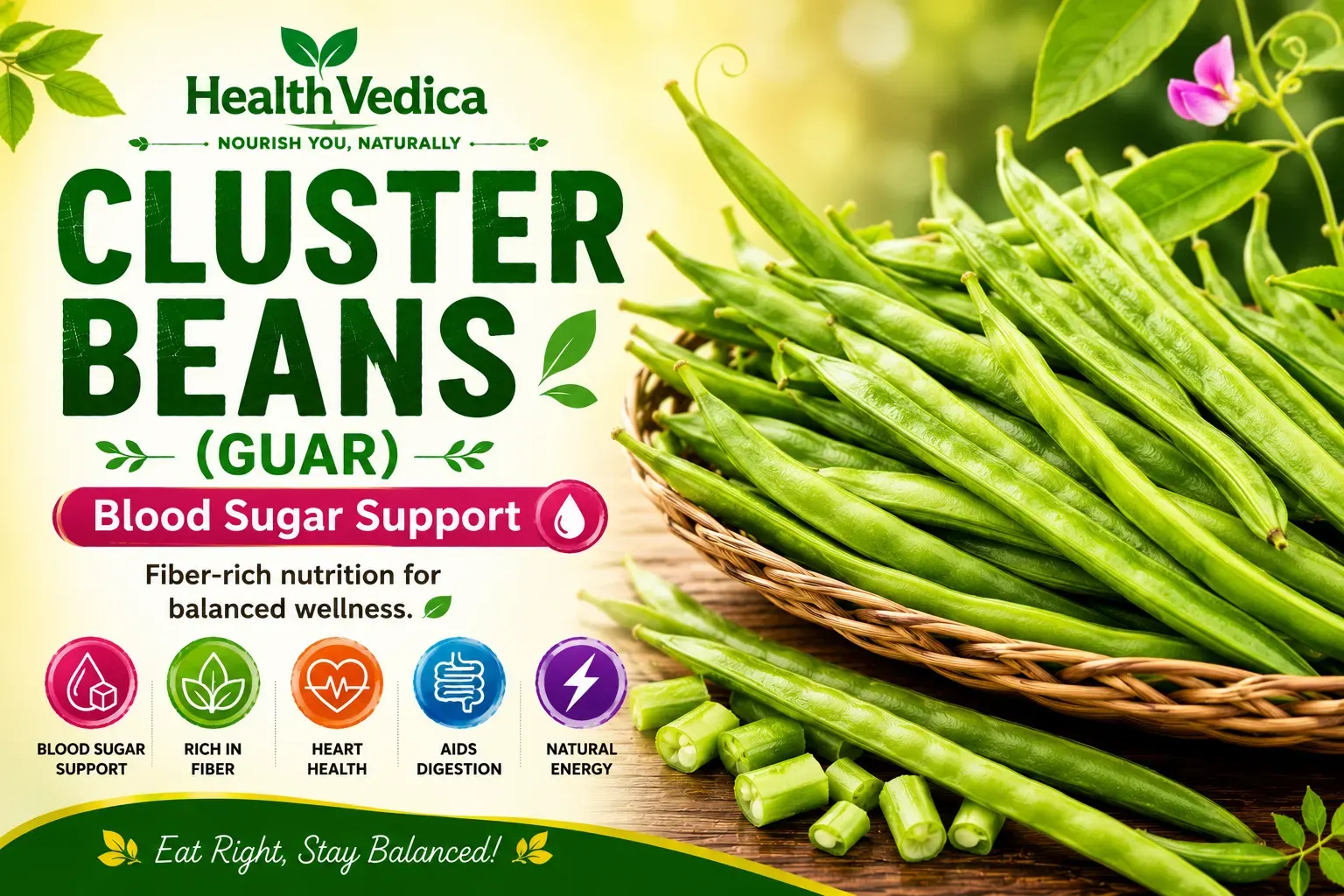
Cluster Beans (Cyamopsis tetragonoloba), popularly known as Guar, are slender green pods widely consumed throughout India, especially in Rajasthan, Gujarat, Maharashtra, Karnataka and Andhra Pradesh. Although famous commercially for producing guar gum, the fresh vegetable itself is a nutritional powerhouse. Rich in soluble fiber, protein, folate, iron and antioxidants, cluster beans help regulate blood sugar, improve digestion, support heart health and aid weight management. Ayurveda considers guar pods beneficial for balancing metabolism and improving digestive function when cooked with digestive spices.
📊 Nutritional Value Per 100g of Cluster Beans
| Nutrient | Amount | % Daily Value (DV) |
|---|---|---|
| Calories | 31 kcal | 2% |
| Protein | 3.2 g | 6% |
| Total Fat | 0.4 g | <1% |
| Carbohydrates | 10.8 g | 4% |
| Dietary Fiber | 5.3 g | 19% |
| Natural Sugars | 2.2 g | — |
| Vitamin C | 49 mg | 54% |
| Folate (Vitamin B9) | 62 mcg | 16% |
| Calcium | 130 mg | 13% |
| Iron | 4.5 mg | 25% |
| Potassium | 340 mg | 7% |
| Magnesium | 58 mg | 14% |
📉 Glycemic Index
Cluster Beans have a low glycemic index of approximately 30. Their exceptionally high soluble fiber slows carbohydrate absorption and helps stabilize post-meal blood sugar levels.
🧬 Powerful Plant Compounds
Cluster Beans contain galactomannans (soluble fiber), flavonoids, polyphenols, saponins, chlorophyll, vitamin C and antioxidant carotenoids that help reduce oxidative stress and inflammation.
💊 Vitamins & Minerals Explained
Vitamin C boosts immunity and collagen production. Folate supports healthy cell growth and pregnancy. Iron contributes to red blood cell formation, while calcium and magnesium support bones and muscles. Soluble fiber improves cholesterol metabolism and digestive health.
🕉️ Ayurvedic Properties & Dosha Effect
According to Ayurveda, Cluster Beans have a Kashaya (astringent) and mildly Tikta (bitter) taste with a cooling nature. They are considered Laghu (light) but can increase Vata Dosha if consumed excessively or without digestive spices. Cooking them with cumin, asafoetida (hing), ginger and turmeric improves digestibility. They help balance Pitta and Kapha while supporting digestive fire and metabolism.
💚 Evidence-Based Health Benefits
Blood Sugar Control: The soluble fiber (galactomannan) in cluster beans slows glucose absorption, helping reduce blood sugar spikes after meals.
Supports Heart Health: Soluble fiber helps lower LDL cholesterol, while potassium supports healthy blood pressure.
Improves Digestive Health: Fiber promotes healthy bowel movements, nourishes beneficial gut bacteria and supports overall digestive wellness.
Supports Weight Management: High fiber increases fullness, helping reduce overall calorie intake.
Bone Health: Calcium, magnesium and phosphorus contribute to stronger bones and teeth.
Supports Healthy Pregnancy: Folate plays an important role in fetal neural tube development.
Helps Prevent Iron Deficiency: Cluster beans provide plant-based iron, especially beneficial when paired with vitamin C-rich foods.
👨👩👧 Who Should Eat Cluster Beans?
Cluster Beans are excellent for people with diabetes, pregnant women, older adults, vegetarians, athletes, individuals with high cholesterol and anyone seeking a fiber-rich diet.
🚫 Who Should Limit Cluster Beans?
People with irritable bowel syndrome (IBS) or those unaccustomed to high-fiber diets should introduce cluster beans gradually. Excess intake may cause bloating or gas due to their high soluble fiber content.
🌿 Healthy Recipes & Home Remedies
Guar Sabzi: Traditional stir-fry prepared with onions, tomatoes and Indian spices.
Cluster Beans with Moong Dal: A protein-rich, balanced meal.
Rajasthani Gavar ki Sabzi: Cooked with yogurt and aromatic spices.
Cluster Bean Stir-Fry: Sauté with garlic, mustard seeds and curry leaves.
Mixed Vegetable Curry: Combine with carrots, peas and potatoes for added nutrition.
🥗 Best Ways to Eat Cluster Beans
Steam or lightly sauté cluster beans to preserve nutrients. Remove the fibrous ends before cooking. Cooking with digestive spices such as cumin, hing and ginger improves digestibility.
🍽️ Best Food Combinations
Cluster Beans pair well with moong dal, garlic, ginger, cumin, coriander, turmeric, sesame seeds, yogurt and whole grains.
🧊 Storage Tips
Store fresh cluster beans in the refrigerator for up to one week. Choose bright green, tender pods without brown spots or excessive fibers.
📅 Daily Recommended Intake
75–150 grams of cooked Cluster Beans daily is appropriate for most healthy adults.
⚠️ Precautions
Excessive consumption may cause gas or bloating because of the high soluble fiber content. Individuals taking blood sugar-lowering medications should monitor glucose levels regularly as part of their overall diabetes management.
🔬 Scientific Highlights
Modern research shows that guar fiber (galactomannan) helps improve glycemic control, reduce LDL cholesterol, enhance satiety and support gut microbiota. Studies also suggest antioxidant and anti-inflammatory effects from the vegetable's natural phytochemicals.
❌ Common Myths & Facts
❌ Myth: Cluster Beans are only valuable for making guar gum.
✅ Fact: Fresh cluster beans are highly nutritious and rich in fiber, vitamins and minerals.
❌ Myth: Cluster Beans should be avoided by diabetics.
✅ Fact: They are among the best vegetables for blood sugar management because of their soluble fiber.
❌ Myth: Cluster Beans always cause gas.
✅ Fact: Proper cooking with digestive spices significantly reduces digestive discomfort for most people.
🌍 Fun Facts
- India produces over 80% of the world's guar crop.
- Guar gum extracted from cluster beans is widely used in foods, pharmaceuticals and cosmetics.
- Cluster Beans belong to the legume family, unlike most gourds.
- The crop is highly drought-resistant and thrives in arid regions.
- Fresh young pods are softer, sweeter and more nutritious than mature pods.
🥬 Edible Parts & Their Benefits
| Edible Part | Health Benefits |
|---|---|
| Tender Pods | Excellent source of soluble fiber, vitamin C and minerals. |
| Young Seeds | Contain plant protein, fiber and healthy carbohydrates. |
| Leaves | Consumed in some regions and provide antioxidants and micronutrients. |
🌱 Seasonality in India
| Season | Availability |
|---|---|
| Peak Season | July – October |
| Available | Throughout most of the year in major markets. |
| Buying Tip | Select young, slender, bright green pods that snap easily when bent. |
⏰ Best Time to Eat
Cluster Beans are best consumed during lunch. Pairing them with dal, yogurt or whole grains creates a balanced meal rich in protein and fiber.