🌿 Introduction
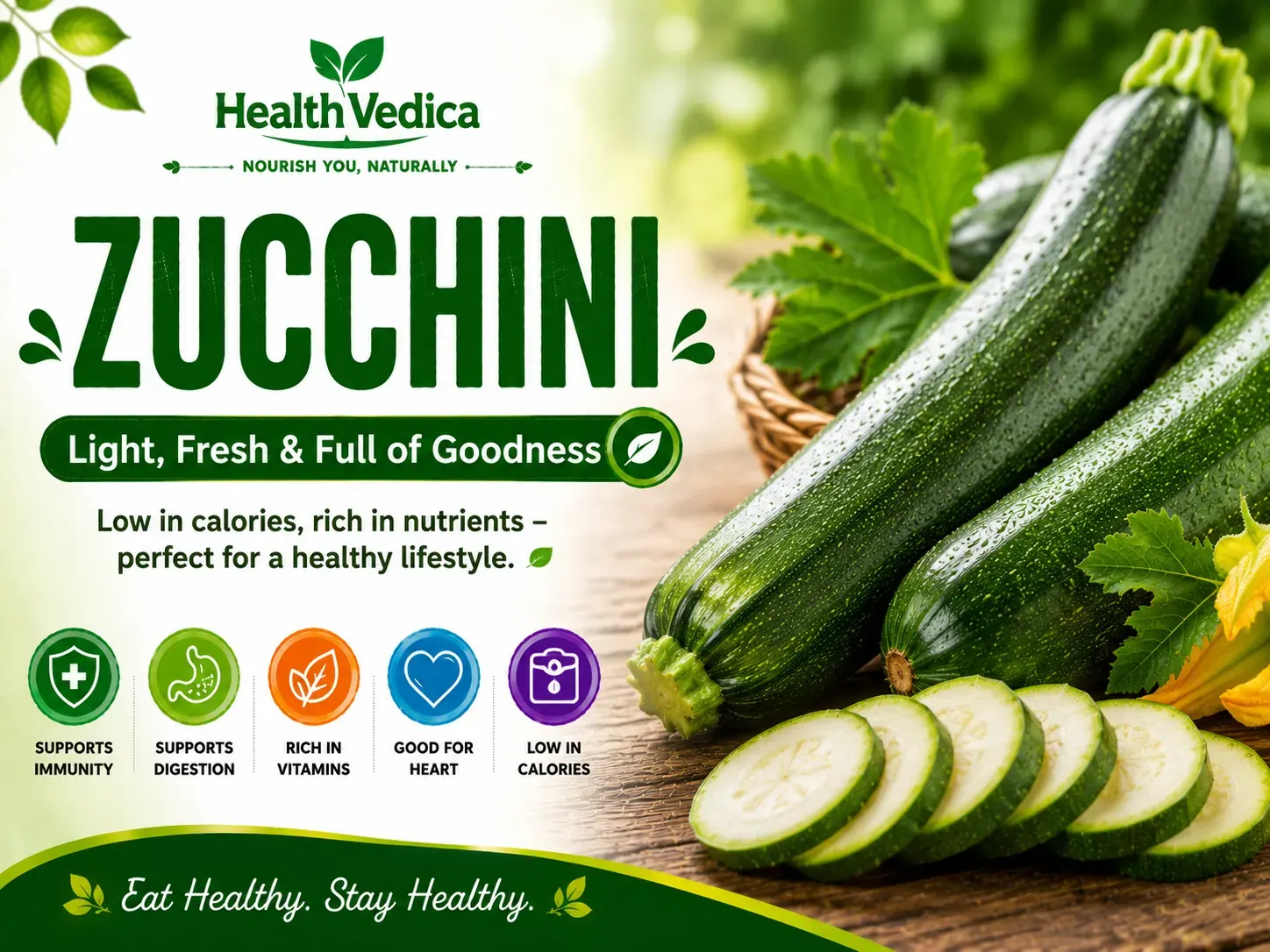
Zucchini (Cucurbita pepo), also known as Courgette, is a nutrient-rich summer squash belonging to the cucumber, pumpkin and melon family (Cucurbitaceae). It is known for its mild flavour, soft texture and high water content, making it a popular vegetable in healthy diets worldwide.
Zucchini is naturally low in calories and carbohydrates while providing fiber, potassium, vitamin C, vitamin A, antioxidants and important plant compounds. It is widely used in salads, soups, stir-fries, noodles, grilled dishes and low-carbohydrate recipes.
Although zucchini is not a traditional Indian vegetable, it is increasingly popular in Indian kitchens because of its easy digestion, versatility and suitability for weight-conscious diets.
📊 Nutritional Value Per 100g of Zucchini
| Nutrient | Amount | % Daily Value (DV) |
|---|---|---|
| Calories | 17 kcal | 1% |
| Protein | 1.2 g | 2% |
| Total Fat | 0.3 g | <1% |
| Carbohydrates | 3.1 g | 1% |
| Dietary Fiber | 1 g | 4% |
| Water Content | 94 g | — |
| Vitamin C | 17.9 mg | 20% |
| Vitamin A | 10 mcg | 1% |
| Vitamin K | 4.3 mcg | 4% |
| Potassium | 261 mg | 6% |
| Magnesium | 18 mg | 4% |
| Manganese | 0.18 mg | 8% |
| Folate | 24 mcg | 6% |
📉 Glycemic Index
Zucchini has a very low glycemic index because it contains minimal carbohydrates and high water content. It is considered a diabetes-friendly vegetable when included as part of a balanced diet.
🧬 Powerful Plant Compounds
Zucchini contains carotenoids, lutein, zeaxanthin, flavonoids and polyphenols. These antioxidants help protect cells from oxidative stress and support eye and overall health.
💊 Vitamins & Minerals Explained
Vitamin C supports immunity, collagen formation and antioxidant protection. Potassium helps maintain fluid balance and healthy blood pressure. Magnesium supports muscle function, energy metabolism and nervous system health. Folate contributes to healthy cell growth.
🕉️ Ayurvedic Perspective & Dosha Effect
Zucchini is not extensively described in classical Ayurveda because it is a relatively modern vegetable in Indian diets. However, based on its qualities, it is considered a light, cooling and hydrating vegetable.
Its cooling nature may help balance Pitta Dosha, while its water and fiber content can support digestion. People with excess Vata may prefer cooked zucchini with warming spices like cumin, ginger, black pepper and turmeric.
💚 Evidence-Based Health Benefits
Supports Weight Management: With only 17 calories per 100g and high water content, zucchini provides volume and fullness without adding excessive calories.
Improves Digestive Health: Fiber supports regular bowel movements and contributes to a healthy gut microbiome.
Supports Heart Health: Potassium helps maintain healthy blood pressure, while fiber supports a healthy cholesterol profile.
Eye Health Support: Zucchini contains lutein and zeaxanthin, antioxidants associated with protecting eye tissues.
Blood Sugar Friendly: Low carbohydrate content and fiber make zucchini suitable for balanced diabetic meal plans.
Hydration Support: Its high water content contributes to daily fluid intake, especially during warmer months.
Anti-Oxidative Protection: Plant compounds help protect cells from oxidative damage.
👁️ Zucchini & Eye Health
Zucchini contains carotenoids including lutein and zeaxanthin, which accumulate in the retina. These compounds help filter harmful blue light and support long-term eye wellness when consumed regularly as part of a nutrient-rich diet.
👨👩👧 Who Should Eat Zucchini?
Zucchini is suitable for children, adults, elderly people, individuals managing weight, people following low-carbohydrate diets and anyone looking to increase vegetable intake.
🚫 Who Should Limit Zucchini?
People with allergies to squash family vegetables should avoid zucchini. Individuals with sensitive digestion may need to introduce raw zucchini gradually.
🌿 Healthy Recipes & Preparations
Zucchini Soup: A light and hydrating soup prepared with herbs and vegetables.
Zucchini Stir Fry: Cooked with garlic, spices and olive oil.
Zucchini Sabzi: Indian-style preparation with turmeric, cumin and coriander.
Zucchini Noodles: A low-carbohydrate alternative to pasta.
Grilled Zucchini: Prepared with herbs, pepper and lemon.
🥗 Best Ways to Eat Zucchini
Zucchini can be eaten raw, steamed, grilled, roasted or lightly sautéed. Avoid excessive cooking because prolonged heat may reduce some heat-sensitive nutrients.
🍽️ Best Food Combinations
Zucchini pairs well with tomatoes, garlic, basil, coriander, lemon, nuts, seeds, lentils and whole grains.
🧊 Storage Tips
Store zucchini in the refrigerator without washing until use. Choose firm zucchini with smooth skin and avoid soft or damaged pieces.
📅 Daily Recommended Intake
150–250 grams of zucchini can be consumed regularly as part of a balanced vegetable intake.
⚠️ Precautions
Rarely, bitter zucchini may contain higher levels of cucurbitacins, which can cause digestive discomfort. Avoid consuming extremely bitter zucchini. People with vegetable allergies should exercise caution.
🔬 Scientific Highlights
Research on zucchini highlights its role as a low-calorie vegetable rich in antioxidants, fiber, potassium and carotenoids. Regular consumption of squash vegetables is associated with improved dietary quality and better intake of protective nutrients.
❌ Common Myths & Facts
❌ Myth: Zucchini has no nutrition because it contains mostly water.
✅ Fact: Zucchini provides fiber, potassium, vitamin C and antioxidants.
❌ Myth: Zucchini is only useful for weight loss.
✅ Fact: It also supports heart health, digestion and eye wellness.
❌ Myth: Zucchini must always be peeled.
✅ Fact: The skin is edible and contains additional nutrients and antioxidants.
🌍 Fun Facts
- Zucchini is technically a fruit because it develops from a flower.
- It belongs to the same family as pumpkin, cucumber and squash.
- Zucchini flowers are edible and considered a delicacy in some cuisines.
- The name zucchini comes from the Italian word meaning small squash.
- Large zucchini can grow quickly if not harvested young.
🥬 Edible Parts & Their Benefits
| Edible Part | Health Benefits |
|---|---|
| Fruit (Zucchini Body) | Provides hydration, fiber, potassium and antioxidants. |
| Skin | Contains fiber and protective plant compounds. |
| Flowers | Edible and contain small amounts of nutrients. |
| Seeds | Provide healthy fats, protein and minerals. |
🌱 Seasonality in India
| Season | Availability |
|---|---|
| Peak Season | Summer and early monsoon |
| Best Climate | Warm growing conditions |
| Buying Tip | Select small to medium-sized firm zucchini with glossy skin. |
⏰ Best Time to Eat
Zucchini can be consumed during lunch or dinner. Lightly cooked zucchini is generally easier to digest than large amounts of raw zucchini.