🌿 Introduction
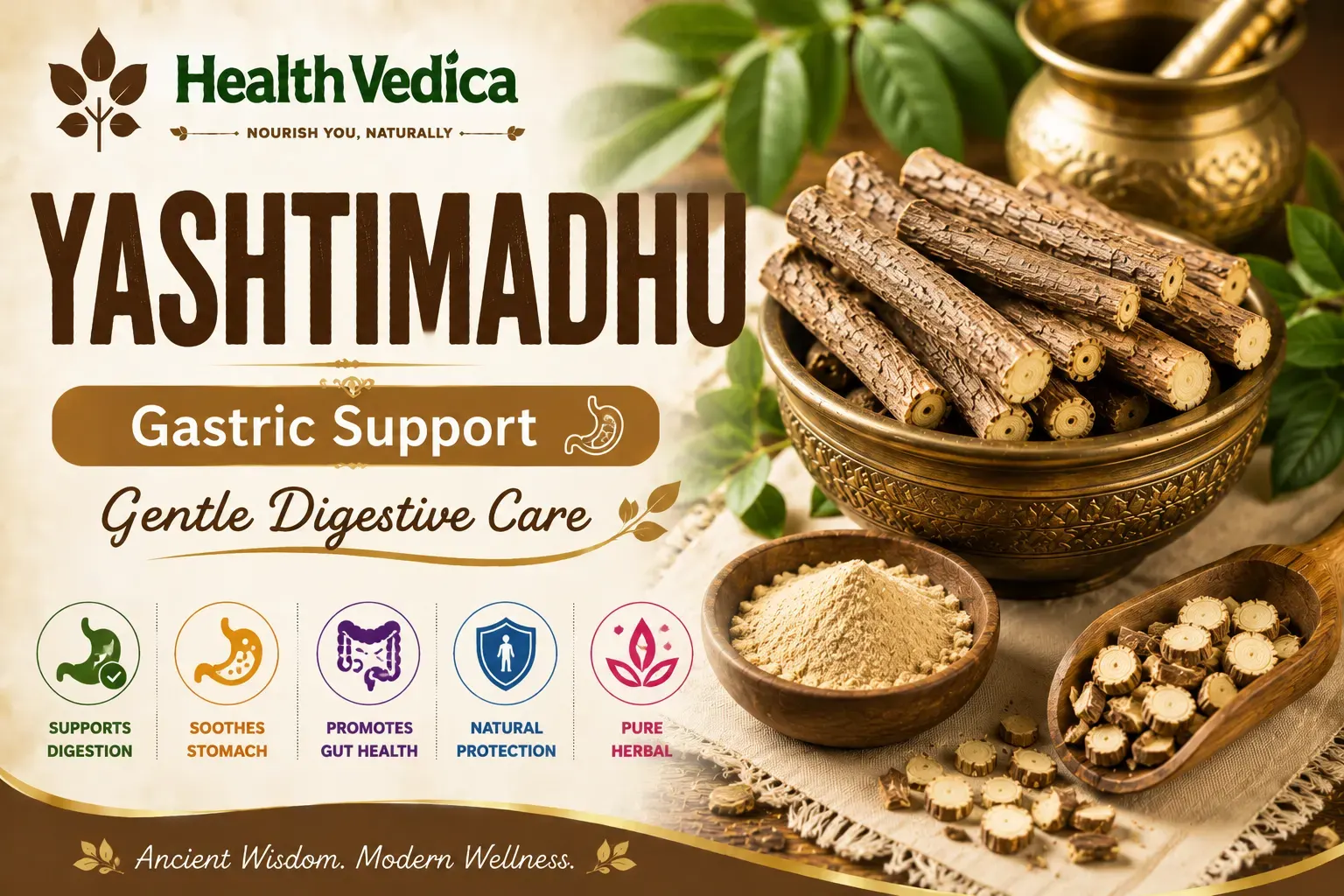
Yashtimadhu (Glycyrrhiza glabra), popularly known as Licorice or Mulethi, is one of the most revered rejuvenating herbs in Ayurveda. The Sanskrit name Yashtimadhu literally means 'sweet stick', referring to its naturally sweet root. Used for over 2,500 years across Ayurveda, Traditional Chinese Medicine and Unani medicine, Yashtimadhu is traditionally valued for supporting healthy digestion, soothing the throat, protecting the stomach lining, promoting respiratory wellness and maintaining healthy skin. Modern scientific research has identified glycyrrhizin, glabridin and numerous flavonoids that contribute to its antioxidant, anti-inflammatory and mucosal protective properties.
📊 Nutritional Value Per 100g of Dried Licorice Root Powder
| Nutrient | Amount | % Daily Value (DV) |
|---|---|---|
| Calories | 375 kcal | 19% |
| Protein | 9.5 g | 19% |
| Total Fat | 0.7 g | 1% |
| Carbohydrates | 86 g | 31% |
| Dietary Fiber | 8 g | 29% |
| Calcium | 190 mg | 19% |
| Iron | 8.2 mg | 46% |
| Magnesium | 115 mg | 27% |
| Potassium | 1120 mg | 24% |
📉 Glycemic Index
Licorice root has a low glycemic index. Since it is usually consumed in small medicinal quantities, it has minimal impact on blood glucose levels.
🧬 Bioactive Compounds
Yashtimadhu contains more than 300 bioactive compounds including glycyrrhizin, glabridin, liquiritigenin, isoliquiritigenin, glycyrrhetinic acid, flavonoids, saponins, coumarins and various polyphenols. These compounds contribute to its soothing, antioxidant, antimicrobial and anti-inflammatory effects.
💊 Vitamins & Minerals Explained
Although Licorice contains calcium, iron, magnesium and potassium, its medicinal effects mainly result from glycyrrhizin and other phytochemicals rather than its vitamin or mineral content because therapeutic doses are relatively small.
🕉️ Ayurvedic Properties & Dosha Effect
According to Ayurveda, Yashtimadhu has a Madhura (sweet) taste with a cooling potency (Sheeta Veerya). It balances Vata and Pitta Doshas while nourishing body tissues, soothing mucous membranes, promoting voice clarity and supporting digestive comfort. Ayurveda classifies Yashtimadhu as a Rasayana herb that promotes rejuvenation and longevity.
💚 Evidence-Based Health Benefits
Supports Stomach Health: Licorice is widely studied for protecting the stomach lining and supporting individuals with occasional acidity and gastric discomfort. Deglycyrrhizinated licorice (DGL) is commonly used for this purpose.
Soothes Sore Throat: Yashtimadhu has traditionally been used as a natural throat soother for hoarseness, dry cough and vocal strain.
Supports Respiratory Wellness: Its soothing properties help maintain healthy respiratory passages and promote mucus clearance.
Powerful Antioxidant: Flavonoids such as glabridin help protect cells from oxidative stress.
Supports Healthy Skin: Laboratory research suggests glabridin may help reduce oxidative stress and support healthy skin pigmentation.
May Support Liver Health: Experimental studies indicate hepatoprotective effects, although further human research is required.
Supports Oral Health: Licorice possesses natural antimicrobial compounds that may help maintain a healthy oral environment.
👨👩👧 Who Should Consider Yashtimadhu?
Yashtimadhu is commonly used by individuals seeking digestive comfort, throat support, respiratory wellness and Ayurvedic rejuvenation. It is especially popular among teachers, singers and public speakers.
🚫 Who Should Avoid Yashtimadhu?
People with high blood pressure, kidney disease, heart disease, low potassium levels or fluid retention should avoid long-term use of whole licorice root unless supervised by a healthcare professional. Pregnant women should also avoid medicinal doses.
🌿 Ayurvedic Remedies
Licorice Tea: Simmer one teaspoon of licorice root in water for 10 minutes to prepare a soothing herbal tea.
Throat Drink: Combine Yashtimadhu with Tulsi and ginger for traditional throat support.
Powder with Honey: Ayurveda traditionally uses licorice powder mixed with honey to soothe the throat. Honey should not be given to infants under one year of age.
Herbal Combination: Yashtimadhu is often combined with Amla, Guduchi, Ashwagandha and Shatavari in Ayurvedic formulations.
🥗 Best Ways to Consume
Licorice is available as dried root, powder, herbal tea, capsules, lozenges, liquid extracts and DGL tablets. DGL formulations remove most glycyrrhizin and are often preferred for long-term digestive support.
🍽️ Best Combinations
Yashtimadhu pairs well with Tulsi, Ginger, Amla, Shatavari, Guduchi, Turmeric and Fennel depending on the intended Ayurvedic formulation.
🧊 Storage Tips
Store dried licorice root or powder in an airtight container away from moisture, sunlight and excessive heat.
📅 Daily Recommended Intake
2–5 grams of root powder daily or standardized extracts according to product instructions. Prolonged high-dose use should be avoided unless supervised by a healthcare professional.
⚠️ Precautions & Drug Interactions
Whole licorice root contains glycyrrhizin, which can raise blood pressure, lower potassium levels and cause fluid retention when consumed excessively or for prolonged periods. It may interact with blood pressure medications, diuretics, corticosteroids, heart medications and anticoagulants. Individuals with hypertension, kidney disease or heart disease should seek medical advice before using licorice supplements.
🔬 Scientific Highlights
Licorice is among the best-researched medicinal herbs. Human studies support the use of DGL for digestive comfort, while laboratory and clinical research demonstrates antioxidant, anti-inflammatory, antimicrobial and mucosal protective activities. Ongoing research continues to investigate its role in metabolic health and skin care.
📚 Traditional Ayurvedic References
- Charaka Samhita
- Sushruta Samhita
- Bhavaprakasha Nighantu
- Dhanvantari Nighantu
- Ayurvedic Pharmacopoeia of India (API)
❌ Common Myths & Facts
❌ Myth: Licorice is completely safe for unlimited daily consumption.
✅ Fact: Excessive intake of whole licorice root may raise blood pressure and lower potassium levels because of glycyrrhizin.
❌ Myth: All licorice products contain glycyrrhizin.
✅ Fact: DGL (Deglycyrrhizinated Licorice) has most glycyrrhizin removed and is commonly used for digestive support.
❌ Myth: Licorice candies provide the same benefits as licorice root.
✅ Fact: Many commercial candies contain little or no real licorice and often include added sugar and flavorings.
🌍 Fun Facts
- Licorice root is approximately 30–50 times sweeter than table sugar due to glycyrrhizin.
- It has been used medicinally for more than 2,500 years.
- Ancient Egyptian tombs contained licorice root, indicating its historical importance.
- DGL (Deglycyrrhizinated Licorice) was specifically developed to reduce the blood-pressure-related side effects associated with glycyrrhizin.