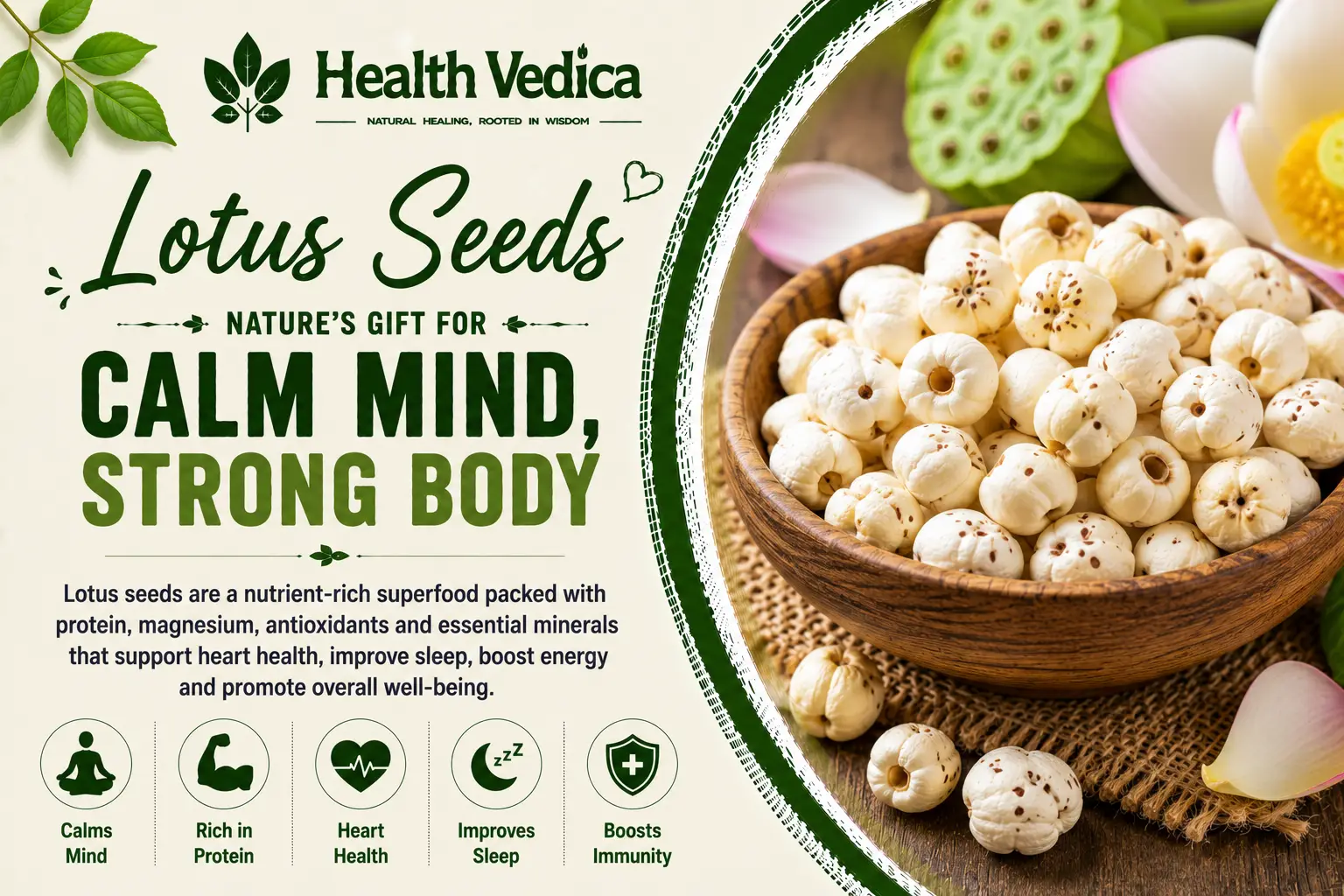
🌿 Introduction
Lotus Seeds, known as Makhana or Fox Nuts in India, are puffed seeds from the lotus flower (Nelumbo nucifera) that have been consumed in India for thousands of years as a sacred food, a fasting staple, and a powerful Ayurvedic medicinal ingredient. Makhana is one of India's most prized superfoods — low in calories, high in protein, and packed with anti-aging antioxidants, magnesium, potassium, and kaempferol. They are particularly popular during Hindu fasting periods and are celebrated for their adaptogenic and kidney-nourishing properties.
📊 Nutritional Value Per 100g (Roasted Makhana)
| Nutrient | Amount | % Daily Value |
|---|---|---|
| Calories | 347 kcal | 17% |
| Carbohydrates | 76.9 g | 26% |
| Protein | 9.7 g | 19% |
| Fat | 0.1 g | 0% |
| Fiber | 14.5 g | 52% |
| Magnesium | 67.2 mg | 16% |
| Potassium | 500 mg | 14% |
| Phosphorus | 200 mg | 20% |
| Calcium | 60 mg | 6% |
| Iron | 1.4 mg | 8% |
| Kaempferol | Significant | — |
| Glutamine | High | — |
📉 Glycemic Index
Despite being a carbohydrate-rich dry food, makhana has a moderate glycemic index (around 55–65) which is significantly moderated by its extraordinary fiber content (14.5g per 100g). As a snack, it causes slower blood sugar rise compared to chips or crackers, and its high protein and fiber content promotes satiety.
🕉️ Ayurvedic Properties & Dosha Effect
Makhana holds an exalted position in Ayurveda as a Rasayana — a rejuvenating food that slows aging and builds Ojas. It is Madhura (sweet), Sheeta (cooling), and Guru (nourishing). It pacifies all three doshas, particularly Pitta and Vata. Ayurveda recommends makhana for kidney health (Mutravaha Srotas), reproductive health (Shukra Dhatu), heart strengthening, and post-illness recovery. It is one of the very few foods classified as beneficial for all body types.
💚 Health & Healing Benefits
Makhana's most unique health benefit comes from kaempferol, a natural flavonoid with potent anti-aging, anti-inflammatory, and anti-cancer properties. Kaempferol has been shown to inhibit cancer cell growth and protect against neurodegenerative diseases. Makhana is extremely low in sodium and high in potassium, making it one of the best snacks for blood pressure management and heart health. Its high magnesium content supports hundreds of enzymatic reactions in the body, including insulin function, nerve conduction, and muscle relaxation. The glutamine content supports gut lining integrity and intestinal health. As a gluten-free, low-fat, high-protein snack, makhana is ideal for people with gluten intolerance or celiac disease. It is one of the best midnight or evening snacks for weight management due to its high fiber and protein content relative to calories.
🍛 Indian Dietary Uses
Makhana is consumed as roasted snacks (plain or spiced), in kheer (makhana milk pudding), curries (Makhana Matar), raita, and trail mixes. It is a staple fasting food during Navratri, Ekadashi, and other Hindu fasting periods.