🌿 Introduction
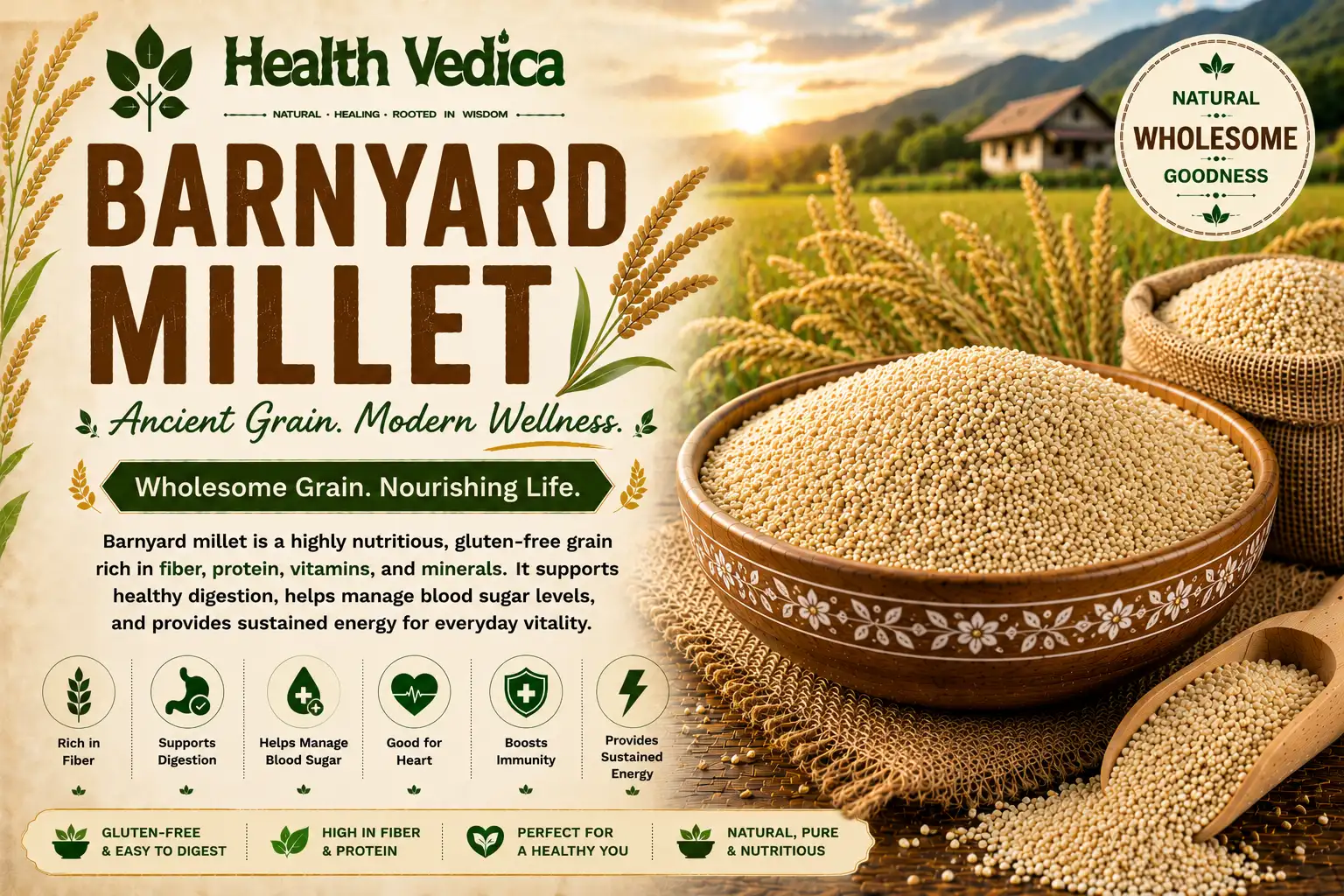
Barnyard millet is one of India's fastest-growing and most drought-resistant millet varieties. Known as Sanwa or Samvat in Hindi, Oodalu in Kannada, Kuthiraivali in Tamil, and Jhangora in Uttarakhand, it holds a unique dual position as both a nutritious daily food and a traditional fasting grain used during Navratri, Ekadashi, and other Hindu fasting periods. Among all millets, barnyard millet has the highest fiber and lowest carbohydrate content, making it exceptional for weight loss and blood sugar management.
🔬 Nutritional Value Per 100g (Raw Barnyard Millet)
| Nutrient | Amount | % Daily Value |
|---|---|---|
| Calories | 300 kcal | 15% |
| Carbohydrates | 51.1 g | 19% |
| Protein | 11.2 g | 22% |
| Fat | 3.6 g | 5% |
| Fiber | 12.6 g | 45% |
| Iron | 5.0 mg | 28% |
| Calcium | 20 mg | 2% |
| Phosphorus | 280 mg | 28% |
| Thiamine (B1) | 0.33 mg | 28% |
| Niacin (B3) | 4.2 mg | 26% |
📊 Glycemic Index
Barnyard millet has one of the lowest glycemic indexes of all millets, approximately 41–50. This exceptionally low GI, combined with its highest-among-millets fiber content, makes it a clinically significant food for blood glucose management, insulin sensitivity improvement, and sustained energy release.
🌿 Ayurvedic Properties & Dosha Effect
In Ayurveda, barnyard millet is classified as light, dry, and cooling. It pacifies Kapha and Pitta doshas and is particularly recommended for conditions involving excess weight, mucus accumulation, and blood sugar imbalance. Traditional texts recommend it for those with sluggish digestion or metabolic disorders. As a fasting food, it provides nourishment without aggravating the body during a cleanse.
✅ Health & Healing Benefits
Barnyard millet has the highest fiber content among all commonly available millets (12.6g/100g), making it extraordinary for digestive health, constipation relief, cholesterol management, and weight loss. The combination of high fiber and high protein creates exceptional satiety that reduces overall calorie intake. Its high iron content (5mg/100g) supports hemoglobin production and is especially valuable for women with iron deficiency. Studies show barnyard millet consumption reduces blood sugar and improves insulin response. The B vitamins support energy metabolism and nervous system health.
🍲 Indian Dietary Uses
Barnyard millet is used to make sanwa ki khichdi, kuthiraivali pongal, barnyard millet idli and dosa, millet roti, Navratri fasting pulao, jhangora kheer (a Uttarakhand traditional dessert), barnyard millet upma, and porridge. During Navratri fasting, samvat ke chawal (barnyard millet rice) is one of the most widely consumed foods across North India.
💡 Traditional Navratri Vrat Recipe
Samvat Khichdi: Cook barnyard millet with sendha namak (rock salt), cumin, green chilli, and water. Top with a generous drizzle of ghee. This traditional Navratri preparation provides high fiber, protein, and sustained energy — ideal for fasting days when digestion is lighter.
💡 Jhangora Kheer (Uttarakhand)
Cook barnyard millet (jhangora) in full-fat milk with jaggery, cardamom, and dry fruits. This traditional Garhwali dessert is a culturally treasured recipe that provides both nourishment and celebration. It is lighter and more nutritious than rice kheer.
💡 Smart Tips
Rinse barnyard millet thoroughly before cooking to remove any surface dust. Use a 1:2.5 ratio (millet:water) for cooked rice texture. It cooks faster than most other millets. Barnyard millet is excellent for diabetics and those on calorie-controlled diets due to its high fiber and satiety effect.