🌿 Introduction
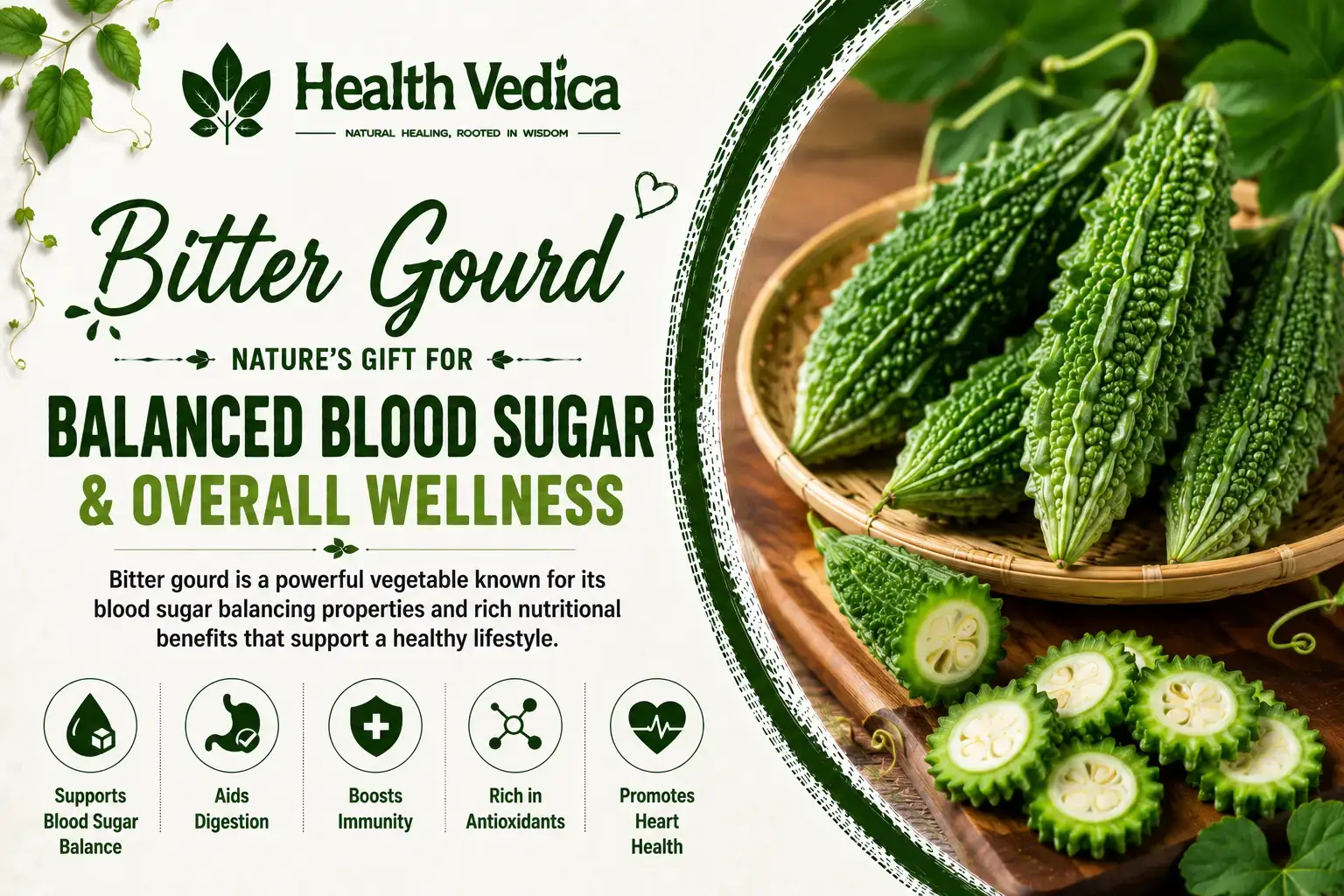
Bitter Gourd, known as Karela in Hindi and Pavakkai in Tamil, is one of India's most medicinally powerful vegetables. Despite its intensely bitter taste, Karela is revered in both Ayurveda and modern medicine for its exceptional anti-diabetic, liver-protective, and blood-purifying properties. It contains three unique plant compounds — charantin, vicine, and polypeptide-p — that act like insulin in the human body, making it one of nature's most potent natural remedies for managing diabetes.
📊 Nutritional Value Per 100g
| Nutrient | Amount | % Daily Value |
|---|---|---|
| Calories | 17 kcal | 1% |
| Carbohydrates | 3.7 g | 1% |
| Protein | 1 g | 2% |
| Fat | 0.2 g | 0% |
| Fiber | 2.8 g | 10% |
| Vitamin C | 84 mg | 93% |
| Vitamin A | 471 IU | 9% |
| Vitamin K | 4.8 mcg | 4% |
| Folate | 72 mcg | 18% |
| Iron | 0.4 mg | 2% |
| Potassium | 296 mg | 9% |
| Zinc | 0.8 mg | 7% |
| Charantin | Significant | — |
| Polypeptide-p | Present | — |
📉 Glycemic Index
Bitter gourd has an extremely low glycemic index (GI around 14) and is uniquely beneficial for people with diabetes because its active compounds actively help lower blood sugar — not merely by being low in carbohydrates, but by mimicking insulin activity in cells.
🕉️ Ayurvedic Properties & Dosha Effect
In Ayurveda, Karela is one of the most important medicinal vegetables. It is classified as Tikta (bitter), Katu (pungent), Laghu (light), and Ruksha (dry). Its bitter taste is Ayurveda's most potent liver and blood cleanser. It pacifies Pitta and Kapha doshas and has been prescribed for Prameha (diabetes), Kushtha (skin disorders), Krimi (parasitic infections), and liver disorders for thousands of years. Regular Karela consumption is recommended in Ayurveda for purifying Rakta (blood) and Rasa (plasma) dhatus.
💚 Health & Healing Benefits
Bitter gourd's most extraordinary health benefit is its anti-diabetic activity. Charantin stimulates pancreatic insulin secretion and enhances glucose uptake by cells. Polypeptide-p, often called 'plant insulin,' directly mimics the action of human insulin. Vicine and other compounds have shown ability to lower both fasting and postprandial blood glucose levels in clinical studies. Karela juice is one of India's most popular traditional diabetes remedies and is backed by significant scientific evidence. Bitter gourd is an excellent liver cleanser — it increases bile acid secretion, stimulates liver enzyme activity, and helps reverse fatty liver in early stages. Its very high Vitamin C content (93% DV per 100g) boosts immunity significantly. Karela has potent antiviral properties and has been studied for activity against dengue, chikungunya, and HIV. It supports kidney health by reducing blood uric acid and is beneficial in managing gout. Its blood-purifying properties make it effective for treating acne, eczema, psoriasis, and other skin disorders.
🍛 Indian Dietary Uses
Karela is used in Karela Sabzi (stir-fry), Karela Juice, Stuffed Karela (Bharwan Karela), Karela chips, Karela Masala Dal, and Pavakkai Pitlai (Tamil Nadu curry). Soaking sliced karela in salt water or yogurt for 20–30 minutes before cooking reduces bitterness while retaining medicinal properties.