🌿 Introduction
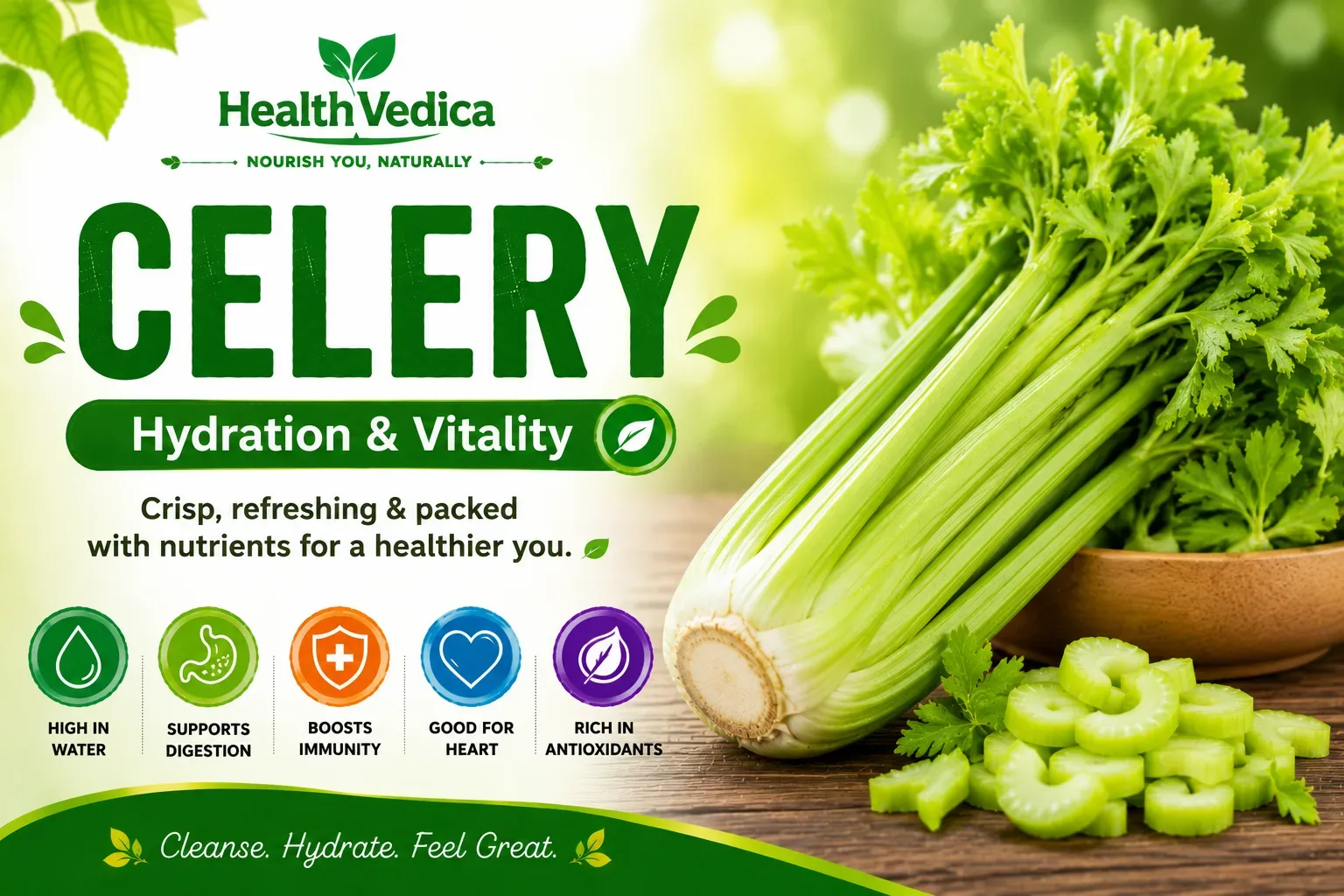
Celery (Apium graveolens) is a refreshing green vegetable known for its crunchy texture, high water content and unique aromatic flavor. It belongs to the Apiaceae family, the same botanical family as coriander, fennel, carrot and parsley.
Originally used as a medicinal herb in ancient civilizations, celery is now widely consumed around the world in salads, soups, juices, smoothies and cooked dishes. It is naturally low in calories while providing fiber, potassium, vitamin K, antioxidants and plant compounds that support hydration, digestion and cardiovascular wellness.
In Ayurveda, celery is related to Ajmoda, a traditional herb valued for supporting digestion, reducing bloating and balancing metabolism when used appropriately.
📊 Nutritional Value Per 100g of Celery
| Nutrient | Amount | % Daily Value (DV) |
|---|---|---|
| Calories | 16 kcal | 1% |
| Protein | 0.7 g | 1% |
| Total Fat | 0.2 g | <1% |
| Carbohydrates | 3 g | 1% |
| Dietary Fiber | 1.6 g | 6% |
| Water Content | 95 g | — |
| Vitamin K | 29.3 mcg | 24% |
| Vitamin C | 3.1 mg | 3% |
| Folate | 36 mcg | 9% |
| Potassium | 260 mg | 6% |
| Calcium | 40 mg | 4% |
| Magnesium | 11 mg | 3% |
| Manganese | 0.1 mg | 4% |
📉 Glycemic Index
Celery has an extremely low glycemic impact because it contains very few digestible carbohydrates. It is considered one of the most diabetes-friendly vegetables due to its high water content and fiber.
🧬 Powerful Plant Compounds
Celery contains apigenin, luteolin, flavonoids, phenolic acids and phthalides. These naturally occurring compounds are studied for their antioxidant, anti-inflammatory and cardiovascular-supporting properties.
💊 Vitamins & Minerals Explained
Vitamin K supports normal blood clotting and bone metabolism. Potassium helps maintain fluid balance and healthy blood pressure. Folate supports cell formation, while antioxidants protect cells from oxidative stress.
🕉️ Ayurvedic Properties & Dosha Effect
In Ayurveda, celery is associated with Ajmoda and is considered to have a Katu (pungent) taste with light and digestive qualities.
Celery is traditionally considered beneficial for balancing Kapha Dosha because of its light and stimulating nature. It may also support Vata digestion when consumed with warming spices. Excess raw celery consumption may aggravate Vata in sensitive individuals due to its cooling and fibrous nature.
💚 Evidence-Based Health Benefits
Supports Heart Health: Celery contains potassium and plant compounds called phthalides that have been studied for their role in supporting healthy blood pressure.
Promotes Hydration: With approximately 95% water content, celery helps contribute to daily fluid intake.
Improves Digestion: Fiber supports healthy bowel movements and feeds beneficial gut bacteria.
Supports Weight Management: Extremely low calorie density makes celery a useful food for people managing weight.
Reduces Oxidative Stress: Antioxidants like apigenin and luteolin help protect cells from free radical damage.
Supports Bone Health: Vitamin K contributes to maintaining healthy bones and normal calcium metabolism.
May Support Inflammation Balance: Celery antioxidants have been studied for their role in maintaining healthy inflammatory responses.
🌿 Celery Juice Benefits
Celery juice has become popular as a wellness drink because of its hydration, minerals and antioxidant content. While celery juice can be part of a healthy diet, it should not be considered a cure for diseases. Whole celery provides more fiber than juice.
👨👩👧 Who Should Eat Celery?
Celery is suitable for healthy adults, people looking for low-calorie foods, individuals focusing on hydration, weight management and heart-friendly diets.
🚫 Who Should Limit Celery?
People taking blood-thinning medication should maintain consistent vitamin K intake and consult healthcare professionals before making major dietary changes. Individuals with celery allergy should avoid it.
🌿 Healthy Recipes & Traditional Uses
Celery Soup: A light, hydrating soup prepared with vegetables and herbs.
Celery Juice: Fresh celery blended with water and consumed as a refreshing drink.
Celery Salad: Combined with cucumber, apple, nuts and lemon dressing.
Celery Stir Fry: Cooked with garlic, spices and vegetables.
Celery Seeds: Traditionally used as a digestive spice similar to Ajmoda.
🥗 Best Ways to Eat Celery
Celery can be eaten raw in salads, lightly cooked in soups or added to smoothies. Combining it with healthy fats like nuts, seeds or olive oil improves absorption of fat-soluble plant compounds.
🍽️ Best Food Combinations
Celery pairs well with carrots, cucumber, apples, lemon, ginger, garlic, coriander, nuts and soups.
🧊 Storage Tips
Store celery in the refrigerator wrapped in a damp cloth or paper towel. Proper storage helps maintain its crisp texture for longer.
📅 Daily Recommended Intake
100–200 grams of celery can be consumed daily as part of a balanced diet.
⚠️ Precautions
Celery allergy can occur in sensitive individuals. Celery seeds and concentrated extracts should be used carefully during pregnancy or with certain medications. Excessive consumption of celery juice may not suit everyone due to its concentrated nature.
🔬 Scientific Highlights
Modern research has studied celery for its antioxidant compounds, potassium content, hydration benefits and potential cardiovascular effects. Celery's flavonoids and phthalides are among the key compounds responsible for its health-promoting properties.
❌ Common Myths & Facts
❌ Myth: Celery burns fat automatically.
✅ Fact: Celery is low calorie and supports weight management as part of a balanced diet.
❌ Myth: Celery juice can cure all diseases.
✅ Fact: Celery juice is nutritious but cannot replace medical treatment.
❌ Myth: Celery has no nutrients because it contains mostly water.
✅ Fact: Celery provides vitamin K, potassium, antioxidants and fiber.
🌍 Fun Facts
- Ancient civilizations used celery as both food and medicine.
- Celery seeds are used as a traditional digestive spice.
- Celery requires significant water to grow, contributing to its high moisture content.
- Celery belongs to the same family as carrots and fennel.
- The crunchy stalk is the most commonly consumed part.
🥬 Edible Parts & Their Benefits
| Edible Part | Health Benefits |
|---|---|
| Stalk | Provides hydration, fiber, potassium and antioxidants. |
| Leaves | Contain aromatic compounds, vitamin K and antioxidants. |
| Seeds | Traditionally used for digestion and spice preparations. |
🌱 Seasonality in India
| Season | Availability |
|---|---|
| Peak Season | November – February |
| Best Climate | Cool weather |
| Buying Tip | Select firm, bright green stalks without yellowing or wilting. |
⏰ Best Time to Eat
Celery can be consumed during daytime, especially as part of breakfast, lunch salads or soups. Some people prefer it before meals because its fiber may support fullness.