🌿 Introduction
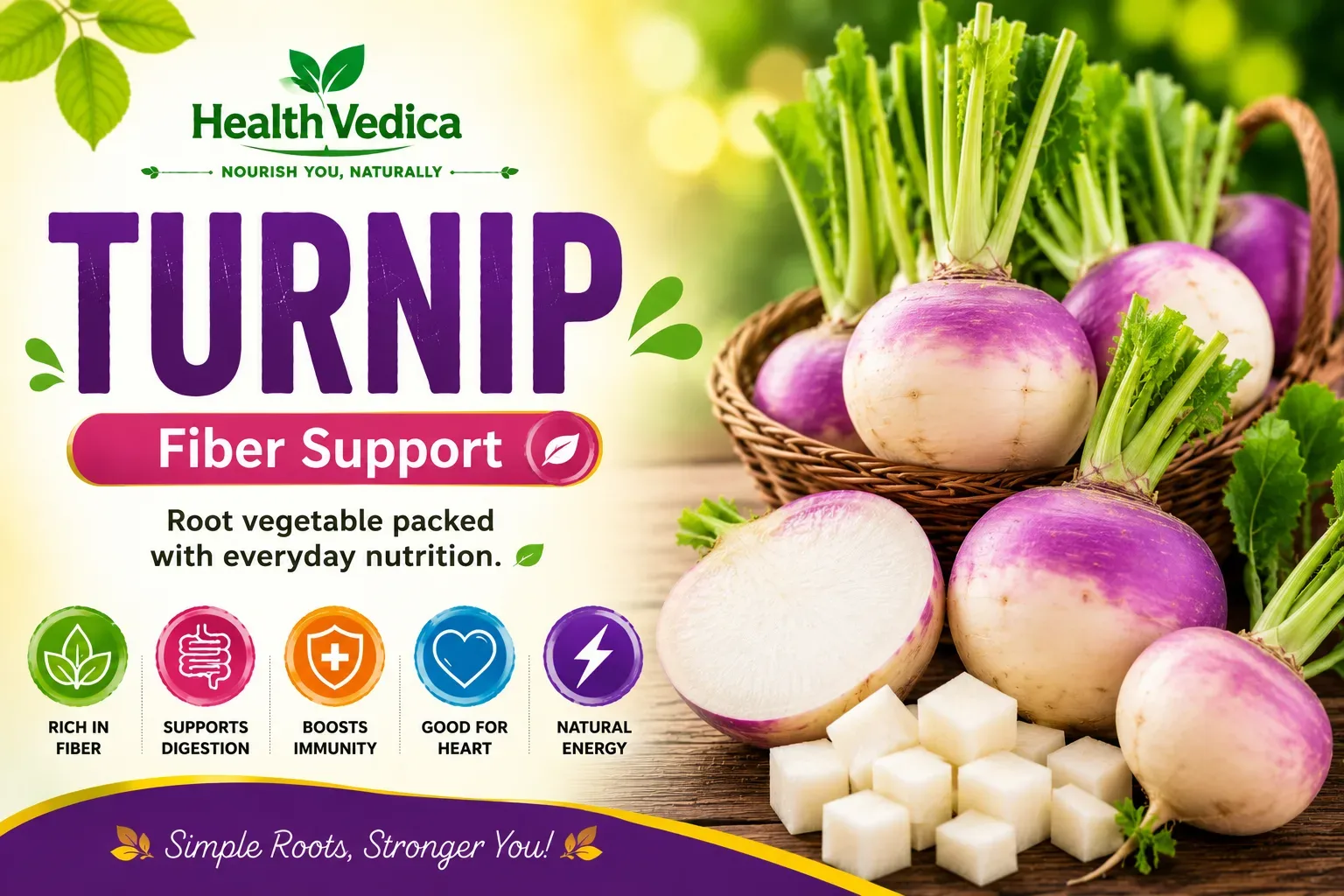
Turnip (Brassica rapa), popularly known as Shalgam in India, is a nutritious root vegetable belonging to the cruciferous vegetable family. It is closely related to cabbage, broccoli, radish and mustard greens. Traditionally consumed in North Indian winter cuisine, especially in Punjab, Himachal Pradesh and Kashmir, turnips are valued for their mildly sweet flavor, crunchy texture and impressive nutrient profile.
Turnips are naturally low in calories yet rich in dietary fiber, vitamin C, potassium, folate and protective plant compounds called glucosinolates. Ayurveda considers root vegetables like turnip beneficial for nourishment, digestion and maintaining strength during colder seasons when cooked with warming spices.
📊 Nutritional Value Per 100g of Turnip
| Nutrient | Amount | % Daily Value (DV) |
|---|---|---|
| Calories | 28 kcal | 1% |
| Protein | 0.9 g | 2% |
| Total Fat | 0.1 g | <1% |
| Carbohydrates | 6.4 g | 2% |
| Dietary Fiber | 1.8 g | 6% |
| Natural Sugars | 3.8 g | — |
| Vitamin C | 21 mg | 23% |
| Folate (Vitamin B9) | 15 mcg | 4% |
| Potassium | 233 mg | 5% |
| Calcium | 30 mg | 3% |
| Magnesium | 11 mg | 3% |
| Iron | 0.3 mg | 2% |
📉 Glycemic Index
Turnips have a low glycemic index of approximately 30. Their fiber content slows digestion and helps maintain more stable blood sugar levels, making them suitable for balanced diabetic meal plans.
🧬 Powerful Plant Compounds
Turnips contain glucosinolates, isothiocyanates, flavonoids, phenolic compounds and antioxidants. These sulfur-containing compounds are naturally present in cruciferous vegetables and are studied for their antioxidant and cellular protective properties.
💊 Vitamins & Minerals Explained
Vitamin C supports immunity, collagen formation and antioxidant defense. Potassium helps maintain healthy blood pressure, while folate supports normal cell growth and repair. Fiber improves digestive health and promotes a healthy gut microbiome.
🕉️ Ayurvedic Properties & Dosha Effect
According to Ayurveda, Turnip has a mildly Katu (pungent) and Madhura (sweet) taste. It has a slightly warming nature after digestion and is considered beneficial when prepared properly with spices.
Turnip may help balance Kapha Dosha due to its light and fibrous nature. Cooking with cumin, ginger, black pepper, turmeric and hing improves digestion and reduces possible gas formation. Excess consumption may increase Vata Dosha in some sensitive individuals.
💚 Evidence-Based Health Benefits
Improves Digestive Health: Turnips provide dietary fiber that supports regular bowel movements, prevents constipation and nourishes beneficial gut bacteria.
Boosts Immunity: Vitamin C strengthens immune defenses and protects cells from oxidative stress.
Supports Heart Health: Potassium helps regulate blood pressure while fiber contributes to healthier cholesterol levels.
Weight Management: With only 28 calories per 100g, turnips provide volume and fullness with minimal calories.
Supports Healthy Blood Sugar: Low carbohydrate content and fiber help slow glucose absorption.
Bone Health Support: Turnips provide small amounts of calcium, magnesium and vitamin K-related nutrients that contribute to bone wellness.
Cell Protection: Glucosinolates found in cruciferous vegetables are being studied for their role in supporting normal cellular defense mechanisms.
🌿 Turnip Greens Benefits
The green leaves attached to turnips are highly nutritious and contain more vitamins and minerals than the root in some cases. Turnip greens provide vitamin K, calcium, vitamin A, vitamin C and antioxidants. They can be cooked like spinach or added to soups and dals.
👨👩👧 Who Should Eat Turnip?
Turnip is suitable for children, adults, older people, individuals managing weight, people following diabetic-friendly diets and anyone looking to increase vegetable intake.
🚫 Who Should Limit Turnip?
Individuals with thyroid disorders should avoid excessive consumption of large amounts of raw cruciferous vegetables. Cooking reduces goitrogenic activity significantly. People with sensitive digestion may experience gas if consumed in large quantities.
🌿 Healthy Recipes & Home Remedies
Punjabi Shalgam Sabzi: A traditional winter curry prepared with tomatoes, spices and herbs.
Turnip Paratha: Grated turnip mixed with wheat flour and spices for a fiber-rich breakfast.
Turnip Soup: Cook with carrots, ginger and black pepper for a warming winter soup.
Turnip Pickle: Traditional Indian pickle prepared with mustard seeds and spices.
Turnip Greens Saag: Nutritious preparation using fresh leaves.
🥗 Best Ways to Eat Turnip
Turnips can be eaten roasted, boiled, steamed, sautéed or cooked in curries. Cooking improves digestibility and reduces bitterness. Young, smaller turnips generally have a sweeter taste and softer texture.
🍽️ Best Food Combinations
Turnips pair well with ginger, garlic, cumin, mustard seeds, turmeric, coriander, lentils, carrots, peas and whole grains.
🧊 Storage Tips
Store fresh turnips in the refrigerator for up to two weeks. Remove leafy greens before storage because they draw moisture from the root.
📅 Daily Recommended Intake
100–200 grams of cooked Turnip daily is suitable for most healthy adults as part of a balanced diet.
⚠️ Precautions
Excessive raw consumption may cause bloating or gas in sensitive individuals. People with thyroid conditions should prefer cooked turnips rather than very large amounts of raw cruciferous vegetables.
🔬 Scientific Highlights
Research on cruciferous vegetables suggests that compounds like glucosinolates and isothiocyanates possess antioxidant and anti-inflammatory properties. Turnips are also studied for their potential role in supporting metabolic health, gut microbiota and cellular protection.
❌ Common Myths & Facts
❌ Myth: Turnip is only a winter vegetable with little nutrition.
✅ Fact: Turnips provide vitamin C, fiber, potassium and beneficial plant compounds.
❌ Myth: Only the root is edible.
✅ Fact: Turnip greens are highly nutritious and can be consumed like leafy vegetables.
❌ Myth: Turnips should always be eaten raw.
✅ Fact: Cooking improves digestibility and makes nutrients easier to utilize.
🌍 Fun Facts
- Turnips have been cultivated for thousands of years across Europe and Asia.
- They belong to the same family as broccoli, cabbage and mustard.
- Turnip greens are often more nutrient-dense than the root itself.
- Small young turnips are sweeter and more tender than mature ones.
- Turnips were historically used as an important winter food crop.
🥬 Edible Parts & Their Benefits
| Edible Part | Health Benefits |
|---|---|
| Root | Provides fiber, vitamin C, potassium and antioxidants. |
| Leaves (Turnip Greens) | Rich in vitamin K, vitamin A, calcium and antioxidants. |
| Tender Stems | Contain fiber and can be cooked with greens. |
🌱 Seasonality in India
| Season | Availability |
|---|---|
| Peak Season | November – February |
| Best Climate | Cool winter temperatures |
| Buying Tip | Select firm, smooth turnips with fresh green tops and avoid soft or cracked roots. |
⏰ Best Time to Eat
Turnips are best consumed during lunch or dinner, especially in winter. Pairing them with lentils and whole grains creates a balanced, fiber-rich meal.