🌿 Moringa: India's Miracle Tree in Your Backyard
Moringa oleifera — known in India as Sahjan, Drumstick Tree, or Murungai — is arguably the most nutritionally dense plant on Earth. Every part is edible and medicinal: leaves, pods (drumsticks), seeds, flowers, bark, and roots. India is both the world's largest producer and consumer of moringa, yet most Indians are only familiar with the pods in sambar, completely unaware of the extraordinary nutrition packed in the leaves.
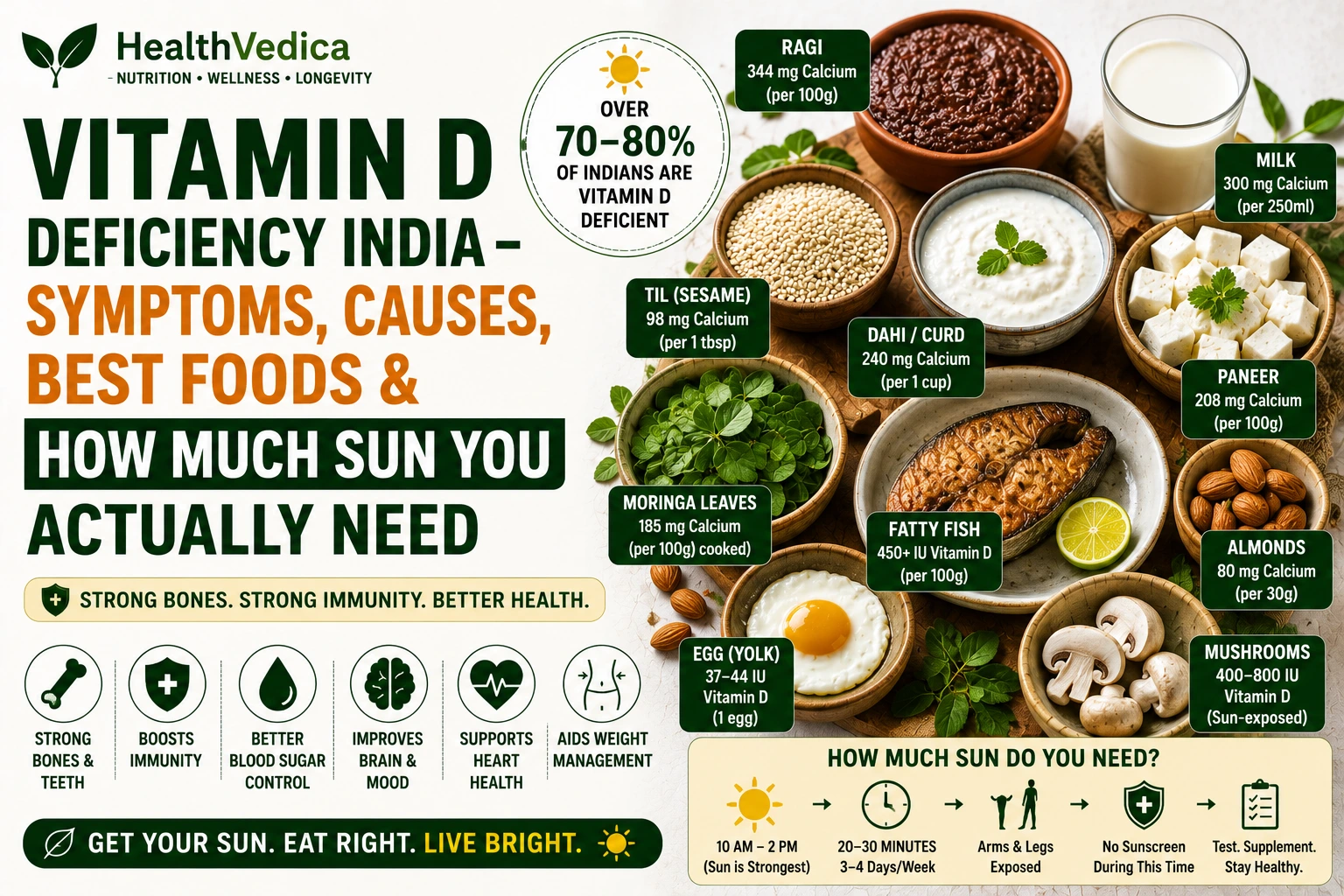
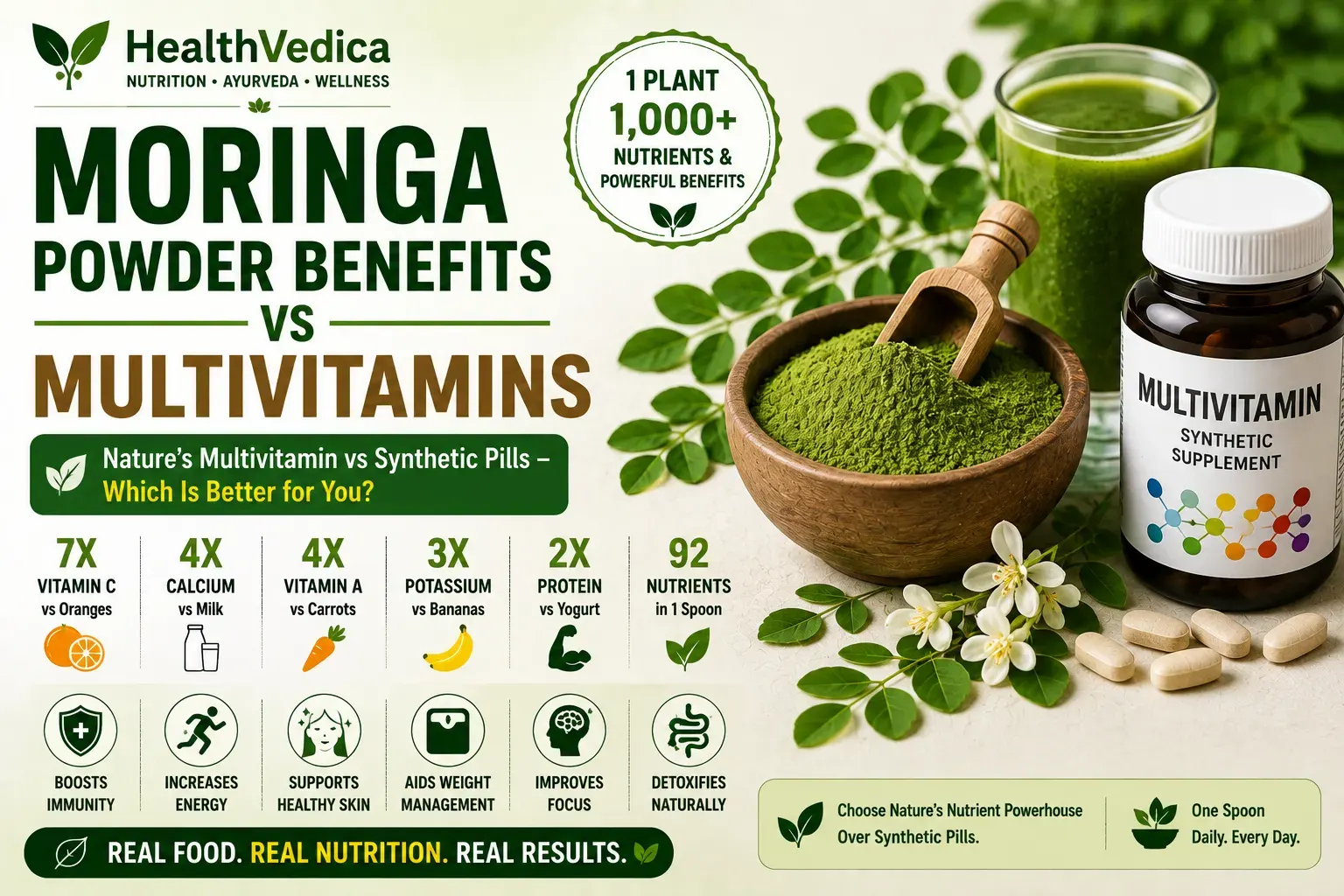
The WHO and UN Food and Agriculture Organisation have identified moringa as a critical solution to global malnutrition. In India, it grows wild across tropical and subtropical regions — Tamil Nadu, Andhra Pradesh, Karnataka, Maharashtra, and Gujarat — often dismissed as a common backyard tree. Yet gram for gram, moringa leaves contain 7× more vitamin C than oranges, 4× more calcium than milk, 4× more potassium than bananas, 2× more protein than yoghurt, and 3× more iron than spinach.
Modern science has validated what Ayurvedic texts knew for 4,000 years: moringa is a potent anti-inflammatory, antioxidant, antidiabetic, liver-protective, cholesterol-lowering, and antimicrobial plant. Over 1,300 published studies now document its therapeutic properties. This guide reveals the full science and practical application of moringa for Indian health.
🔬 The Biochemistry of Moringa's Healing Power
Moringa's extraordinary properties stem from a unique combination of bioactive compounds:
Isothiocyanates (particularly moringin): Analogous to sulforaphane in broccoli, these compounds activate the Nrf2 pathway — the master antioxidant and anti-inflammatory switch in cells. They inhibit NF-kB (inflammation) and upregulate the body's own antioxidant enzyme systems (superoxide dismutase, catalase, glutathione peroxidase).
Quercetin and Kaempferol: Potent flavonoid antioxidants that cross the blood-brain barrier, reduce neuroinflammation, inhibit cancer cell proliferation, and lower blood pressure by improving endothelial nitric oxide production.
Chlorogenic acid: The same compound responsible for many of coffee's health benefits — reduces post-meal blood sugar spikes by slowing glucose absorption in the intestine.
Zeatin: A plant cytokinin found in unusually high concentrations in moringa that has anti-aging properties at the cellular level — protects against oxidative damage to DNA and proteins.
Complete amino acid profile: Moringa provides all 9 essential amino acids — rare for a plant food. This makes it a complete protein source, particularly valuable for Indian vegetarians.
📊 Moringa Nutritional Comparison (per 100g fresh leaves)
| Nutrient | Moringa Leaves | Comparison Food | Moringa Advantage |
|---|---|---|---|
| Vitamin C | 220 mg | Orange: 53 mg | 4× more |
| Calcium | 185 mg | Milk: 120 mg/100ml | 1.5× more |
| Potassium | 337 mg | Banana: 358 mg | Comparable |
| Iron | 4 mg | Spinach: 2.7 mg | 1.5× more + higher bioavailability |
| Protein | 9.4 g | Milk: 3.4 g/100ml | 2.7× more |
| Vitamin A (beta-carotene) | 6,780 mcg | Carrot: 8,285 mcg | Comparable |
| Magnesium | 147 mg | Almonds: 270 mg | Half of almonds |
| Antioxidant ORAC | 157,000 μmol TE | Blueberry: 4,669 | 34× more |
✅ Top Proven Health Benefits of Moringa
1. Blood Sugar Management (Critical for India's 101 Million Diabetics)
Moringa is one of the most studied natural antidiabetic plants. Multiple mechanisms work simultaneously: isothiocyanates reduce intestinal glucose absorption; chlorogenic acid slows carbohydrate digestion; and moringa increases glucose uptake in cells by acting on GLUT4 transporters (similar to insulin mechanism). Clinical studies show 7g of moringa leaf powder daily reduces fasting blood sugar by 13–28% in type 2 diabetics over 12 weeks. For prediabetics, moringa supplementation has prevented diabetes progression in several trials.
2. Cholesterol Reduction
Beta-sitosterol and other phytosterols in moringa competitively inhibit cholesterol absorption in the gut — exactly how pharmaceutical statin drugs work, but through a gentler mechanism. Studies show 4g moringa powder daily reduces total cholesterol by 14%, LDL by 15%, and triglycerides by 14% over 3 months. HDL (good cholesterol) increases simultaneously.
3. Anti-Inflammatory Action
Chronic inflammation underlies virtually every modern Indian health concern — diabetes, heart disease, PCOS, fatty liver, arthritis, and cancer. Moringa's isothiocyanates and quercetin directly inhibit NF-kB, the master inflammation transcription factor, reducing production of inflammatory cytokines (IL-6, TNF-alpha, COX-2). This broad anti-inflammatory action makes moringa relevant for virtually any inflammatory condition.
4. Liver Protection (Vital for India's NAFLD Epidemic)
Non-alcoholic fatty liver disease (NAFLD) affects 27% of Indians. Moringa provides hepatoprotective (liver-protecting) effects: reduces fat accumulation in liver cells, lowers liver enzymes (ALT, AST), and reduces liver fibrosis through quercetin and kaempferol actions. Studies in both NAFLD patients and liver toxicity models consistently show moringa's liver-protective effects.
5. Nutrition for Mothers and Children
India has a severe problem of maternal malnutrition and child stunting. Moringa leaves provide iron, calcium, vitamin A, and protein — all nutrients critical for pregnancy, lactation, and infant development. WHO projects recommend moringa as a low-cost nutritional intervention for at-risk populations. Traditional South Indian communities have always included drumstick leaves in postpartum diets — a tradition with profound scientific justification.
6. Brain Health and Mental Clarity
Moringa crosses the blood-brain barrier. Antioxidants in moringa reduce neuroinflammation, protect against beta-amyloid accumulation (Alzheimer's marker), and stimulate neurotransmitter production. Moringa increases serotonin, dopamine, and norepinephrine — neurotransmitters regulating mood, motivation, and cognitive function. Regular moringa consumption is associated with better memory and reduced depression risk in observational studies.
🌿 Moringa in Ayurveda (Shigru)
Moringa (Shigru in Sanskrit) occupies a place of high reverence in Ayurvedic medicine. Classical texts describe it as: Tikshna (sharp/penetrating), Laghu (light), Ushna (hot in potency) — properties that reduce Kapha and Vata, stimulate digestion, clear Ama, and penetrate deep into tissues.
Classical Ayurvedic applications: Shigru for Shvayathu (oedema/swelling) — diuretic and anti-inflammatory; Shigru for Gulma (abdominal tumours/cysts) — anti-tumour properties; Shigru for Kushtha (skin diseases) — antimicrobial; Shigru for Vata Vyadhi (neurological disorders) — neuroprotective.
Traditional preparations: Shigru Kwath (moringa decoction) for joint pain; Shigru in Trikatu for weight management; moringa leaf paste applied topically for skin infections.
🚫 Moringa Side Effects and Precautions
Pregnancy caution: Moringa root, bark, and flowers contain alkaloids that can stimulate uterine contractions — traditionally used as abortifacients. Pregnant women should avoid moringa root, bark, and high-dose supplementation. Moringa leaves in normal food quantities (as in sambar) are generally considered safe, but high-dose supplements (>3g/day) should be avoided during pregnancy without medical guidance.
Thyroid medication interaction: Moringa has thyroid-stimulating properties. Those on levothyroxine should monitor thyroid levels if supplementing with moringa, as it may enhance or alter medication effects.
Hypoglycaemia risk: Moringa significantly lowers blood sugar. Diabetics on insulin or sulfonylureas must monitor blood glucose carefully when adding moringa to avoid hypoglycaemia (dangerously low blood sugar).
Digestive side effects: Starting with high doses can cause loose stools, nausea, or digestive discomfort. Start with ½ tsp powder and gradually increase to 1–2 tsp daily.
💡 Practical Moringa Usage Guide for Indians
Forms available: Fresh leaves (most nutritious), moringa powder (dried leaves — convenient), drumstick pods (in sambar/curries), moringa seed oil (for skin), moringa capsules (for precise dosing).
Daily moringa powder dose: Start at ½ tsp (1.5g), work up to 1–2 tsp (3–6g) daily. Therapeutic studies use 7–14g, but culinary quantities of 3–6g daily are effective for most health goals.
Indian moringa recipes: Moringa sambar (drumstick pods — South Indian classic) | Moringa dal (fresh leaves in toor dal — Karnataka tradition) | Moringa paratha (dried powder kneaded into dough) | Moringa lassi (1 tsp powder blended with dahi, banana, and honey) | Moringa rice (leaves cooked with jeera rice) | Moringa chutney (fresh leaves with coconut, green chilli, ginger) | Moringa tea (dried powder steeped in hot water with lemon and honey — do not boil as it destroys vitamin C)
Moringa powder in cooking: Add to dal, soups, curries, or chutneys after cooking (adding during cooking reduces some heat-sensitive nutrients). Mix into chapati dough invisibly. Blend into green smoothies or juices.